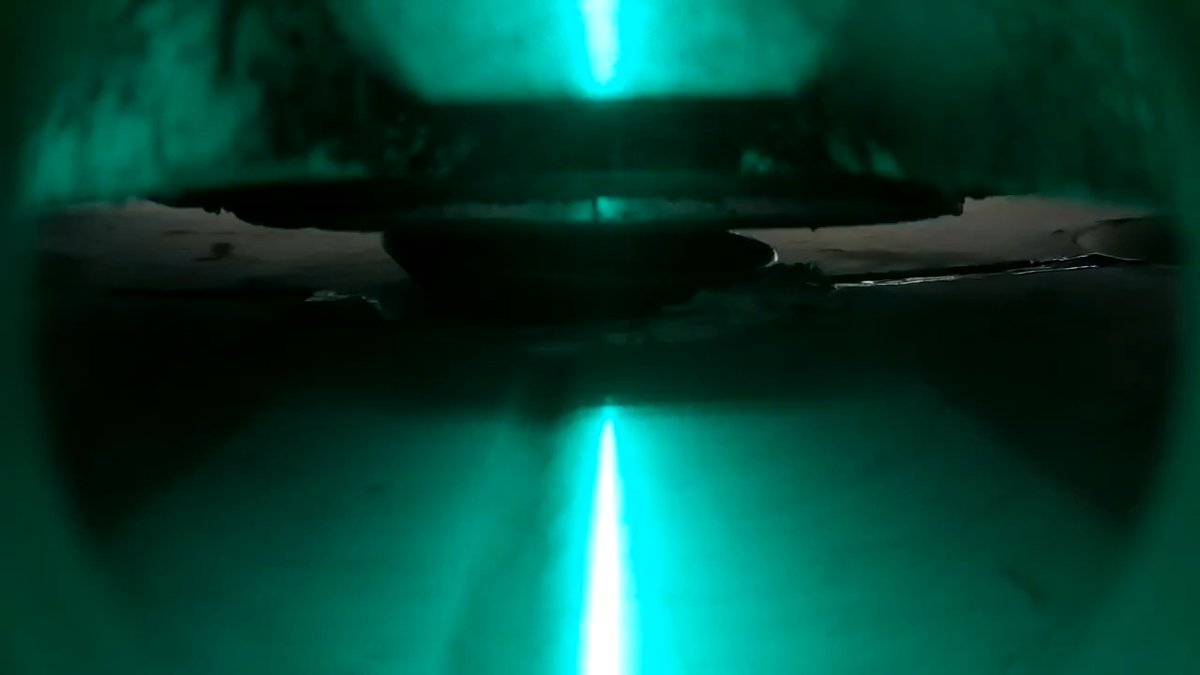
The Boring Company posted a significant capability milestone on Friday: its Prufrock tunnel-boring machine can now build tunnel rings entirely without human hands on-site. Six concrete segments — each weighing roughly 3,750 pounds, or about the mass of a Tesla Model 3 — are lifted, translated, and locked into final position with millimeter-level accuracy in under 60 seconds, monitored remotely from the company's Global Operations Control Center in Texas.

What the Demonstration Actually Shows
The tunnel ring erection process is one of the most labor-intensive and precision-critical steps in conventional boring. Each precast concrete segment must be positioned to tolerances measured in millimeters — a misalignment compounds over the length of a tunnel and can compromise structural integrity. Doing that autonomously, at speed, with no operator in the machine, is a meaningful engineering step.
The remote oversight model is also worth noting. Monitoring from a centralized Global OCC in Texas means a single operations team can theoretically supervise multiple Prufrock machines running simultaneously across different project sites. That changes the staffing math considerably for large-scale urban tunnel programs.
According to the Background Research, the Prufrock series has progressed through multiple generations — from Prufrock-1 onward — with each iteration targeting faster bore rates, lower cost per mile, and increasing levels of automation. Full autonomous ring-building represents the kind of milestone that moves the needle on the cost side of the equation, since labor inside a pressurized tunnel environment is expensive and operationally complex.
The Autonomous Vehicle Connection
The timing of this announcement sits against a broader infrastructure question that's becoming harder to ignore: as robotaxi fleets and autonomous vehicles scale, urban road networks face a new category of congestion — empty vehicles repositioning, circling, or deadheading between trips. Surface streets weren't designed for that load.
Commentator Whole Mars Catalog put it plainly: autonomous vehicles don't need scenery, don't need daylight, and don't share space with pedestrians or cyclists underground. A tunneled route for driverless vehicles offloads surface congestion while eliminating two of the most complex edge cases in autonomous driving — unprotected pedestrian crossings and mixed cyclist traffic. The logic is straightforward, even if the infrastructure buildout is anything but.
The connection between The Boring Company's progress and Tesla's autonomous vehicle ambitions is structural, not incidental. Both operate within the same ecosystem, and the viability of high-density robotaxi networks in cities like Austin, Las Vegas, or Los Angeles depends partly on whether underground routing becomes economically feasible. Autonomous ring-building is one piece of making that math work.
Why Speed and Autonomy Are Inseparable Here
Traditional tunnel construction is slow because it's manual, and it's expensive because it's slow. The Boring Company's stated goal has always been to collapse cost-per-mile to a fraction of conventional subway or highway tunnel projects. Autonomous operation doesn't just reduce headcount — it enables continuous operation without shift changes, fatigue limits, or the safety protocols required when workers are inside an active boring environment.
A sub-60-second ring placement cycle, running autonomously around the clock, compounds quickly. The gap between conventional tunnel timelines and what Prufrock is targeting isn't incremental — it's structural. Whether the company can sustain that pace across full project lengths, and at the scale required to serve multiple cities simultaneously, remains the open question. But the capability demonstration posted Friday suggests the underlying automation is functional, not theoretical.
Related Gear
Gear up your Tesla with tested, custom-fit BASENOR accessories — shop Tesla accessories →
Sources & reporting notes
The links below identify the material source records used for this report.
- @boringcompany on X (2026-08-08T20:05:32.000Z) — Direct source
- @wholemars on X (2026-08-08T20:22:28.000Z) — Direct source
Source links are preserved as published or accessed. See our editorial standards and corrections policy.
The BASENOR Editorial Desk covers Tesla, SpaceX, and related technology, curating reporting from primary sources — official accounts, regulatory filings, and software release data. Every article passes source-record and fact-checking review before publication. About the newsroom.
This report was curated by the BASENOR Editorial Desk from the sources listed above. Read our editorial standards or email editorial@basenor.com to report an error.