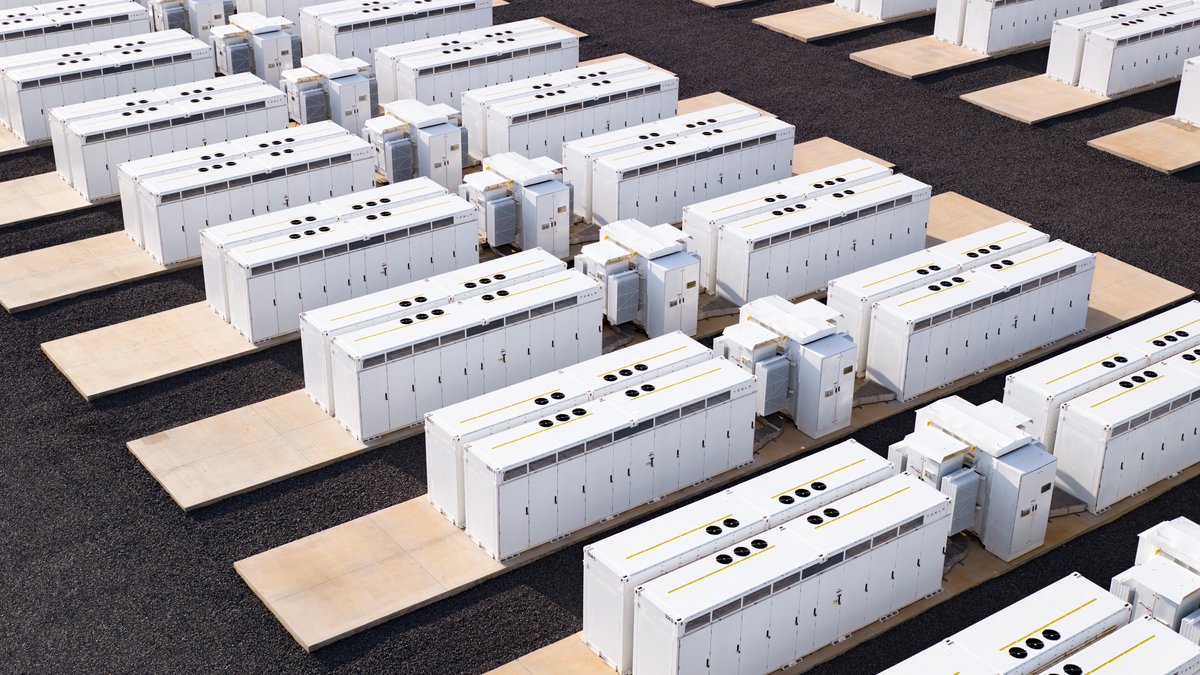
Construction is underway on a new Tesla Megapack battery storage facility in Pueblo, Colorado — the first large-scale battery project for regional utility Black Hills Energy. The project brings 50 Tesla Megapacks, a four-hour discharge capacity, and a late-2027 target for coming online. Here's what the details actually tell us.

1. The Project Has a Name and a Specific Address
This isn't a greenfield site in the middle of nowhere. The Pueblo Battery Resource will be built at Black Hills Energy's Pueblo Airport Generating Station (PAGS) — right next to the utility's existing 420-megawatt natural gas plant. Co-locating battery storage with a gas peaker is a deliberate grid strategy: the Megapacks can absorb excess renewable generation and discharge during peak demand windows, reducing how often the gas plant needs to fire up.
2. Cloudbreak Energy Is Building It, Black Hills Energy Will Own It
The developer behind the project is Cloudbreak Energy, operating through its subsidiary CBEP Solar. Cloudbreak is handling design and construction, with Linxon responsible for the balance-of-plant work — civil and electrical infrastructure to physically connect the batteries to the grid. Once construction wraps, Black Hills Energy takes ownership. That handoff structure is common in utility-scale storage: a specialized developer builds, a regulated utility operates.
3. Fifty Megapacks, 200 MWh, Four Hours of Discharge
The system specs are clean and consistent: 50 MW of power capacity, 200 MWh of energy capacity, delivered by exactly 50 Tesla Megapack units. That 4:1 ratio means the system is optimized for four-hour discharge — long enough to cover evening peak demand after solar generation drops off, which is the primary use case utilities are building for right now. Each Megapack unit is therefore contributing 1 MW / 4 MWh to the overall system.
4. This Is Black Hills Energy's First Large-Scale Battery Project
Black Hills Energy serves customers across eight states in the Mountain and Midwest regions. Despite that footprint, this is the company's first utility-scale battery storage deployment. The Pueblo Battery Resource is partly driven by Colorado's regulatory environment — the state requires an 80% reduction in greenhouse gas emissions by 2030 relative to 2005 levels. Black Hills Energy also operates three wind installations in southern Colorado, and the Megapack system is intended to help integrate that intermittent generation more reliably into the grid.
5. The $50 Million Figure Comes With an Asterisk
The $50 million figure cited in initial reporting refers to the project investment, but according to verified project information, the total cost for this specific facility has not been publicly disclosed by the parties involved. The $50 million figure is the number circulating in coverage — treat it as approximate until Black Hills Energy or Cloudbreak publish official capital expenditure figures. For context, utility-scale Megapack projects in this size range have historically landed in the $40–70 million range depending on interconnection costs and site work.
6. Online Date Is Late 2027 — Construction Just Started
The project moved from development to execution phase in early September 2026, with Black Hills Energy targeting a late-2027 in-service date. That's roughly a 12–15 month construction window, which is typical for a 50-unit Megapack installation once equipment is delivered and site prep is complete. Tesla's Megapack manufacturing has scaled significantly at Lathrop, California, so supply constraints are less of a wildcard than they were in earlier years of the product's history.
The Pueblo Battery Resource is a straightforward but telling data point: regulated utilities that have been cautious about large-scale storage are now moving from pilot projects to committed capital. Black Hills Energy's first battery investment going straight to 50 Megapacks — rather than a smaller proof-of-concept — reflects how quickly the economics and regulatory pressure have shifted. Whether late 2027 holds as the go-live date will depend on interconnection approvals and equipment delivery schedules, both of which have historically caused slippage in projects like this.
Related Gear
Gear up your Tesla with tested, custom-fit BASENOR accessories — shop Tesla accessories →
Sources & reporting notes
The links below identify the material source records used for this report.
- @SawyerMerritt on X (2026-09-06T22:03:47.000Z) — Direct source
- @SawyerMerritt on X (2026-09-06T22:03:47.000Z) — Direct source
Source links are preserved as published or accessed. See our editorial standards and corrections policy.
The BASENOR Editorial Desk covers Tesla, SpaceX, and related technology, curating reporting from primary sources — official accounts, regulatory filings, and software release data. Every article passes source-record and fact-checking review before publication. About the newsroom.
This report was curated by the BASENOR Editorial Desk from the sources listed above. Read our editorial standards or email editorial@basenor.com to report an error.