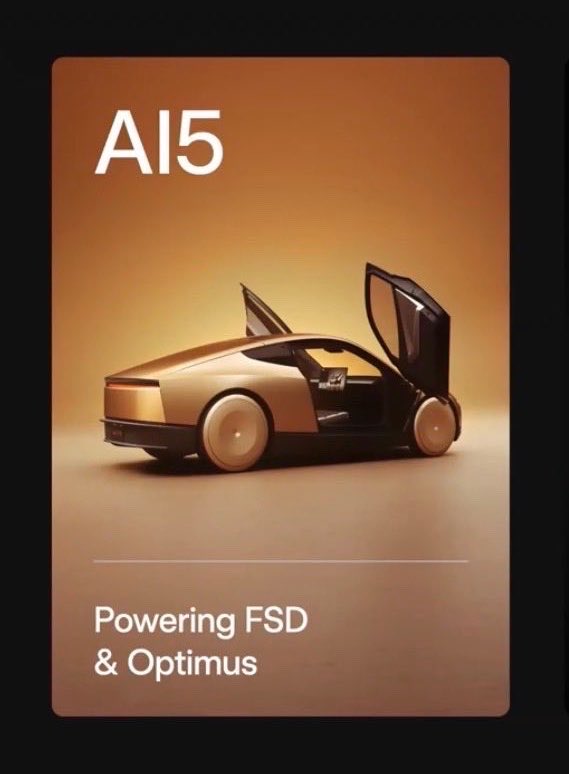
Samsung has reportedly begun prototype production of Tesla's next-generation AI5 chip at its foundry in Taylor, Texas, according to @TeslaNewswire. The 2-nanometer processor is designed to be the shared brain across Tesla's most ambitious hardware programs — Full Self-Driving, the Optimus humanoid robot, and the Cybercab robotaxi. If the timeline holds, it marks the moment Tesla's in-house silicon strategy graduates from tape-out on a slide deck to actual wafers rolling off a US production line.

What's happening at Taylor
According to reports out of Korea (Sedaily, Business Korea) and echoed by Wccftech and SamMobile, Samsung began trial 2nm wafer production on September 15, 2026 — roughly two months earlier than the plant's originally telegraphed November ramp. The move is being framed as a response to surging AI-chip demand, with Tesla as the anchor customer pulling the schedule forward.
Prototype runs are not the same as mass production. They exist to validate process stability and yield before Samsung commits to volume. According to Business Korea, Samsung intends to complete final mass-production verification by the end of 2026 and begin supplying AI5 chips in earnest starting in 2027, with broader volume expected around mid-2027.
Why the AI5 chip matters
The AI5 is the successor to the AI4 (Hardware 4) inference computer currently shipping in Tesla vehicles. It is not a modest refresh. Based on figures Elon Musk and Tesla have discussed publicly and summarized by Electrek and Wccftech, the AI5 is expected to deliver:
- Up to 40x faster AI processing versus AI4
- Roughly 8x more raw compute
- Around 9x larger memory capacity
- About 3x better performance per watt
Those are Tesla's own projected targets rather than benchmarked silicon, so treat them as directional. Even a fraction of that uplift would meaningfully change what neural networks Tesla can run on-vehicle without offloading to the cloud — which is the entire point of building custom inference hardware in the first place.
Key figures
| Item | Detail |
|---|---|
| Process node | Samsung 2nm (Samsung Foundry) |
| Fab location | Taylor, Texas, USA |
| Prototype production start | September 15, 2026 |
| Mass production verification | End of 2026 (targeted) |
| Volume supply | Starting 2027, ramping mid-2027 |
| Tape-out | July 2026 (confirmed by Musk in April 2026) |
| Tesla-Samsung contract value | ~$16.5B (signed 2025, per Business Korea) |
The dual-foundry play
One detail worth pulling out: AI5 is not a Samsung-exclusive part. According to Digitimes and Wccftech, Tesla is running a dual-foundry strategy — Samsung on its 2nm process in Texas, and TSMC producing a version on its 3nm process. Splitting a critical AI chip across two foundries is unusual and expensive. It's also a hedge. If either fab hits yield problems, Tesla is not stranded, and it gives Tesla real leverage in pricing conversations with both partners.
For Samsung, landing Tesla as the launch 2nm customer at Taylor is more than a single contract. It's validation that the fab, which has faced repeated delays since ground-breaking, can actually deliver leading-edge nodes for a US customer at scale.
What this means for Tesla owners and the roadmap
Nothing changes in your car this week. AI5 is not an OTA update — it's silicon, which means it can only reach owners inside new vehicles (or, eventually, as part of a paid Hardware retrofit, which Tesla has hinted at but not committed to for AI5 specifically).
The realistic timeline, if Samsung hits its own targets:
- Late 2026: Mass-production verification complete. Any AI5 hardware in the wild would be engineering samples, not customer cars.
- 2027: Volume supply begins. This is the earliest window for AI5 to show up in production vehicles, likely starting with Cybercab and next-generation Model Y or Model 3 builds.
- Optimus: The AI5 is described in multiple reports as being specifically tuned for Optimus — processing vision and force-torque data locally rather than streaming to a data center. That matters for latency and for the economics of scaling Optimus to production quantities.
The current AI4 hardware in Tesla vehicles will continue to receive FSD updates for years — that has been Tesla's consistent pattern. But the ceiling of what any FSD build can do on AI4 will eventually be reached, and AI5 is the answer to that ceiling.
What to watch next
- Yield reports from Taylor. Samsung's 2nm yields at its Korean fab have been the industry's swing variable. Any credible yield data out of Taylor in Q4 will tell us whether the 2027 volume target is real.
- Tesla Q4 2026 or Q1 2027 earnings commentary. Expect Musk or engineering to reference AI5 progress if the ramp is on track — and to conspicuously not reference it if it isn't.
- Cybercab production timing. Cybercab has been described as an AI5-native platform. Its production start date is now effectively tied to Samsung and TSMC hitting their AI5 supply commitments.
- The TSMC side of the split. If TSMC's 3nm AI5 variant ships in volume before Samsung's 2nm version, the dual-foundry strategy stops looking like a hedge and starts looking like a workaround.
Editor's view
The interesting story here is not the chip specs — Tesla has been telegraphing AI5's performance targets for over a year. The story is the location. A 2nm chip designed by an American automaker, fabbed in Texas by a Korean foundry, powering robots and robotaxis intended for a global market. Five years ago that sentence would have read as fiction. It's still not a finished sentence — prototype production is a milestone, not a shipping product — but it's meaningfully closer to reality than it was 48 hours ago.
🚕 Following the Robotaxi rollout? See every operating city, launch date and announced market in our Tesla Robotaxi Tracker.
🤖 Tracking Tesla's humanoid robot? See every Optimus production milestone and appearance in our Tesla Optimus Tracker.
Related Gear
Gear up your Tesla with tested, custom-fit BASENOR accessories — shop Tesla accessories →
Sources & reporting notes
The links below identify the material source records used for this report.
- @TeslaNewswire on X (2026-09-17T20:30:03.000Z) — Direct source
Source links are preserved as published or accessed. See our editorial standards and corrections policy.
The BASENOR Editorial Desk covers Tesla, SpaceX, and related technology, curating reporting from primary sources — official accounts, regulatory filings, and software release data. Every article passes source-record and fact-checking review before publication. About the newsroom.
This report was curated by the BASENOR Editorial Desk from the sources listed above. Read our editorial standards or email editorial@basenor.com to report an error.