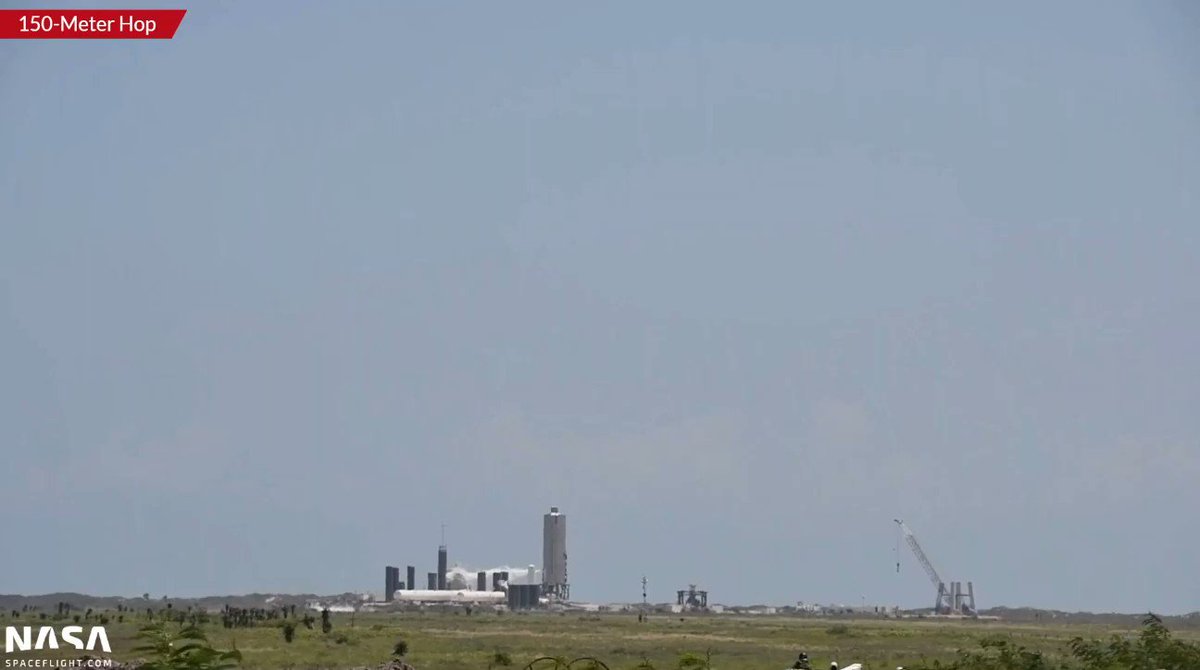
On September 3, 2020, a stubby stainless-steel cylinder rose 150 meters above the South Texas scrubland, hovered briefly, and touched back down. It sounds modest. But that flight — Starship prototype SN6's single-engine hop at Boca Chica — was the moment SpaceX internally decided it was ready to move beyond incremental low-altitude testing and push toward something far more ambitious.

One Month, Two Hops, One Green Light
SN6's flight didn't happen in isolation. Just 30 days earlier, on August 4, 2020, SN5 had become the first full-scale Starship prototype to successfully complete a 150-meter hop — a test that itself had taken months of hardware iteration and scrubbed attempts to achieve. SN5's success proved the basic concept. SN6's success, according to NASASpaceflight, was the confirmation that convinced SpaceX the program was ready to advance.
The distinction matters. A single successful test can be luck. Two back-to-back successes with the same vehicle class, at the same altitude, using the same Raptor engine architecture — that's a pattern. Elon Musk noted at the time that SN6's operation was a "much smoother and faster" turnaround than SN5's, signaling that the ground crew and vehicle processing were maturing alongside the hardware itself.
What SN6 Actually Was
SN6 was powered by a single Raptor engine — specifically Raptor SN29 — and flew from SpaceX's Boca Chica facility in Texas. Like SN5, it had no nose cone, no flaps, and no heat shield. It was essentially a propellant tank with an engine bolted to the bottom, designed to validate flight control, propellant management, and landing leg deployment at low altitude. By those narrow criteria, it delivered exactly what was needed.
SpaceX's strategy at the time was deliberate: run multiple short hops to refine launch and recovery procedures before committing to high-altitude flights. SN6 was the second and final entry in that hop phase. After it landed cleanly, the program pivoted toward the high-altitude, high-velocity tests that would eventually see SN8 attempt a belly-flop maneuver and near-vertical landing — a radically different flight profile that would have been reckless to attempt without the procedural confidence those hops built.
The Distance Traveled Since
Six years is a long time in rocketry. The Starship that exists today — flying orbital-class missions with a fully reusable Super Heavy booster — bears almost no operational resemblance to the stubby prototype that hopped 150 meters over Boca Chica in 2020. The Raptor engine has gone through multiple generations. The vehicle has grown taller, heavier, and more capable. The launch infrastructure at Starbase has been rebuilt around catching and relaunching boosters rather than landing them on legs.
But the engineering logic that SN6 validated — prove the basics, iterate fast, don't skip steps — is the same logic that carried the program from a 150-meter hop to orbital flight. Anniversaries like this one are worth pausing on, not for nostalgia, but because they illustrate how far a disciplined test cadence can take a program in a relatively short span of time.
For anyone tracking Starship's current development trajectory, our SpaceX coverage has the full arc.
🚀 Following the Starship program? See every test flight, official outcome and the next launch window in our SpaceX Starship Tracker.
Sources & reporting notes
The links below identify the material source records used for this report.
- @NASASpaceflight on X (2026-09-03T17:22:31.000Z) — Direct source
Source links are preserved as published or accessed. See our editorial standards and corrections policy.
The BASENOR Editorial Desk covers Tesla, SpaceX, and related technology, curating reporting from primary sources — official accounts, regulatory filings, and software release data. Every article passes source-record and fact-checking review before publication. About the newsroom.
This report was curated by the BASENOR Editorial Desk from the sources listed above. Read our editorial standards or email editorial@basenor.com to report an error.