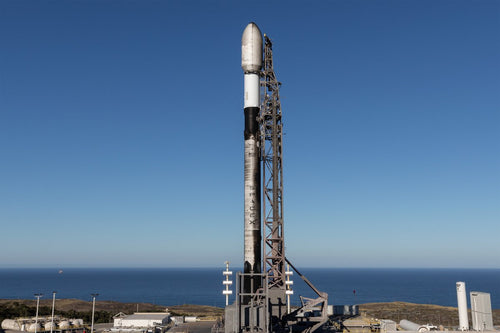
SpaceX has formally asked the Federal Communications Commission for permission to launch its next-generation Starlink V3 satellites for the first time aboard Starship's upcoming Flight 14 test. The request, surfaced Sunday by Sawyer Merritt, would move the V3 program from paperwork to orbit and turn Starship's next integrated flight into an operational Starlink mission rather than a pure test.
If approved, Flight 14 becomes the moment Starship stops being an experimental vehicle and starts earning its keep as the backbone of Starlink's next decade.

What SpaceX Is Asking For
According to the filing referenced by Merritt, SpaceX is seeking authorization to deploy Starlink V3 satellites on Starship's fourteenth integrated flight test. The company frames the mission around a single headline claim: each V3 satellite is designed to support more than 10 times the downlink capacity of the current Starlink fleet, which SpaceX argues will bring "unprecedented" bandwidth to American subscribers.
This is not SpaceX's first V3 paperwork. According to Satnews and SpacePolicyOnline, SpaceX filed a broader Gen3 constellation application with the FCC on July 6, 2026, requesting authorization for up to 100,000 third-generation satellites. This latest request is the specific launch-and-deploy authorization tied to Flight 14 — the piece needed to actually put hardware in orbit.
Why V3 Needs Starship
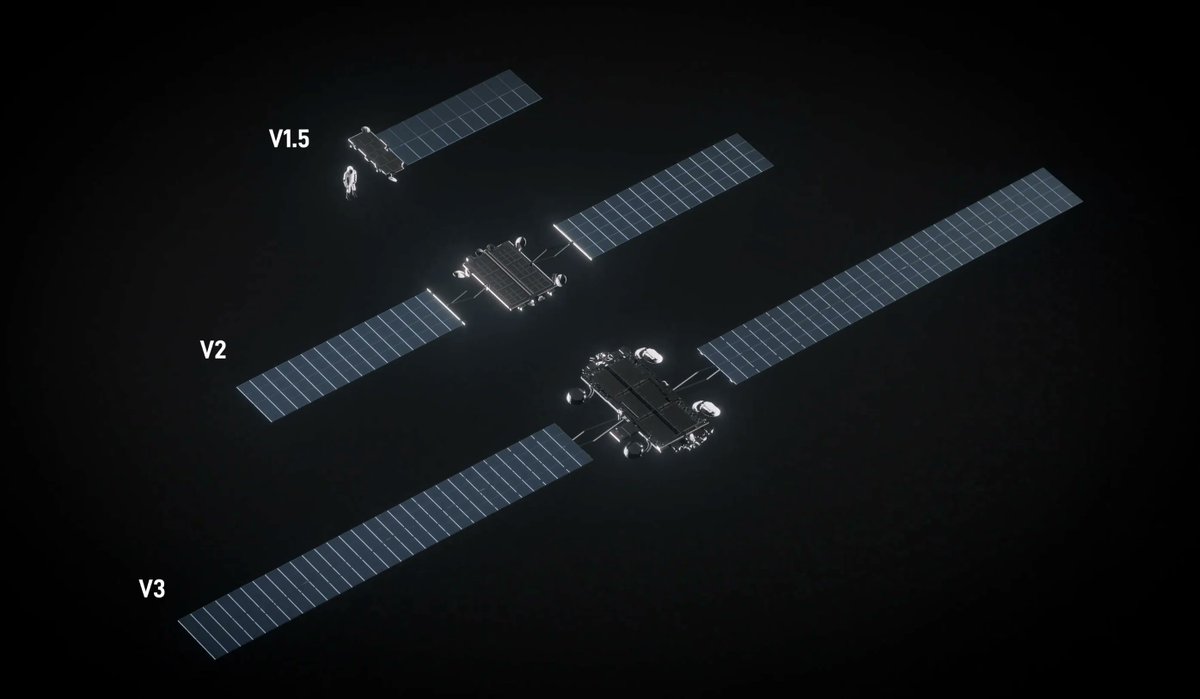
The V3 satellite is a fundamentally different animal from the V2 Mini units Falcon 9 has been launching in stacks of 20-plus. According to SpaceX's own technical disclosures summarized by Satnews and Starlink.com, each V3 satellite weighs roughly 2,000 kg — more than three times the mass of a V2 Mini. That mass, combined with the physical size of the spacecraft, makes them impractical to fly on Falcon 9 in meaningful numbers.
Starship, with its wider fairing volume and dramatically higher payload mass to low Earth orbit, is the only vehicle in SpaceX's fleet that can actually deploy V3s at scale. The company has been explicit that Starship's near-term commercial rationale is Starlink V3 — everything from lunar architecture to Mars talk depends on Starship first proving it can reliably launch, deploy satellites, and come home.
The Capacity Story
The 10x figure in SpaceX's FCC language is conservative compared to what Elon Musk and SpaceX engineers have publicly claimed elsewhere. Based on verified technical filings and reporting, here's what each V3 satellite is designed to do:
| Metric | V2 Mini | V3 |
|---|---|---|
| Downlink throughput | ~100 Gbps | 1 Tbps (~10x) |
| Uplink throughput | ~7 Gbps | 160 Gbps (~22x) |
| Downlink beams | 192 | 2,048 |
| Optical laser links | 3 × 100 Gbps | 6 × 400 Gbps |
| Satellite mass | ~600 kg | ~2,000 kg |
According to Starlink.com's technical documentation, the six 400 Gbps space lasers on each V3 create a "petabit-class" laser mesh — meaning inter-satellite backhaul stops being the bottleneck it currently is on V2. Musk has separately said the overall bandwidth uplift, when the constellation is built out, will be roughly two orders of magnitude — about 100x current capacity.
The Launch Cadence Math
The number SpaceX has been quietly circulating in filings and briefings is 60 Tbps of added network capacity per Starship launch. That's more than 20 times the capacity added by each Falcon 9 V2 Mini flight, according to Satnews. In practice, a small number of successful Starship deployment missions could add more network capacity than a full year of Falcon 9 Starlink launches.
The planned deployment orbit is also lower — approximately 350 km, per SpaceX's technical filings — which is designed to push user latency below 20 milliseconds. That figure matters commercially: sub-20 ms latency is the threshold where satellite broadband becomes genuinely competitive with terrestrial fiber for latency-sensitive applications like cloud gaming and real-time financial trading.
Flight 14: A Test With Real Payload
Historically, Starship's integrated flight tests have carried Starlink mass simulators — dummy payloads designed to prove the deployment mechanism without risking real hardware. Flight 14 is shaping up to be different. If the FCC signs off, SpaceX will be flying operational V3 satellites, which means the mission profile has to include a successful upper-stage burn, deployment sequence, and vehicle disposal — not just a suborbital splashdown.

SpaceX has publicly confirmed that Starship will begin delivering V3 satellites to orbit this year. A firm public launch date for Flight 14 has not been announced as of this filing, though the mission had been planned for late August 2026 timing. FCC approval — or the pace of it — is now one of the gating items on the schedule.
What to Watch Next
Three things worth tracking in the next few weeks:
- FCC action on the launch authorization. The agency can approve, deny, request modifications, or defer. Any of those creates a schedule signal for Flight 14.
- A firm launch date from SpaceX. The company typically confirms Starship flight windows only after key regulatory pieces are in place. A dated announcement would signal FCC has moved.
- Ground segment readiness. V3's massive uplink capacity requires upgraded gateway infrastructure. Watch for FCC filings on new ground stations or expanded spectrum coordination.
Editor's View
The FCC filing reframes what Flight 14 actually is. It's no longer just "can Starship fly and come back" — it's "can Starship start being useful." That's the transition that determines whether SpaceX's entire commercial thesis for the vehicle plays out on schedule or slips into 2027. For Starlink subscribers, especially in the U.S. markets SpaceX highlighted in its filing, the V3 constellation is the answer to the congestion complaints that have piled up as the network has scaled past 5 million users. The paperwork is now in front of regulators. The rocket is the next variable.
🚀 Following the Starship program? See every test flight, official outcome and the next launch window in our SpaceX Starship Tracker.
Sources & reporting notes
The links below identify the material source records used for this report.
- @SawyerMerritt on X (2026-08-31T22:19:28.000Z) — Direct source
- @SawyerMerritt on X (2026-08-31T22:31:58.000Z) — Direct source
Source links are preserved as published or accessed. See our editorial standards and corrections policy.
The BASENOR Editorial Desk covers Tesla, SpaceX, and related technology, curating reporting from primary sources — official accounts, regulatory filings, and software release data. Every article passes source-record and fact-checking review before publication. About the newsroom.
This report was curated by the BASENOR Editorial Desk from the sources listed above. Read our editorial standards or email editorial@basenor.com to report an error.