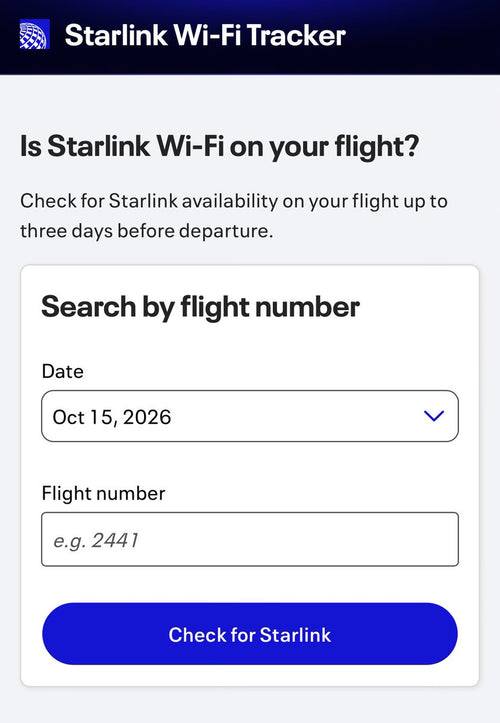
Starlink has confirmed it will deliver high-speed connectivity across Southwest Airlines' entire fleet — a deal that, once complete, would make Southwest the first major U.S. carrier to run satellite internet on every aircraft it operates. The partnership was officially announced in February 2026, the first Starlink-equipped Southwest flight took off on June 22, and the program is now visibly scaling.

Where the Rollout Stands
As of October 2026, 13 of Southwest's 817 Boeing 737s have been fitted with Starlink hardware — roughly 2% of the fleet. Southwest's stated target is to cross 300 equipped aircraft before year-end, which would require a significant installation pace over the next two and a half months. Full fleet-wide completion is targeted for fall 2027, according to Southwest.
Southwest Airlines Starlink Rollout
| Milestone | Detail |
|---|---|
| Partnership announced | February 2026 |
| First flight (Dallas → Albuquerque) | June 22, 2026 |
| Aircraft equipped (Oct 2026) | 13 of 817 (~2%) |
| 2026 year-end target | 300+ aircraft |
| Full fleet completion target | Fall 2027 |
| Total fleet size | 817 Boeing 737s |
What Passengers Actually Get
Starlink Aviation is designed to deliver download speeds of 135–310 Mbps to individual aircraft, with latency under 99 ms. That's a meaningful step up from the legacy satellite and air-to-ground systems that have made in-flight Wi-Fi a punchline for years. According to Starlink, performance antennas can push per-plane throughput to 500 Mbps or higher, though real-world per-passenger speeds depend on how many people are connected simultaneously.
For Southwest passengers specifically, the pricing structure is straightforward: Wi-Fi will be free for Rapid Rewards members, funded through a T-Mobile arrangement. Non-members will have access as well, though Southwest hasn't detailed a separate pricing tier for non-loyalty passengers.
Why This Deal Matters Beyond Southwest
In-flight connectivity has historically been one of aviation's most persistent disappointments — slow, expensive, and unreliable enough that many frequent flyers simply stopped trying. Starlink's low-Earth orbit constellation changes the underlying physics of the problem, and Southwest's all-737 fleet makes it a cleaner integration target than carriers operating mixed fleets across multiple aircraft types.
If Southwest hits its fall 2027 deadline, it becomes a reference case for every other major carrier still evaluating LEO satellite options. The scale of the commitment — 817 aircraft — is also commercially significant for SpaceX's aviation business, which competes with ViaSat and Intelsat for airline contracts. For SpaceX coverage of Starlink's broader expansion, see our SpaceX coverage.
The 13-aircraft figure today versus a 300-aircraft target by December is a wide gap, and Southwest hasn't publicly detailed its installation rate. That's the number worth watching over the next few months — whether the rollout accelerates to match the ambition, or whether the year-end target quietly slips into 2027.
Sources & reporting notes
The links below identify the material source records used for this report.
- @Starlink on X (2026-10-15T19:49:15.000Z) — Direct source
Source links are preserved as published or accessed. See our editorial standards and corrections policy.
The BASENOR Editorial Desk covers Tesla, SpaceX, and related technology, curating reporting from primary sources — official accounts, regulatory filings, and software release data. Every article passes source-record and fact-checking review before publication. About the newsroom.
This report was curated by the BASENOR Editorial Desk from the sources listed above. Read our editorial standards or email editorial@basenor.com to report an error.