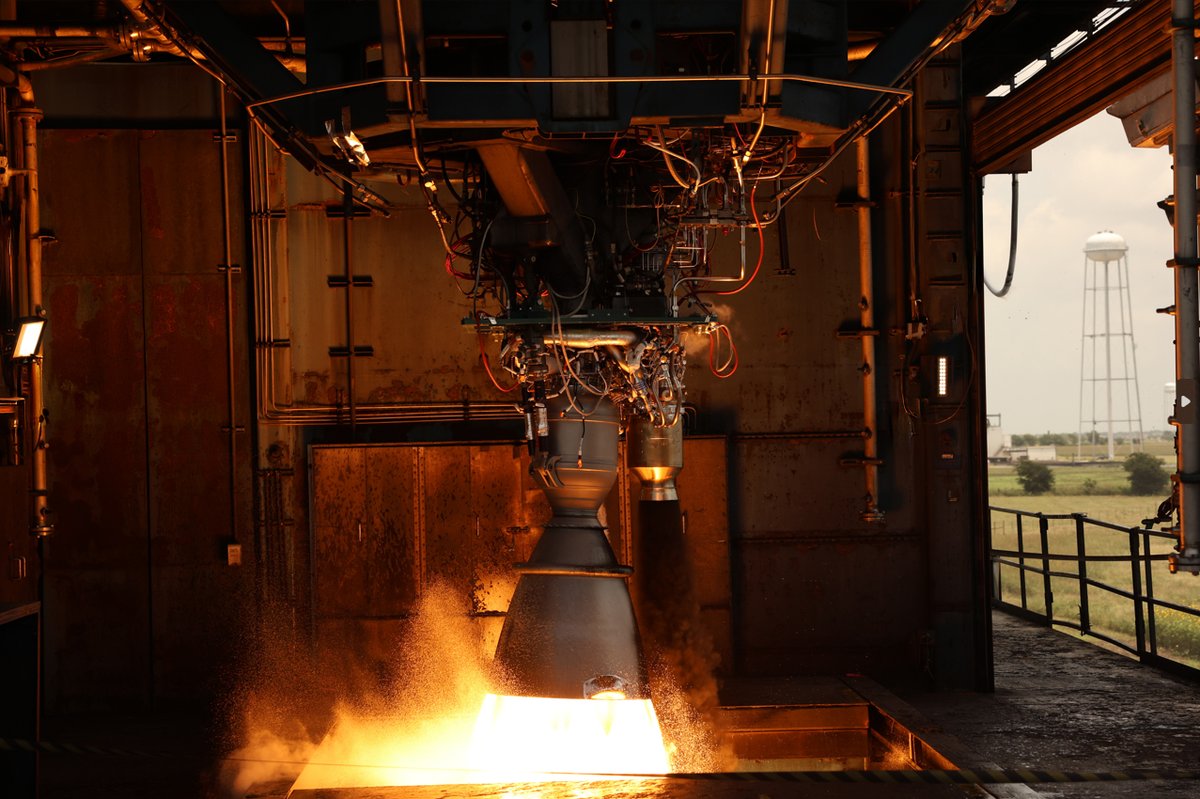
SpaceX has quietly crossed a significant manufacturing threshold: the team at its Hawthorne, California facility has completed the build and acceptance testing of its 1,000th Merlin 1D engine for the Falcon rocket's first stage. It's the kind of number that doesn't come with a launch countdown, but it says a lot about where commercial rocketry has arrived.

The Merlin 1D powers the nine-engine cluster on Falcon 9's first stage, producing 845 kN (roughly 190,000 lbf) of thrust at sea level on a gas-generator cycle burning RP-1 and liquid oxygen. It took SpaceX until October 2014 to reach the 100th unit, and until December 2017 to hit 400. Getting from 400 to 1,000 reflects just how dramatically Falcon's launch cadence — and the recovery program behind it — has scaled.
Reusability is the key word here. Because SpaceX routinely lands and inspects first-stage boosters, engineers have been able to study how Merlins behave across multiple flights, identify wear patterns, and feed those findings back into production. The result, according to SpaceX, is that Merlin has become one of the most reliable rocket engines ever built. Each acceptance test at the McGregor, Texas facility acts as a final quality gate before an engine is cleared for flight — so hitting 1,000 units also means 1,000 engines that cleared that bar.
For a company that is simultaneously developing Raptor engines for Starship, the Merlin milestone is a reminder that Falcon remains the backbone of SpaceX's commercial manifest. As long as Falcon 9 and Falcon Heavy keep flying, the Merlin line keeps running — and the data gathered from each recovered engine keeps making the next batch better. For more on SpaceX's launch program, see our SpaceX coverage.
Sources & reporting notes
The links below identify the material source records used for this report.
- @SpaceX on X (2026-07-01T23:37:09.000Z) — Direct source
Source links are preserved as published or accessed. See our editorial standards and corrections policy.
The BASENOR Editorial Desk covers Tesla, SpaceX, and related technology, curating reporting from primary sources — official accounts, regulatory filings, and software release data. Every article passes source-record and fact-checking review before publication. About the newsroom.
This report was curated by the BASENOR Editorial Desk from the sources listed above. Read our editorial standards or email editorial@basenor.com to report an error.