
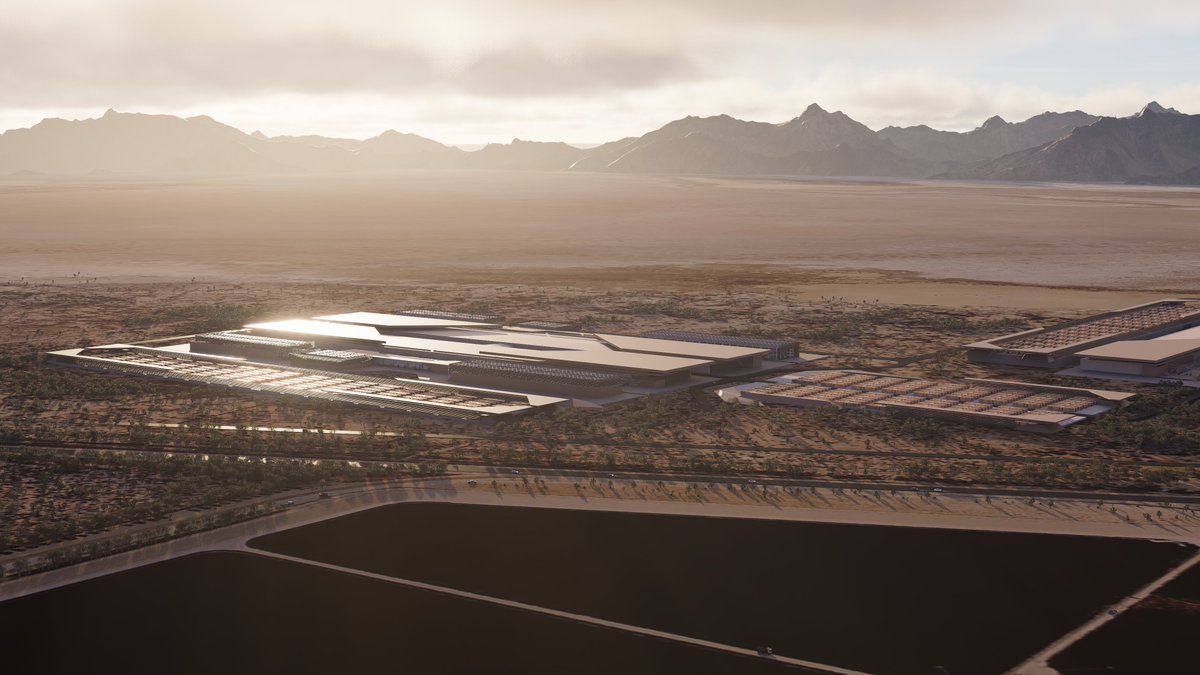
SpaceX has publicly detailed its plans for a massive supercompute campus in Cochise County, Arizona, committing more than $50 billion in investment alongside aggressive environmental and community benefit pledges. In a statement posted Tuesday, the company outlined a project that avoids gas-plant power and industrial groundwater use, promises 1,000 permanent jobs and up to 5,500 construction roles at peak, and bundles in a $3.6 billion grid upgrade that SpaceX says could cut residential electricity rates for local cooperative customers by as much as 40%.
The announcement arrives days before a scheduled December 9 Cochise County Planning and Zoning Commission public hearing — a vote that Arizona Attorney General Kris Mayes has asked the county to postpone pending state and federal review.

What SpaceX Is Proposing
The Cochise campus is one half of a broader AI compute footprint SpaceX is building out. According to filings and local reporting compiled by The Next Web and Fortune, SpaceX's combined Texas and Arizona supercomputing investment totals more than $74 billion, with Arizona accounting for the $50 billion+ figure cited in this week's statement.
The special-use application (SU26-22), filed under the name Cochise Supercomputer Campus by Tombstone Resources LLC on October 30, 2026, lays out the physical scope: approximately 747 acres near the Apache Generating Station and Willcox Playa, with up to nine computing buildings of roughly 493,000 square feet each, delivered in four phases. At full buildout, the site could draw up to six gigawatts of electrical demand — roughly 1.5 GW per phase.
Construction is anticipated to begin in 2027 if the project clears its approvals.
Key Figures
| Metric | Value |
|---|---|
| Total investment (Arizona) | $50 billion+ |
| Grid upgrade commitment | $3.6 billion |
| Permanent jobs | ~1,000 |
| Peak construction jobs | Up to 5,500 |
| Site size | ~747 acres |
| Computing buildings | Up to 9 (~493,000 sq ft each) |
| Peak power demand | Up to 6 GW at full buildout |
| Battery storage | 24 GWh system |
| Potential residential rate change | Up to 40% decrease (SpaceX); up to 20% per earlier filings |
The Environmental Pitch
Cochise County sits in a region where groundwater politics are unusually sensitive, and SpaceX's statement reads as a direct response to that context. The company specifies three commitments: no gas plant on site, no industrial water use, and a dry-cooling closed-loop water system.
According to the special-use application summarized by local outlets including Metrophoenix and Tucsonhired, nonpotable water needs would be met using treated wastewater from the adjoining Apache Generating Station or water trucked in from outside the site, with no new groundwater production wells. For a data center of this scale — up to 6 GW — the choice of dry cooling is the single biggest determinant of water draw, and it's the technical lever that makes the "no industrial water use" claim plausible.
The Grid Math
The $3.6 billion in developer-funded transmission and substation upgrades is the part of the proposal most likely to shape the local political fight. SpaceX is framing it as a net benefit to existing ratepayers: the company pays for its own power and funds grid improvements that, it argues, could reduce residential bills for Sulphur Springs Valley Electric Cooperative (SSVEC) customers by up to 40%.
That number is notably higher than earlier filings referenced in reporting from Fortune and Convergedigest, which cited a potential reduction of up to 20% for cooperative members. The gap between the two figures is likely a modeling question — rate impacts depend on load factor, financing assumptions, and how transmission costs are allocated — but it's the kind of number that regulators and intervenors will scrutinize closely.
Also bundled into the grid package: a 24 gigawatt-hour battery storage system, which would be one of the largest in the country if built at that scale.
The Approval Fight Ahead
The project is not yet approved. The Cochise County Planning and Zoning Commission is scheduled to hear the application on December 9, and SpaceX's statement explicitly asks the Commission to keep that date on the calendar: "We're asking the Commission to keep it and let residents be heard."
That language is a response to Arizona Attorney General Kris Mayes, who has publicly requested a postponement to allow state and federal agencies time to review the project. Mayes' intervention, reported by Newsweek and Fortune, raises the profile of the hearing considerably — a county zoning vote has become a de facto state-level test of how Arizona handles very large AI compute siting.
Why It Matters Beyond Arizona
The Cochise announcement is part of a pattern worth watching. SpaceX's expanding AI compute footprint sits alongside xAI's Memphis buildout and Tesla's own Dojo and Cortex compute programs — all three Musk-led entities are now committing to multi-gigawatt data center capacity on timelines that compress traditional utility planning cycles.
It also lands in the middle of a corporate reorganization story BASENOR has been tracking: earlier this week we reported on the five directors named to negotiate a potential Tesla-SpaceX combination, and last week HSBC cited SpaceX's valuation trajectory in its upgrade of Tesla to Hold. A $50 billion-plus compute campus in Arizona — funded by SpaceX, not Tesla — is another data point for anyone modeling how the two balance sheets may eventually combine. For more on SpaceX's broader operational pace, see our SpaceX coverage.
What to Watch Next
- December 9: Cochise County Planning and Zoning Commission public hearing — the first formal vote on SU26-22.
- AG intervention: Whether the Commission grants or denies Attorney General Mayes' postponement request will signal how much state-level scrutiny the project faces before groundbreaking.
- SSVEC rate filing: Any formal rate case or cost-allocation filing with Arizona utility regulators will test the "up to 40%" residential savings claim.
- 2027 construction start: Earliest realistic groundbreaking if approvals clear on schedule.
SpaceX has committed, publicly and on the record, to a project whose political and technical scale matches its investment number. The December 9 hearing will be the first real measure of whether the Cochise community agrees with the pitch.
Sources & reporting notes
The links below identify the material source records used for this report.
- @SpaceX on X (2026-11-25T17:07:12.000Z) — Direct source
Source links are preserved as published or accessed. See our editorial standards and corrections policy.
The BASENOR Editorial Desk covers Tesla, SpaceX, and related technology, curating reporting from primary sources — official accounts, regulatory filings, and software release data. Every article passes source-record and fact-checking review before publication. About the newsroom.
This report was curated by the BASENOR Editorial Desk from the sources listed above. Read our editorial standards or email editorial@basenor.com to report an error.