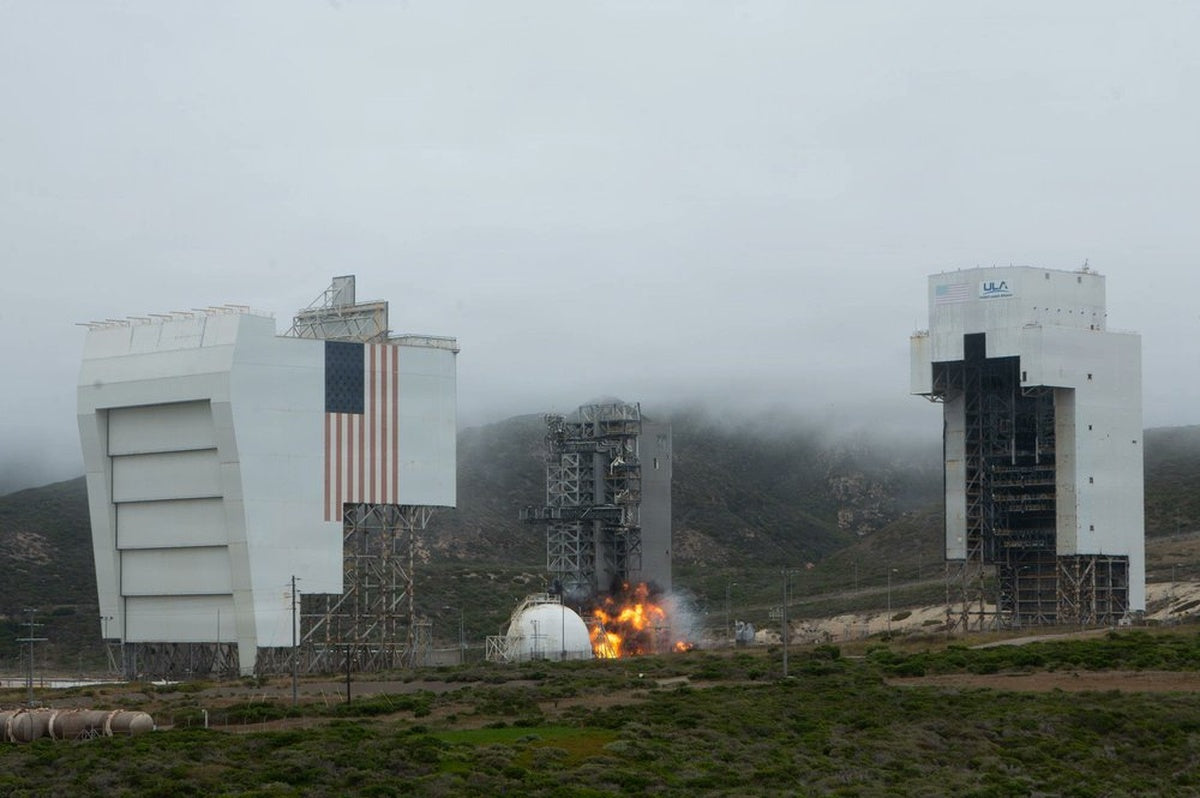
SpaceX took a significant step at Vandenberg Space Force Base on June 16, 2026, demolishing decades-old infrastructure at Space Launch Complex 6 — clearing the way for a full rebuild that could double the West Coast launch rate to 100 missions per year. The language used in the announcement caught observers' attention: SpaceX described the work as supporting 'next generation spacelift operations,' a phrase that carries weight given SLC-6's complicated history.

As NASASpaceflight noted, the 'next generation' framing is interesting precisely because of SLC-6's backstory. The pad was originally built for the Manned Orbiting Laboratory in the 1960s, later adapted for the Space Shuttle (which never flew from it), and then used by the Delta IV. Falcon 9 is already a generational leap over that history — but the phrasing leaves open the question of what SpaceX is ultimately planning for the site long-term.
What Was Demolished and What Gets Built
On June 16, the Mobile Service Tower (MST), Fixed Umbilical Tower (FUT), and Tail Service Masts (TSMs) — all legacy structures from prior programs — came down. These were the last major remnants of the pad's pre-SpaceX configuration.
What replaces them is a purpose-built Falcon-optimized complex. According to planning documents, SpaceX will modify or construct a new 62,000-square-foot horizontal integration facility, add a transport road with rails to the pad, and install commodity storage tanks for liquid oxygen and RP-1. A 200-foot water tower is also planned — Falcon Heavy launches alone will require approximately 1.5 million gallons of water per launch for the deluge system, while Falcon 9 missions need around 200,000 gallons each.
Two new landing pads, each 280 feet in diameter with a 60-foot gravel apron, will be constructed adjacent to SLC-6 to support booster recovery on the West Coast — something currently not possible at Vandenberg at scale.
The Numbers Behind the Expansion
The strategic rationale is straightforward: demand for polar and sun-synchronous orbit launches — the kind Vandenberg is positioned for — is growing, and SLC-4E alone can't keep up. The Department of the Air Force finalized approvals in October 2025 for SpaceX to redevelop SLC-6, raising the total annual launch ceiling across both pads from 50 to up to 100 missions.
By 2027, SpaceX is targeting approximately 25 Falcon 9 and 5 Falcon Heavy missions annually from SLC-6 alone, alongside continued operations at SLC-4E. The first Falcon Heavy launch from Vandenberg is expected to originate from SLC-6 — a significant milestone for national security payloads that require the heavy-lift vehicle on a polar trajectory.
Initial Falcon launches from the rebuilt pad are targeted for 2026, with the full modernization work expected to span roughly 18 months from late 2025 construction start.
The 'Next Generation' Question
The phrase that sparked the most discussion — 'next generation spacelift operations' — almost certainly refers to Falcon Heavy in the near term, given that the vehicle has never flown from Vandenberg and represents a genuine capability step up for the West Coast range. SpaceX secured the SLC-6 lease from the U.S. Space Force in April 2023 with Falcon 9 and Falcon Heavy explicitly named as the target vehicles.
Whether the wording hints at anything beyond Falcon — Starship, for instance — remains speculative. Vandenberg does not currently have Starship infrastructure, and the environmental and regulatory pathway for such a project would be substantial. For now, the concrete plans point to a Falcon-centric buildout, with the 'next generation' label reflecting the pad's historical context as much as any forward-looking ambition.
What's not in question is the scale of the commitment. Doubling Vandenberg's launch cadence, adding booster landing infrastructure, and rebuilding a pad from the ground up represents one of SpaceX's most significant West Coast investments to date — and the demolition this week marks the point of no return on that bet.
Sources & reporting notes
The links below identify the material source records used for this report.
- @NASASpaceflight on X (2026-06-17T02:01:41.000Z) — Direct source
Source links are preserved as published or accessed. See our editorial standards and corrections policy.
The BASENOR Editorial Desk covers Tesla, SpaceX, and related technology, curating reporting from primary sources — official accounts, regulatory filings, and software release data. Every article passes source-record and fact-checking review before publication. About the newsroom.
This report was curated by the BASENOR Editorial Desk from the sources listed above. Read our editorial standards or email editorial@basenor.com to report an error.