

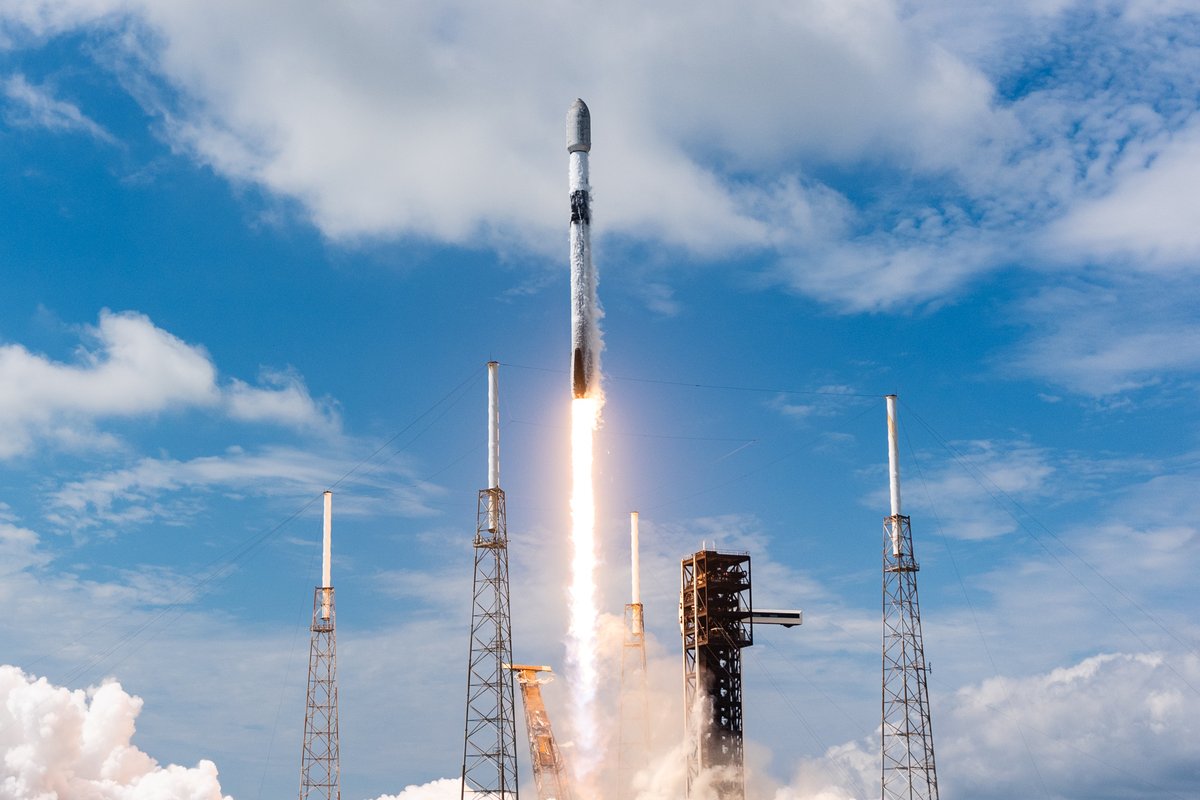
SpaceX added another 29 satellites to its Starlink constellation on August 21, 2026, with a Falcon 9 lifting off from Cape Canaveral and the booster pulling off its 30th landing — a quiet milestone that underscores just how routine reusability has become for the company.
What Happened
The Falcon 9 lifted off at 11:14 a.m. EDT from Space Launch Complex 40 at Cape Canaveral Space Force Station in Florida. Approximately 8.5 minutes after launch, the first stage booster — designated B1078 — touched down on the droneship A Shortfall of Gravitas in the Atlantic Ocean. That landing marked B1078's 30th flight and recovery, according to Space.com.
Satellite deployment was confirmed roughly 61.5 minutes after liftoff, with SpaceX posting the official confirmation to X shortly after.

Where the Constellation Stands
With this batch integrated, the Starlink network now sits at nearly 11,000 operational spacecraft in low Earth orbit, according to Space.com. That figure represents a network built almost entirely on reusable hardware — the same Falcon 9 first stages flying again and again to keep cadence high and cost per satellite low.
B1078's 30th flight is worth pausing on. When SpaceX first demonstrated booster reuse, the engineering target was roughly ten flights per core. Tripling that number with the same hardware is a meaningful data point on long-term reliability, and it directly informs the economics of keeping Starlink's launch rate sustainable at scale.
| Detail | Value |
|---|---|
| Launch time | 11:14 a.m. EDT (1514 GMT) |
| Launch site | SLC-40, Cape Canaveral Space Force Station, Florida |
| Booster | B1078 — 30th flight |
| Landing | A Shortfall of Gravitas, ~8.5 min after launch |
| Satellites deployed | 29 Starlink spacecraft (~61.5 min after liftoff) |
| Total constellation size | ~11,000 operational spacecraft |
For more on SpaceX's launch cadence and constellation milestones, see our SpaceX coverage.
The pace SpaceX is sustaining — dozens of satellites per flight, multiple flights per month — keeps pressure on any rival attempting to build a comparable broadband network from scratch. Each incremental batch also adds redundancy and capacity to a system that Starlink's commercial and government customers increasingly depend on. Whether the constellation's next significant threshold is 12,000 or 15,000 active satellites, the trajectory from today's launch makes the answer a matter of when, not if.
Sources & reporting notes
The links below identify the material source records used for this report.
- @SpaceX on X (2026-08-21T16:16:36.000Z) — Direct source
- @SpaceX on X (2026-08-21T16:42:47.000Z) — Direct source
Source links are preserved as published or accessed. See our editorial standards and corrections policy.
The BASENOR Editorial Desk covers Tesla, SpaceX, and related technology, curating reporting from primary sources — official accounts, regulatory filings, and software release data. Every article passes source-record and fact-checking review before publication. About the newsroom.
This report was curated by the BASENOR Editorial Desk from the sources listed above. Read our editorial standards or email editorial@basenor.com to report an error.






