SpaceX's Falcon rocket family crossed 700 total missions on September 13, 2026 — a number that would have seemed implausible when the original Falcon 1 first flew in 2006. The milestone came on a commercial satellite mission, which is fitting: Falcon's dominance was built launch by launch on the back of paying customers, not government prestige projects.

The Mission That Closed Out 700
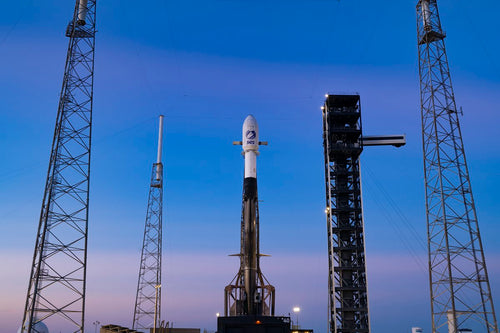
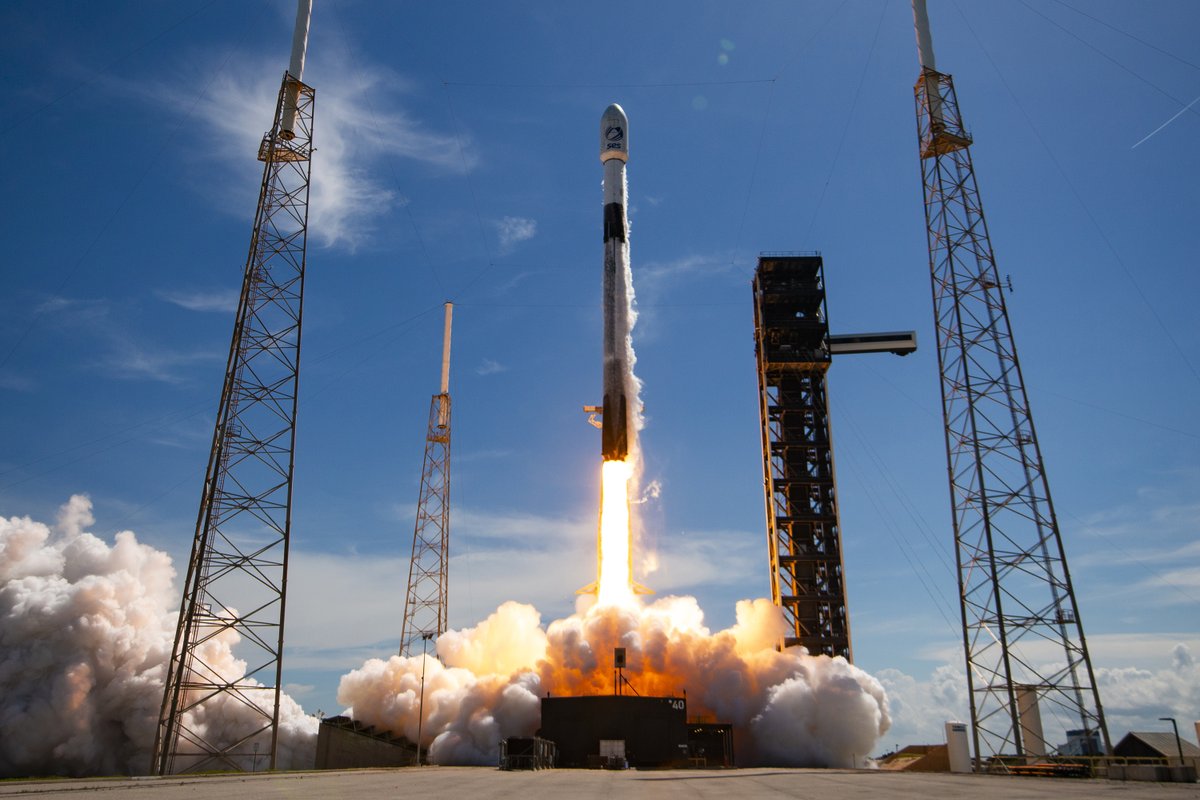
The 700th launch was the O3b mPOWER F mission, carrying the final three O3b mPOWER satellites for SES — a Luxembourg-based operator building out a medium-Earth-orbit broadband constellation. The Falcon 9 lifted off from Space Launch Complex 40 at Cape Canaveral Space Force Station in Florida. As of September 10, the fleet stood at 699 launches, making this mission the one that turned the odometer.

The Numbers Behind the Milestone
| Metric | Figure |
|---|---|
| Total Falcon missions | 700 |
| Falcon 9 Block 5 launches (since May 2018) | 630 |
| Falcon Heavy launches (since Feb 2018) | 13 |
| Booster landing attempts | 670 |
| Successful booster landings | 657 |
| Booster landing success rate | 98% |
| Record missions by a single booster (B1067) | 37 |
| Fairing halves reflown | 300+ |

What Reusability Actually Built
The 98% booster landing success rate is the number that explains everything else. When SpaceX first landed an orbital-class booster in December 2015, the aerospace industry's prevailing view was that reusability would prove too operationally complex to deliver meaningful cost savings. Ten years later, booster B1067 has flown 37 times — a single rocket core that has done more missions than many entire national launch programs.
The fairing recovery program, often overlooked, tells a similar story. Reflying fairing halves more than 300 times removes what was once a $6 million per-launch expendable cost. Multiply that across hundreds of missions and the economics compound quickly — which is precisely why Falcon 9 has captured the majority of commercial launch contracts globally.

Context: Block 5 Did the Heavy Lifting
Of the 700 total missions, 630 belong to Falcon 9 Block 5 alone — the variant introduced in May 2018 that was specifically designed for rapid reuse. Block 5 is what turned reusability from a proof-of-concept into a production operation. Falcon Heavy, which uses three Block 5 cores strapped together, accounts for 13 of those 700, handling the heaviest payloads the fleet carries.
The pace has also accelerated sharply. SpaceX's first 100 Falcon launches took roughly a decade. The most recent 100 have come in well under two years, driven largely by Starlink constellation builds and a full commercial manifest. For the full SpaceX coverage on how that cadence is shaping the broader space economy, the trajectory points in one direction.
The 800th mission will arrive faster than the 700th did. At current launch rates, SpaceX is on pace to hit that mark within roughly 18 months — assuming no major anomalies and the Starlink V3 deployment schedule holds. The more interesting question is whether Starship's eventual operational cadence starts absorbing some of the manifest that Falcon 9 currently owns outright.
Sources & reporting notes
The links below identify the material source records used for this report.
- @SpaceX on X (2026-09-13T20:45:15.000Z) — Direct source
Source links are preserved as published or accessed. See our editorial standards and corrections policy.
The BASENOR Editorial Desk covers Tesla, SpaceX, and related technology, curating reporting from primary sources — official accounts, regulatory filings, and software release data. Every article passes source-record and fact-checking review before publication. About the newsroom.
This report was curated by the BASENOR Editorial Desk from the sources listed above. Read our editorial standards or email editorial@basenor.com to report an error.