📌 UPDATE — August 4, 2026
SpaceX's Q2 earnings call has sent shockwaves through the telecom sector: Verizon, AT&T, and T-Mobile each dropped 4.5% in after-hours trading following remarks from SpaceX President Gwynne Shotwell on Starlink Mobile's trajectory. Analyst and tech commentator Sawyer Merritt called the market reaction a sign that "people are sleeping on Starlink Mobile," arguing the service's disruptive potential to legacy carriers remains vastly underappreciated. The stock moves suggest Wall Street is beginning to price in a more serious competitive threat than previously modeled. Starlink Mobile's path to full global direct-to-device coverage by end of 2028 now carries significantly higher strategic weight for the broader wireless industry.
@SawyerMerritt · Aug 4, 2026
"Verizon, AT&T and T-Mobile's stock all dropped by 4.5% in after-hours trading after these comments from Gwynne."

📌 UPDATE — August 4, 2026
SpaceX President Gwynne Shotwell has detailed a concrete mechanism for Starlink's mobile cellular ambitions: ground-based repeaters that tap into satellite backhaul and rebroadcast cellular service locally — a model that would let Starlink compete directly with traditional carriers like AT&T and Verizon without relying solely on direct satellite-to-handset links. Shotwell indicated the service is targeted to launch by end of 2027. This ground-repeater architecture is a notable addition to the D2D strategy outlined in the original article, potentially accelerating real-world coverage density well ahead of the full global D2D rollout planned for 2028.
"Shotwell explains a plan to have Starlink mobile repeaters on ground that connect to the satellite backhaul and broadcast cellular service on the ground" — @wholemars, Aug 4, 2026
📌 UPDATE — August 4, 2026
On the eve of SpaceX's first-ever financial results meeting, aerial footage from Joe Tegtmeyer reveals significant construction activity at the Starlink dish production facility in Bastrop, Texas. The factory has already grown to rival the size of SpaceX's Star Factory, underscoring the scale of Starlink hardware manufacturing ahead of the company's inaugural earnings presentation. The timing of the expansion footage highlights how SpaceX is ramping production capacity as Starlink pushes toward full global direct-to-device coverage by end of 2028. No financial figures from the results meeting have been disclosed yet.
SpaceX enters uncharted territory today as it prepares to release its first-ever quarterly earnings report as a publicly traded company. The report, due after markets close, arrives alongside a fresh regulatory filing that lays out one of the most ambitious timelines in the satellite industry: continuous full global direct-to-device (D2D) coverage from Starlink by the end of 2028, powered by thousands of additional satellites.
The dual disclosure — a financial milestone paired with a long-range strategic roadmap — gives investors and Tesla-adjacent watchers their clearest look yet at how Elon Musk's rocket company plans to convert Starlink dominance into durable, market-leading revenue.

The Earnings Backdrop
SpaceX went public on June 12, 2026, in what became the largest IPO in market history, pricing shares at $135. Since then, the stock has taken a bruising. According to trading data referenced across financial outlets, SPCX was trading near $119.53 on August 4 — down roughly 11% from IPO and about 47% off its June 16 intraday high of $225.64. Today's report is the first opportunity for management to reset the narrative with actual numbers rather than pre-IPO projections.
Expectations are mixed. For full-year 2025, SpaceX reported $18.7 billion in revenue against a net loss north of $4.9 billion, according to pre-IPO disclosures. Analysts polled ahead of today's release are modeling Q2 2026 revenue near $6.9 billion — driven almost entirely by Starlink — with a net loss of approximately $1.9 billion. Some forecasts suggest first-half 2026 losses could exceed $5 billion as Starship development and constellation buildout continue to consume cash.
Key Figures Heading Into the Print
| Metric | Value | Notes |
|---|---|---|
| IPO price (June 12, 2026) | $135.00 | Largest IPO in history |
| Stock price (Aug 4, 2026) | ~$119.53 | −11% from IPO |
| Est. Q2 2026 revenue | ~$6.9B | Analyst consensus |
| Est. Q2 2026 net loss | ~$1.9B | Per analyst forecasts |
| Q1 2026 Connectivity revenue | $3.26B | $1.19B operating income |
| Q1 2026 Space (rockets) revenue | $619M | $662M operating loss |
| Q1 2026 AI segment revenue | $818M | Includes xAI contribution |
The Q1 breakdown is instructive: Starlink is already carrying the company financially, generating more than five times the revenue of the launch business and producing meaningful operating income while rockets continue to run at a loss. That structural imbalance is exactly why today's second disclosure matters so much.
Starlink's 2028 Direct-to-Device Roadmap
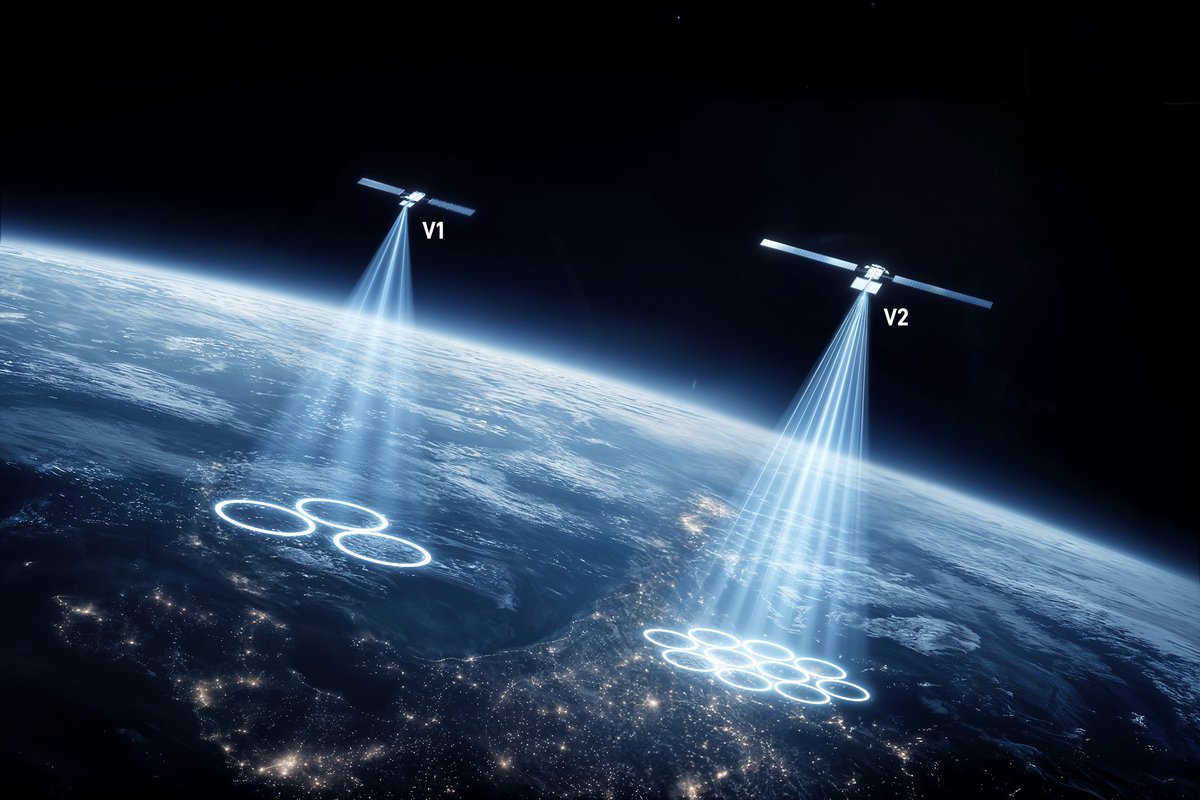
In a filing shared publicly by @SawyerMerritt, SpaceX stated that "by the end of 2028, Starlink Mobile will have already rapidly upgraded the constellation by launching thousands more satellites, providing continuous full global coverage to become the first — and most likely the only — direct-to-device provider" offering true global service.

The scale of the buildout is significant. Starlink Mobile currently operates with roughly 650 direct-to-device satellites, according to reporting from PCMag and Broadband Breakfast. To hit continuous global D2D coverage, SpaceX plans to migrate to a second-generation constellation that could ultimately include up to 15,000 satellites — pending FCC approval. That expansion is dependent on Starship being reliable enough to serve as the primary delivery vehicle for the new spacecraft.
The filing also outlines interim milestones: next-generation Starlink D2D satellites are expected to begin launching soon, with service commencing by late 2027. Life-saving data services to partners are targeted for Q3 2027, with voice services following within months. SpaceX has also secured rights to a portion of EchoStar's spectrum in a $17 billion deal announced earlier this year, giving it the licensed bandwidth required to run a global direct-to-cell business at scale.
How We Got Here
Direct-to-device satellite service — the ability for an unmodified smartphone to connect directly to a satellite — has quickly become the most contested frontier in space communications. Apple partnered with Globalstar for emergency SOS. AT&T teamed up with AST SpaceMobile. Verizon signed a partnership with Skylo. But none of those efforts are close to true continuous global coverage; they either work in narrow bands, require specific device support, or cover only limited geographies.
SpaceX's advantage is vertical integration: it owns the rockets, the satellites, and the ground infrastructure, and it has the launch cadence — Falcon 9 today, Starship tomorrow — to deploy thousands of satellites on a schedule no competitor can match. The EchoStar spectrum deal removed the last major licensing obstacle in the U.S. market, and the T-Mobile partnership already brings basic texting D2D service to American consumers today.
Why This Matters for the Broader Musk Ecosystem
For Tesla owners and investors watching from the sidelines, the SpaceX story is increasingly relevant. Musk has repeatedly framed Starlink as a candidate for future in-vehicle connectivity, and Cybertruck already ships with Starlink-compatible provisioning language in some early marketing materials. A true global D2D network by 2028 would open the door to vehicle-to-satellite links that no longer depend on cellular carrier coverage — a potentially significant enabler for Robotaxi deployments in remote regions, off-grid navigation, and emergency connectivity.
Today's earnings report is also the first stress test for a Musk-run public company whose valuation now depends on Wall Street's quarterly rhythms rather than private-round secondaries. How management frames the Starlink profitability curve, Starship's cost trajectory, and the D2D capex ramp will set the tone for every quarter that follows.
What to Watch Next
- 4:00 p.m. ET today — Q2 2026 earnings release; watch Starlink subscriber numbers and Connectivity segment operating margin.
- 4:30 p.m. ET today — Analyst call; look for guidance on Starship's role in D2D constellation deployment.
- Late 2027 — Target for D2D service commencement using next-gen satellites.
- Q3 2027 — Life-saving data services to partners; voice services expected months later.
- FCC decision — Approval (or denial) of the up-to-15,000-satellite Gen2 constellation.
The Bottom Line
SpaceX is pitching investors a story where Starlink funds the entire company while Starship and D2D extend that lead into a market with no serious global competition. Today's numbers will tell us how close that story is to reality — and the 2028 filing tells us how far the company is willing to stretch on the timeline. Both matter. The next four hours may be the most consequential earnings window Musk has ever faced.
🚀 Following the Starship program? See every test flight, official outcome and the next launch window in our SpaceX Starship Tracker.
Related Gear
Gear up your Tesla with tested, custom-fit BASENOR accessories — shop Tesla accessories →
Sources & reporting notes
The links below identify the material source records used for this report.
- @SawyerMerritt on X (2026-08-03T23:06:20.000Z) — Direct source
- @SawyerMerritt on X (2026-08-03T23:06:21.000Z) — Direct source
- @SawyerMerritt on X (2026-08-04T07:00:00.000Z) — Direct source
Source links are preserved as published or accessed. See our editorial standards and corrections policy.
The BASENOR Editorial Desk covers Tesla, SpaceX, and related technology, curating reporting from primary sources — official accounts, regulatory filings, and software release data. Every article passes source-record and fact-checking review before publication. About the newsroom.
This report was curated by the BASENOR Editorial Desk from the sources listed above. Read our editorial standards or email editorial@basenor.com to report an error.