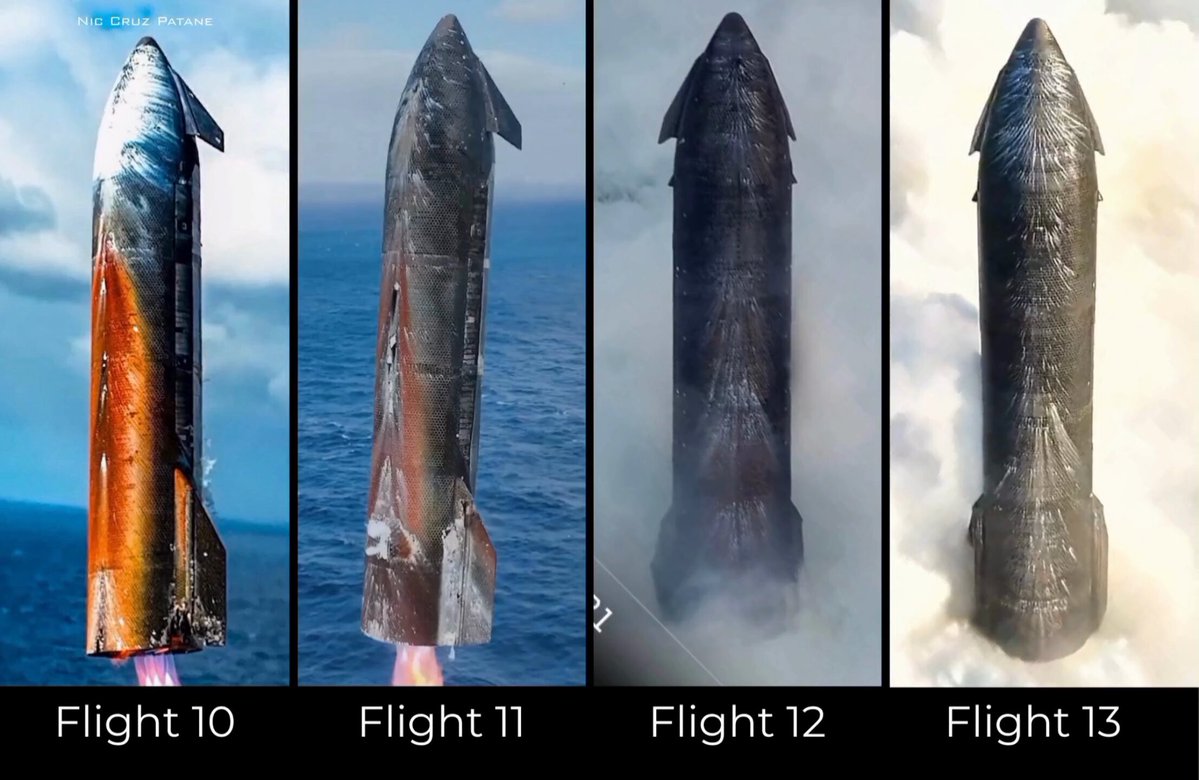
Elon Musk confirmed on August 23 that SpaceX has graduated beyond off-the-shelf 301 stainless steel for Starship construction, revealing the company has developed its own proprietary alloys. The disclosure, made in a reply on X, is a quiet but significant signal: SpaceX is no longer just a sophisticated buyer of industrial materials — it is now a materials developer in its own right.

How We Got Here: Steel as a Strategic Choice
When Musk first announced Starship would be built from stainless steel in late 2018, the aerospace community was skeptical. Carbon fiber had been the prestige material of choice for rockets — lighter, seemingly more advanced. But Musk's reasoning was grounded in physics and economics. Stainless steel melts above 1,000°C, meaning the vehicle can tolerate re-entry heat loads that would destroy carbon fiber structures, which weaken beyond roughly 200°C. That thermal tolerance directly reduces the complexity and mass of the heat shield system. Steel also gets stronger, not brittle, at cryogenic propellant temperatures — a critical property for liquid oxygen and methane tanks.
Early Starship prototypes, including the Mk1 vehicle unveiled in 2019, used standard 301 stainless steel — a widely available, relatively inexpensive grade. By early 2020, according to reporting at the time, SpaceX had already shifted key structural sections to 304L, a grade with superior cryogenic strengthening properties better suited to propellant tank walls. That transition was the first sign SpaceX was treating material selection as an engineering variable, not a procurement decision.
The Proprietary 30X Alloy
The alloy SpaceX has developed — referred to in engineering circles as "30X steel" — is a patented formulation within the 300-series stainless family, built on a modified 304L base. It is optimized specifically for Starship's unique load cases: the combination of cryogenic propellant exposure, extreme re-entry thermal cycling, and the structural demands of a fully reusable vehicle that must survive dozens of flights.
The economics remain compelling. According to background research, 30X steel costs slightly above €3.6 per kilogram — a fraction of the roughly $40 per kilogram that aluminum-lithium alloys command. That cost differential matters enormously at Starship's scale. The vehicle is the largest rocket ever built, and SpaceX's stated ambition is to manufacture it at high volume for Mars missions. A material that is both technically superior for this application and an order of magnitude cheaper than the aerospace-grade alternative is a genuine competitive advantage.
| Material | Era | Approx. Cost/kg | Key Limitation |
|---|---|---|---|
| 301 Stainless Steel | Mk1 prototypes, 2019 | ~$4 | Standard grade, not optimized for cryogenic cycling |
| 304L Stainless Steel | Transition, 2020 | ~$4 | Off-the-shelf; not tailored to Starship load cases |
| SpaceX 30X (proprietary) | Current production | ~€3.6+ | Proprietary — SpaceX controls supply chain |
| Aluminum-Lithium | Industry alternative | ~$40 | Poor cryogenic performance, high cost, complex fabrication |
What It Signals About the Starship Program
Developing a patented aerospace alloy is not a casual undertaking. It requires metallurgical research, extensive testing under simulated flight conditions, and qualification across the manufacturing process. The fact that SpaceX has done this — and that Musk is now comfortable confirming it publicly — suggests the 30X material has accumulated enough flight heritage to be considered mature.
The timing of the disclosure also coincides with the Starship V3 architecture, the refined vehicle configuration that has been in active flight testing through 2026. Observations of prototype vehicles including Ship 45 and S39 earlier this year showed continued iteration on the thermal protection system, with new white-colored heat shield tiles and experimental metal heat shield panels appearing on test articles. A more capable structural alloy and an evolving TPS are complementary developments: both reduce the thermal and structural margins the vehicle needs to carry, which translates directly into payload capacity and reusability.
For the broader aerospace industry, the implication is worth noting. SpaceX began as a launch services company that bought materials from existing suppliers. It is now a vertically integrated operation that designs its own engines, develops its own propellants infrastructure, and — as of today's confirmation — formulates its own structural alloys. Each step up that vertical stack reduces dependence on external supply chains and gives SpaceX tighter control over cost, quality, and iteration speed. That is a structural advantage that compounds over time, and it is one reason the gap between SpaceX and its competitors in heavy-lift reusability remains as wide as it does.
The full technical specifications of 30X steel remain proprietary, and SpaceX has not disclosed which specific flights have used the new alloy exclusively. But Musk's confirmation that 301 is no longer in use draws a clear line: the Starship flying today is built from a material that did not exist as a commercial product when the program started. That is a meaningful engineering milestone, even if it arrived quietly in a reply thread.
🚀 Following the Starship program? See every test flight, official outcome and the next launch window in our SpaceX Starship Tracker.
Sources & reporting notes
The links below identify the material source records used for this report.
- @elonmusk on X (2026-08-23T20:05:48.000Z) — Direct source
Source links are preserved as published or accessed. See our editorial standards and corrections policy.
The BASENOR Editorial Desk covers Tesla, SpaceX, and related technology, curating reporting from primary sources — official accounts, regulatory filings, and software release data. Every article passes source-record and fact-checking review before publication. About the newsroom.
This report was curated by the BASENOR Editorial Desk from the sources listed above. Read our editorial standards or email editorial@basenor.com to report an error.