
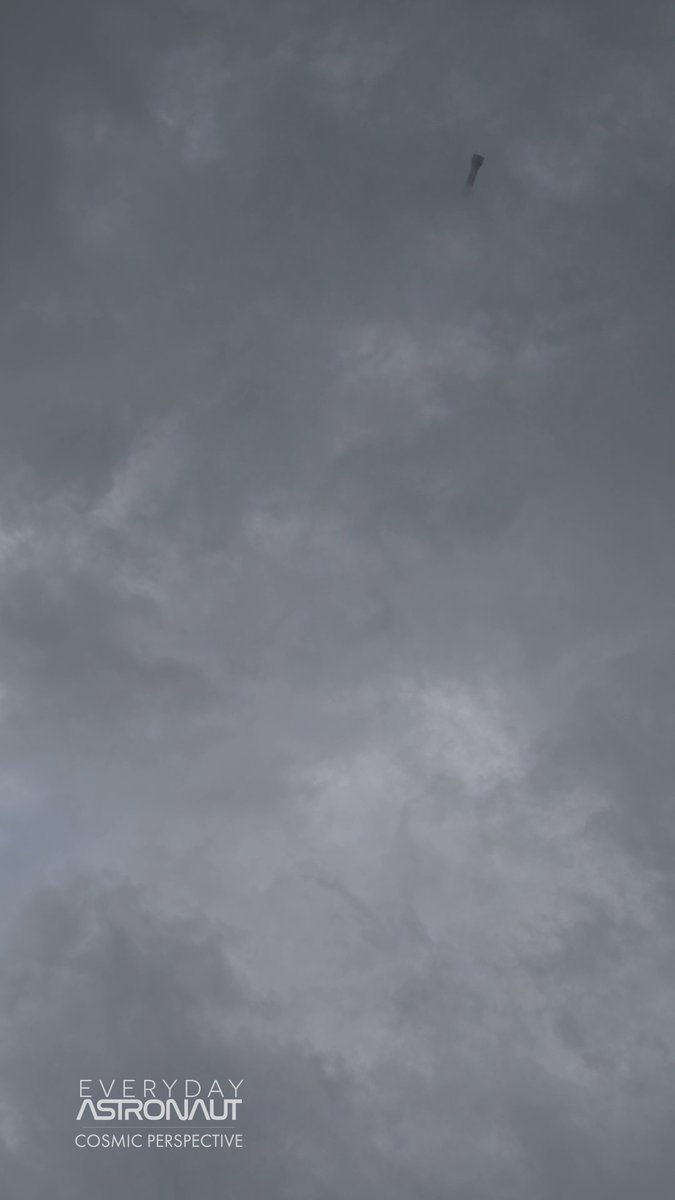
SpaceX's Starship Flight 15 didn't just go to orbit and come back — it rewrote what the program is capable of in a single weekend. Ship 42 launched on November 13, 2026, deployed 26 Starlink satellites, and was caught by Mechazilla's chopstick arms the following day. Everyday Astronaut captured the moment on video, noting you can literally hear Starship falling before the catch — and that the original Starhopper prototype was still on-site to witness it.

1. Ship 42 is the first Starship upper stage ever recovered
Every previous Starship test flight ended with the ship either lost at sea, destroyed during reentry, or intentionally splashed down. On November 14, Ship 42 changed that entirely — executing a controlled bellyflop descent and being caught by the launch tower's chopstick arms at Starbase, Texas. According to Space.com, this marks the first time a Starship upper stage has been successfully recovered, closing a loop that SpaceX has been working toward since the program began. The vehicle is now, in principle, reusable.
2. The descent is audible — and that's not a small thing
As Everyday Astronaut's video shows, you can actually hear Ship 42 cutting through the air on its way down. That audible presence — the whoosh of a 50-meter steel vehicle falling from the sky — is a visceral reminder of the scale involved. The controlled descent, what SpaceX calls the "bellyflop," requires precise attitude management and engine relight timing. The fact that it's happening reliably enough to be caught on casual video, rather than ending in a fireball, signals genuine operational maturity in the flight profile.
3. Flight 15 set a Starship endurance record
Ship 42 spent over 22 hours in low Earth orbit before returning — the longest Starship flight to date, according to Space.com. During that time it deployed 26 Starlink V3 satellites, making Flight 15 the first Starship mission to carry and release a real payload. The combination of orbital endurance, payload deployment, and successful recovery in a single flight represents a step-change from earlier test missions, which were focused purely on surviving ascent and reentry.
4. The booster catch was aborted, and SpaceX is still investigating why
Booster 22's planned chopstick catch was called off mid-flight after a low-fuel alarm triggered during the boostback burn. The booster was intentionally diverted offshore, where its flight termination system was activated. SpaceX has confirmed the root cause of the early boostback cutoff is still under investigation. It's a meaningful gap in an otherwise landmark mission — full rapid reusability requires catching both halves of the stack, and the booster anomaly is the clearest item on the program's near-term punch list.
5. Starhopper was still there to watch
Everyday Astronaut pointed out that the original Starhopper prototype — which completed its final 150-meter hop test back in August 2019 — remains at Starbase and was present to witness the Flight 15 catch. It's a detail that puts the program's pace in perspective: the vehicle that proved the Raptor engine could lift and land a Starship-shaped object now sits in the background while its descendants catch themselves from orbit. SpaceX has come a long way in seven years, and Starhopper's continued presence on-site is a quiet monument to how the whole thing started.
Flight 15's ship catch sets the stage for what comes next. With Flight 17 targeting a debut from Pad 39A at Kennedy Space Center, SpaceX is now working to demonstrate that the catch infrastructure and recovery procedures can be replicated at a second launch site — and to resolve the booster anomaly before attempting another full-stack recovery. The program is no longer just testing whether Starship can survive; it's testing whether it can operate.
Related coverage
🚀 Following the Starship program? See every test flight, official outcome and the next launch window in our SpaceX Starship Tracker.
Sources & reporting notes
The links below identify the material source records used for this report.
- @Erdayastronaut on X (2026-11-23T20:03:30.000Z) — Direct source
Source links are preserved as published or accessed. See our editorial standards and corrections policy.
The BASENOR Editorial Desk covers Tesla, SpaceX, and related technology, curating reporting from primary sources — official accounts, regulatory filings, and software release data. Every article passes source-record and fact-checking review before publication. About the newsroom.
This report was curated by the BASENOR Editorial Desk from the sources listed above. Read our editorial standards or email editorial@basenor.com to report an error.