📌 UPDATE — September 10, 2026
SpaceX's AI compute revenue picture just got significantly larger. By December 2026, SpaceXAI is now projected to generate over $3.4 billion per month — $41.1 billion annually from AI compute capacity deals, up sharply from the $28B/year figure reported at the time of the original article. The jump reflects the new $13.3B/year deal confirmed by CFO Bret Johnsen stacking on top of previously announced contracts. Analyst and commentator Sawyer Merritt notes that further deals are likely as SpaceXAI continues building out capacity, unless the company opts to deploy that capacity for internal use instead.

SpaceX has signed another massive AI compute hosting agreement, CFO Bret Johnsen confirmed Wednesday at the Goldman Sachs Communacopia + Technology Conference. The new deal will generate $1.11 billion in monthly revenue — roughly $13.3 billion annually — with billings starting December 1, 2026. It is the fourth major AI infrastructure contract SpaceX has disclosed in less than a year, and it cements what has quietly become one of the fastest-growing lines of business inside Elon Musk's rocket company.

What Johnsen Announced
Speaking to investors, Johnsen described the contract as a "hosting deal" closed earlier this month — the industry shorthand for SpaceX renting out GPU capacity, power, cooling and colocation to an AI customer that wants to train or serve models without building its own data center. He did not name the counterparty in the on-stage remarks, consistent with how SpaceX has handled its other recent AI agreements.
The revenue ramp is aggressive by any measure. At $1.11 billion per month, this single contract alone would exceed the annual revenue of most publicly traded data-center operators. And it starts less than three months from the announcement date, implying the underlying capacity is either already installed or very close to it.
Key Figures
| Metric | Value |
|---|---|
| Monthly revenue | $1.11 billion |
| Annualized revenue | $13.3 billion |
| Start date | December 1, 2026 |
| SpaceX installed compute capacity (Jun 30, 2026) | 1.4 GW |
| Target capacity by end of 2027 | ~10 GW |
How This Fits SpaceX's AI Infrastructure Stack
The December contract is the newest layer on a stack of hosting deals that have quietly reshaped SpaceX's revenue mix. According to disclosures compiled from investor conferences and reporting by outlets including AI Business, TheStreet, and Investing.com, the company is now sitting on the following pipeline:
- Anthropic — approximately $1.25 billion per month through May 2029, disclosed in May 2026. The three-year contract totals roughly $45 billion and provides access to more than 220,000 Nvidia GPUs and over 300 megawatts of dedicated power capacity. Musk has publicly characterized this as a short-term arrangement with a 90-day termination clause on either side.
- Google Cloud — approximately $920 million per month from October 2026 through June 2029, giving Google access to roughly 110,000 Nvidia GPUs plus associated CPU, memory and networking infrastructure. Total contract value is reported to exceed $30 billion.
- Reflection AI — a $6.3 billion agreement disclosed in June 2026. Reflection pays $150 million per month from July 1, 2026 through the end of 2029 for access to Nvidia GB300 chips inside SpaceX's Colossus 2 data center.
- The newly announced hosting deal — $1.11 billion per month starting December 1, 2026.
Stacked together, these four contracts alone put SpaceX on track for more than $28 billion in annualized AI infrastructure revenue once all four are billing simultaneously, according to figures cited by AI Business and Pulse 2.0. That is a scale of recurring revenue that, only a year ago, would have been unthinkable for a company whose brand identity is built around Falcon 9, Starship and Starlink.
Why SpaceX — and Why Now
The obvious question is why AI labs are handing SpaceX billion-dollar checks instead of going to Amazon Web Services, Microsoft Azure or Oracle. Johnsen's public comments over the past several months point to two answers.
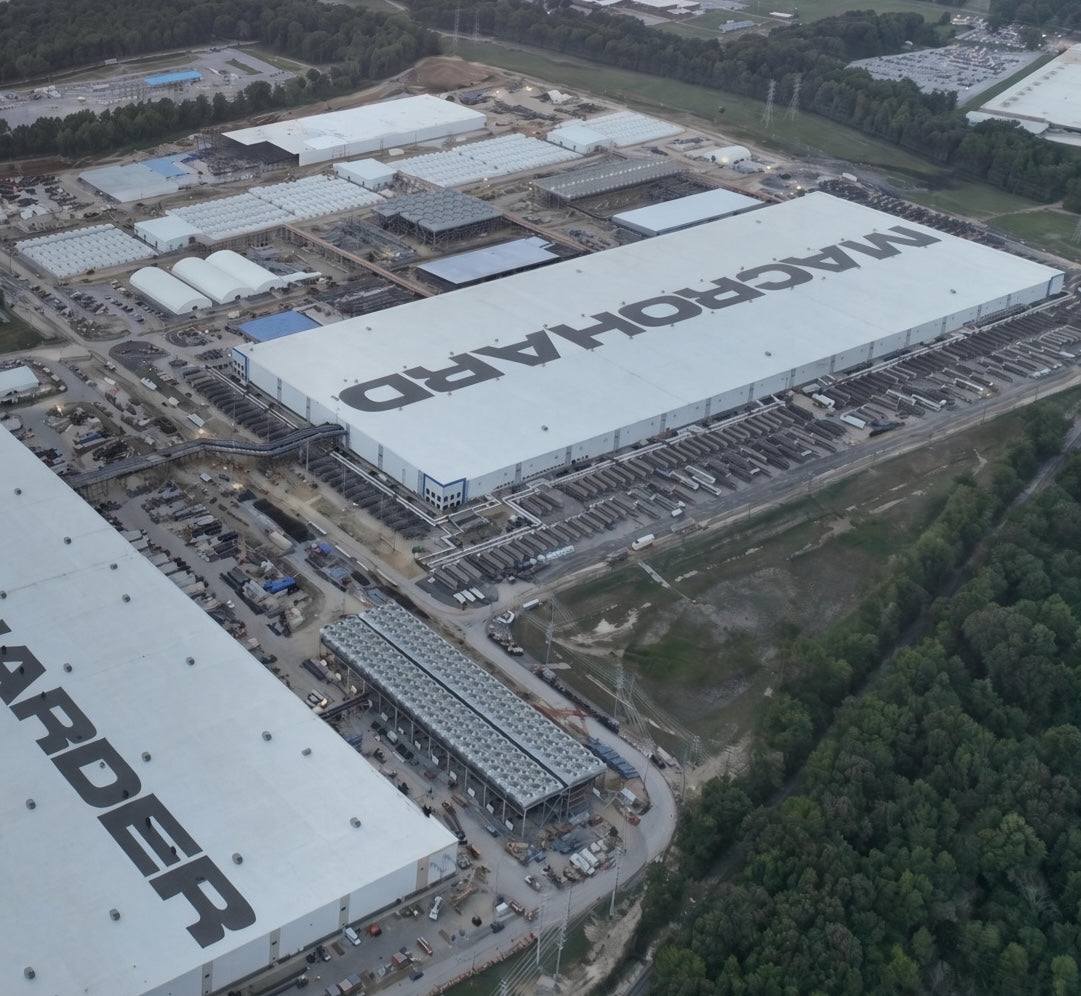
The first is time-to-power. AI training clusters are constrained less by GPUs today than by electricity, permitting and data-center construction schedules. SpaceX, through its Colossus 2 facility built for xAI, has been able to bring gigawatt-scale capacity online at a pace conventional hyperscalers have struggled to match. According to reporting from CFO Brew, Johnsen has told investors that SpaceX's AI compute spending has a payback period of less than one year — an economic profile that only works when capacity is filled almost immediately upon coming online.
The second is the hardware bet. SpaceX has committed to building its AI infrastructure exclusively on Nvidia hardware, with Johnsen citing the Vera Rubin architecture and the company's Nvidia partnership as strategic advantages. For AI labs that want the newest silicon fastest, SpaceX's queue position with Nvidia is itself a product.
Where the Capacity Is Going
The scale of the compute buildout is what makes the revenue projections credible. SpaceX had 1.4 gigawatts of installed computing capacity as of June 30, 2026, according to figures cited across investor coverage. The company expects to cross 2 GW by year-end 2026 and is targeting close to 10 GW by the end of 2027 — roughly a seven-fold increase in eighteen months.
That trajectory is what makes it possible to sign a $13.3 billion-per-year contract with a December start date. The power, the racks and the GPUs required to service the deal are either already installed or already ordered.
What It Means for Tesla and the Musk Ecosystem
For Tesla owners and investors, the SpaceX AI infrastructure story matters for two indirect reasons. First, it establishes that AI compute is now a commodity being bought at industrial scale on multi-year contracts — the same market Tesla is trying to enter with its Dojo and in-vehicle inference hardware. Second, it validates the Musk-orbit thesis that compute capacity built for one AI use case (xAI's Grok training on Colossus and Colossus 2) can be monetized by hosting third parties on the same footprint.
Tesla's own AI ambitions — FSD training, Optimus, and the Cybercab robotaxi network — depend on similar economics. If SpaceX can prove out that GPU hosting delivers sub-one-year paybacks at gigawatt scale, expect that logic to shape how Tesla and xAI plan their own compute investments.
What to Watch Next
- The counterparty: SpaceX has not named the customer behind the new $1.11 billion/month contract. Watch upcoming filings, investor letters, or AI-lab funding announcements for hints.
- Q4 2026 revenue disclosures: The December 1 start date means the first month of billings will land in SpaceX's fourth-quarter numbers, assuming any are shared with private-market investors.
- Colossus 2 buildout milestones: Progress toward the 2 GW year-end target will indicate whether the announced pipeline is deliverable on schedule.
- Anthropic contract status: Because Musk has flagged the Anthropic deal as terminable on 90 days' notice, any change there would materially reshape SpaceX's AI revenue mix.
Frequently Asked Questions
Is this a Starlink contract or something different?
Different. This is AI compute hosting — renting out GPU-based data-center capacity to an AI customer for model training and inference. It is not related to Starlink satellite service, though both sit inside SpaceX.
Who is the customer?
Johnsen did not disclose the counterparty on stage. SpaceX's known AI hosting customers include Anthropic, Google, and Reflection AI, but the December 2026 contract is described as a separate, newly signed deal.
How does $13.3 billion per year compare to SpaceX's other revenue?
It is comparable in scale to Starlink's reported annualized revenue run rate and, combined with the Anthropic, Google, and Reflection contracts, positions AI compute as one of SpaceX's largest revenue lines alongside launch services and Starlink.
Does this affect Tesla directly?
Not contractually. SpaceX and Tesla are separate companies. But the economics — sub-one-year payback on GPU hosting at gigawatt scale — inform how Musk-orbit companies, including Tesla and xAI, plan their own AI infrastructure investments.
When does the revenue actually start hitting SpaceX's books?
December 1, 2026, per Johnsen's remarks. That means the first full month of billings falls in Q4 2026.
Related Gear
Gear up your Tesla with tested, custom-fit BASENOR accessories — shop Tesla accessories →
Sources & reporting notes
The links below identify the material source records used for this report.
- @SawyerMerritt on X (2026-09-10T20:42:48.000Z) — Direct source
Source links are preserved as published or accessed. See our editorial standards and corrections policy.
The BASENOR Editorial Desk covers Tesla, SpaceX, and related technology, curating reporting from primary sources — official accounts, regulatory filings, and software release data. Every article passes source-record and fact-checking review before publication. About the newsroom.
This report was curated by the BASENOR Editorial Desk from the sources listed above. Read our editorial standards or email editorial@basenor.com to report an error.