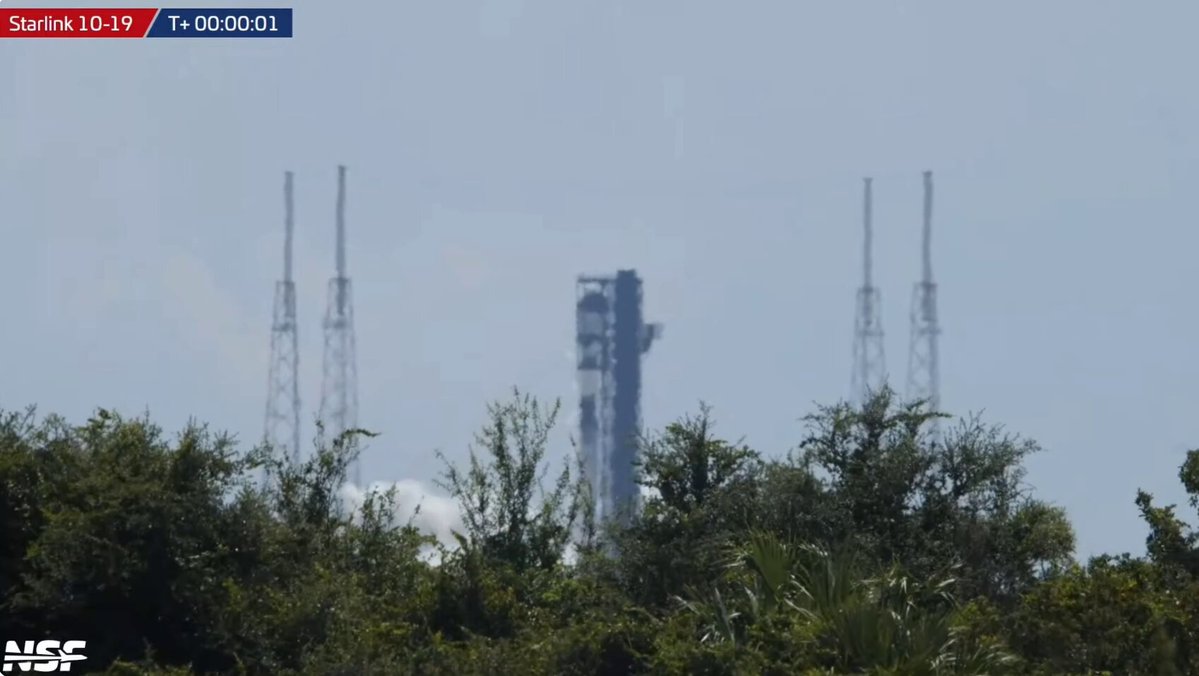
SpaceX launched 29 Starlink satellites into orbit on August 11, 2026, continuing its rapid cadence of constellation-building missions. Falcon 9 booster B1085-18 lifted off from Space Launch Complex 40 at Cape Canaveral, Florida, carrying the Group 10-19 batch — another incremental but meaningful step in filling out Starlink's global coverage grid.
What This Mission Adds
The Group 10-19 designation places this batch within Starlink's Shell 10 orbital plane structure, which targets mid-inclination coverage — the latitudes where population density is highest and demand for low-latency broadband is strongest. Each Falcon 9 Starlink mission typically slots satellites into a deployment orbit before the spacecraft use their onboard Hall-effect thrusters to drift into their final operational altitude.
Booster B1085-18 is notable on its own terms: the "18" suffix indicates this was the 18th flight of that particular first-stage core, a figure that would have seemed implausible just a few years ago. Reusability at this scale is what keeps SpaceX's launch cadence economically viable — and what keeps the Starlink constellation growing faster than any competitor can match.
The Bigger Picture
SpaceX has been running Falcon 9 Starlink missions at a pace that makes individual launches feel almost routine — but the cumulative effect is anything but. Each batch of 20-30 satellites meaningfully reduces coverage gaps, lowers latency in underserved regions, and adds redundancy to an already-operational network that serves millions of subscribers across maritime, aviation, and residential markets.
For Tesla owners specifically, the Starlink connection is more than corporate family ties. Tesla vehicles use cellular connectivity for over-the-air updates, navigation data, and the Tesla app — and a denser, more resilient Starlink constellation strengthens the broader global connectivity infrastructure that modern connected vehicles depend on. SpaceX has also been expanding Starlink's direct-to-cell capability, which could eventually reduce dead zones that affect any device relying on terrestrial networks.
With B1085-18 now at 18 flights, SpaceX continues to push the boundaries of what a reusable booster program looks like at operational scale. The question going forward isn't whether Starlink can cover the globe — it's how quickly the network density reaches the threshold where latency and throughput become genuinely competitive with fiber in dense urban markets. Missions like Group 10-19 are the unglamorous but essential work that gets it there. For more on SpaceX's ongoing launch program, see our SpaceX coverage.
Sources & reporting notes
The links below identify the material source records used for this report.
- @NASASpaceflight on X (2026-08-11T15:01:06.000Z) — Direct source
- @SpaceX on X (2026-08-11T15:48:31.000Z) — Direct source
- @NASASpaceflight on X (2026-08-11T15:59:49.000Z) — Direct source
Source links are preserved as published or accessed. See our editorial standards and corrections policy.
The BASENOR Editorial Desk covers Tesla, SpaceX, and related technology, curating reporting from primary sources — official accounts, regulatory filings, and software release data. Every article passes source-record and fact-checking review before publication. About the newsroom.
This report was curated by the BASENOR Editorial Desk from the sources listed above. Read our editorial standards or email editorial@basenor.com to report an error.