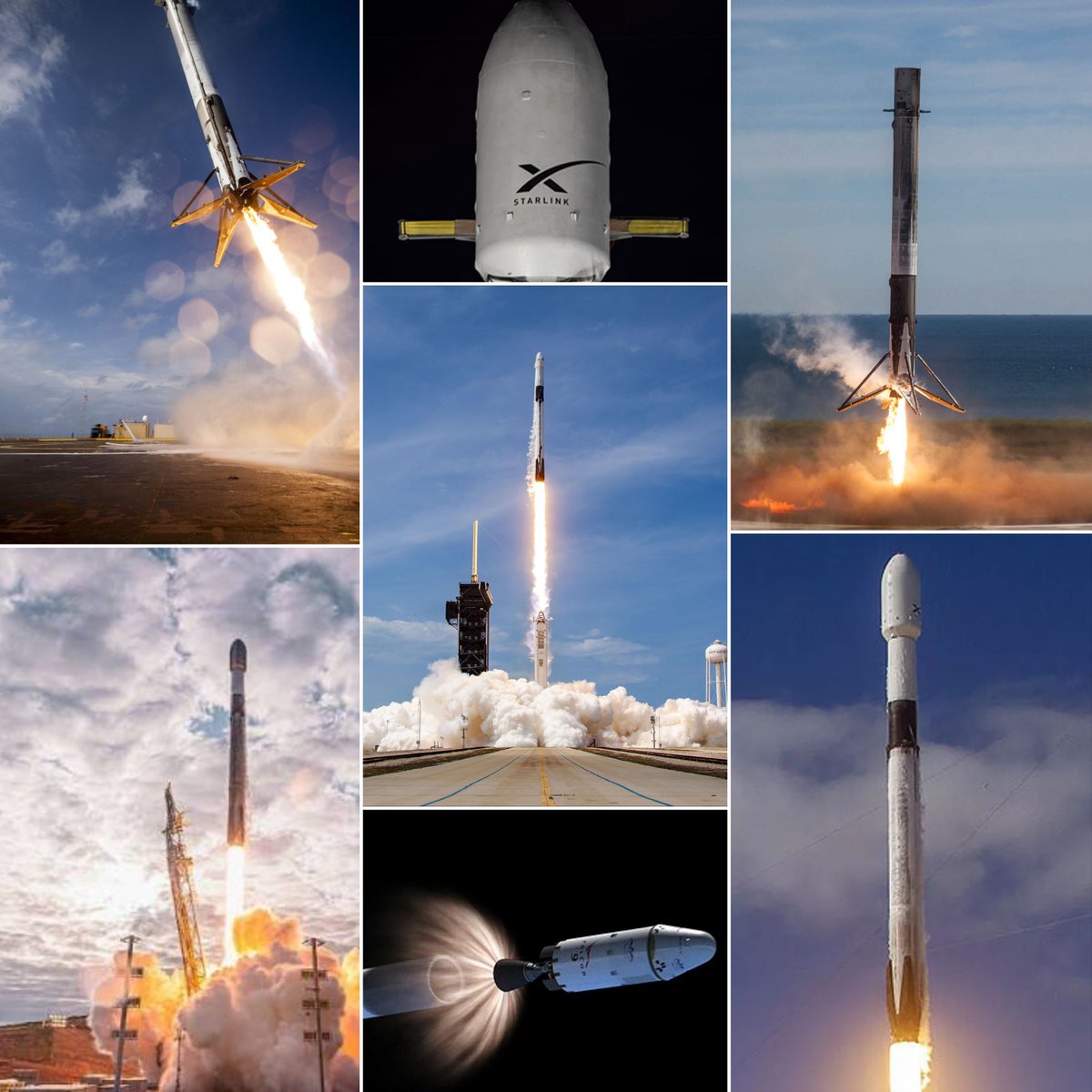
SpaceX has crossed 600 autonomous rocket landings — a number that would have seemed like science fiction when the company first stuck a booster upright on a drone ship less than a decade ago. Elon Musk confirmed the milestone on X, and the background data fills in a story worth understanding in full.

The Numbers Behind the Milestone
The headline figure of 600 is actually already in the rearview mirror. According to reporting from Space.com and Spaceflight Now, SpaceX formally hit its 600th successful orbital-class rocket landing on April 19, 2026 — the recovery of booster B1097 after launching 25 Starlink satellites on the Starlink Group 17-22 mission. That booster completed its eighth flight on that landing alone, which is itself a remarkable data point about hardware reuse.
SpaceX VP of Launch Kiko Dontchev broke down the 600th landing tally at the time: 496 recoveries on autonomous droneships at sea, 104 on solid ground at the company's designated landing zones. That split reflects the operational reality of launching from both coasts and hitting a wide range of orbital inclinations — not every mission geometry allows a return-to-launch-site landing.
Then the pace accelerated further. By August 17, 2026 — less than four months after the 600th — SpaceX completed its 650th Falcon booster landing, achieved during a dual-launch event where two Falcon 9 rockets lifted off from opposite coasts just 38.5 minutes apart. Musk's post this week, referencing "over 600," appears to be a rounded acknowledgment of the broader trajectory rather than a precise current count.
How Fast the Cadence Has Grown
The timeline tells the real story of acceleration. SpaceX's first successful booster landing came in December 2015. The 500th landing was completed in September 2025 — meaning it took roughly ten years to reach 500. The next 150 landings happened in under a year. That compression is not accidental; it reflects a launch cadence that has become genuinely industrial in scale, driven largely by the Starlink constellation build-out requiring constant resupply missions.
| Milestone | Date | Notable Detail |
|---|---|---|
| 1st landing | December 2015 | Return-to-launch-site, Cape Canaveral |
| 500th landing | September 2025 | ~10 years to reach 500 |
| 600th landing | April 19, 2026 | B1097 on 8th flight; 496 droneships, 104 land pads |
| 650th landing | August 17, 2026 | Dual-launch event, coasts 38.5 min apart |
Why Reusability Is the Actual Product
It is easy to treat each landing as a spectacle. The operational significance is more prosaic and more important: every recovered booster is a booster that does not need to be built from scratch. The cost reduction that comes from flying the same hardware eight, ten, or more times is what makes the current Starlink launch cadence economically viable, and it is what underpins SpaceX's pricing power in the commercial launch market.
The droneships-versus-land-pad split also matters. Droneship landings — which account for roughly 83% of the total — require the booster to perform a longer coast and a more fuel-intensive landing burn over open ocean, but they allow missions to higher-energy orbits that cannot return to the launch site. The fact that SpaceX has made this work reliably at scale, across two oceans and multiple launch sites, is the engineering story behind the headline number.
For context on what comes next, follow our SpaceX coverage as the company continues pushing toward full Starship reusability — a program where the booster-catch milestones are still being written.
Sources & reporting notes
The links below identify the material source records used for this report.
- @elonmusk on X (2026-09-05T15:17:04.000Z) — Direct source
Source links are preserved as published or accessed. See our editorial standards and corrections policy.
The BASENOR Editorial Desk covers Tesla, SpaceX, and related technology, curating reporting from primary sources — official accounts, regulatory filings, and software release data. Every article passes source-record and fact-checking review before publication. About the newsroom.
This report was curated by the BASENOR Editorial Desk from the sources listed above. Read our editorial standards or email editorial@basenor.com to report an error.