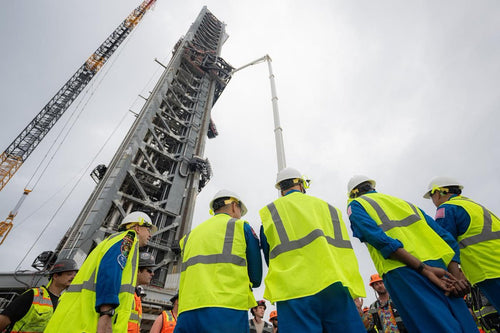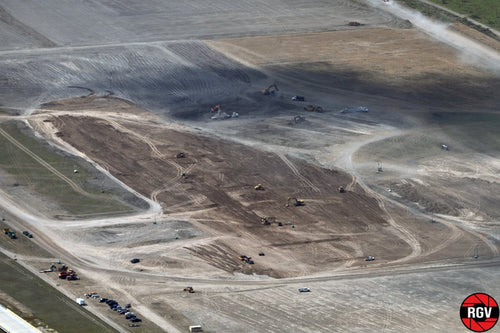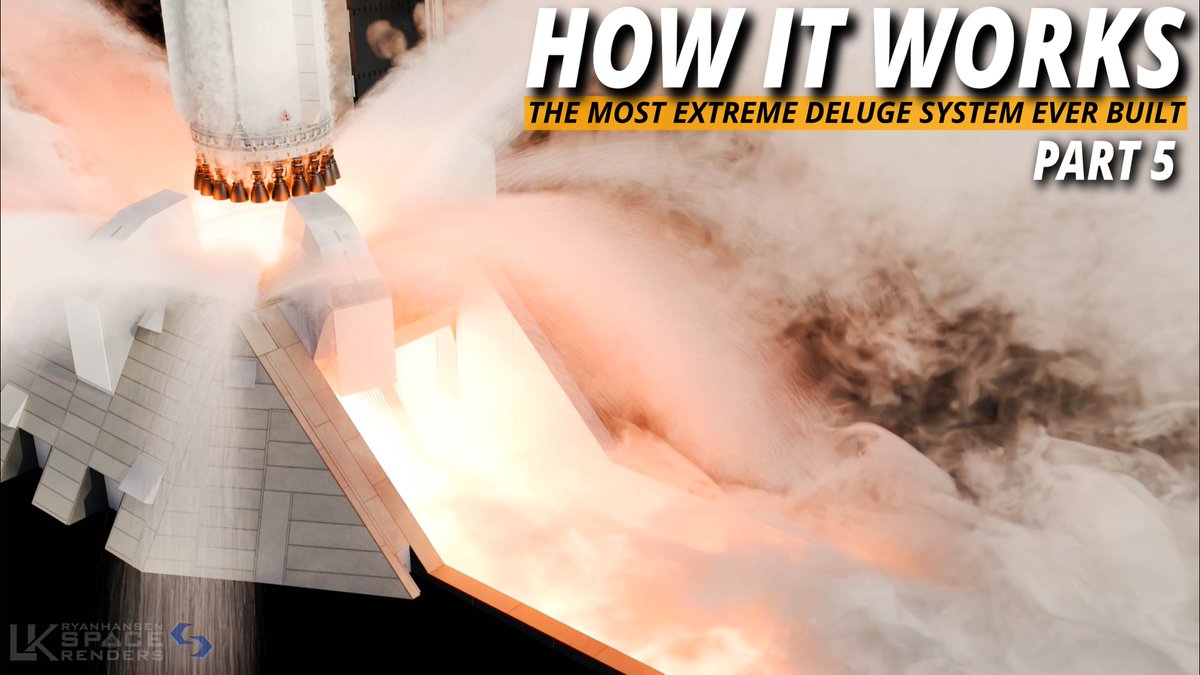
Zack Golden of @CSI_Starbase has announced the final installment of his Stage Zero 2.0 Series — a deep-dive investigation into every issue SpaceX encountered when it introduced Starship V3 to its rebuilt launch pad at Starbase. The episode promises to go significantly deeper than anything covered in the series so far, closing out one of the most technically detailed independent analyses of the Starship program to date.

The Infrastructure SpaceX Built — and Had to Debug
Stage Zero 2.0, also known as Pad 2, is not a patch job on the original launch complex. According to SpaceX, it is a ground-up rebuild following damage to the original Pad A during the April 2023 static fire and early flight attempts. The new pad incorporates a redesigned launch mount with improved load-sharing and hold-down systems, a bidirectional flame diverter, a top-deck flame deflector engineered to eliminate ablation, and a reinforced quick disconnect arm for propellant loading into the Starship upper stage — one that now rotates significantly farther from the vehicle during launch. The catch arms on the Mechazilla integration tower were also upgraded for the booster recovery operations that have since become a defining visual of the program.
SpaceX began integrating Stage Zero 2.0 with the V3 Super Heavy booster at Starbase in March 2026, building toward Starship Flight 12. The intent behind all these changes was to reduce post-launch refurbishment time and increase operational cadence. Whether those goals were fully met on the first attempt is precisely what Golden's investigation examines.
What Starship V3 Brought to the Equation
Starship V3, introduced on May 12, 2026, is not simply a stretched V2. At approximately 124 meters (407 feet) tall — 1.5 meters taller than its predecessor — the vehicle introduced the Raptor 3 engine across both stages. The Super Heavy booster shed one of its four grid fins, going to three fins that are 50% larger and structurally stronger, and adopted an integrated hot-stage design. These are meaningful changes to mass distribution, aerodynamic loading, and thermal management at the pad, all of which interact directly with the Stage Zero 2.0 infrastructure in ways that weren't fully validated until the hardware came together.
That integration — a new vehicle meeting a new pad for the first time — is where Golden's series has been heading all along. The combination of V3's dimensional and propulsion changes with Pad 2's redesigned hold-down geometry, flame management systems, and quick disconnect hardware created a matrix of first-time interactions. Some worked as designed. Others, according to the investigation, did not.
Why Independent Analysis Like This Matters
SpaceX publishes mission updates and broad technical summaries, but granular post-flight engineering breakdowns are rarely part of the public record. Investigators like Golden — working from high-resolution imagery, publicly available telemetry fragments, and community-sourced observations — fill a genuine gap. The Stage Zero 2.0 Series has tracked everything from flame diverter performance to structural anomalies on the integration tower across multiple episodes, building a documented record that SpaceX itself has not publicly released in comparable detail.
For anyone following the Starship program seriously, the final episode represents a consolidation of that work: a single reference point for what the V3-to-Pad-2 integration actually looked like in practice, not just in the pre-launch renders. You can follow our SpaceX coverage for the full breakdown once the episode drops.
The announcement gives no specific release date beyond the implication that it is imminent. Given the scope Golden is describing — examining all issues encountered across the V3 introduction — it is likely to be the most technically dense entry in the series. Worth watching closely.
🚀 Following the Starship program? See every test flight, official outcome and the next launch window in our SpaceX Starship Tracker.
Sources & reporting notes
The links below identify the material source records used for this report.
- @CSI_Starbase on X (2026-09-04T22:49:37.000Z) — Direct source
Source links are preserved as published or accessed. See our editorial standards and corrections policy.
The BASENOR Editorial Desk covers Tesla, SpaceX, and related technology, curating reporting from primary sources — official accounts, regulatory filings, and software release data. Every article passes source-record and fact-checking review before publication. About the newsroom.
This report was curated by the BASENOR Editorial Desk from the sources listed above. Read our editorial standards or email editorial@basenor.com to report an error.