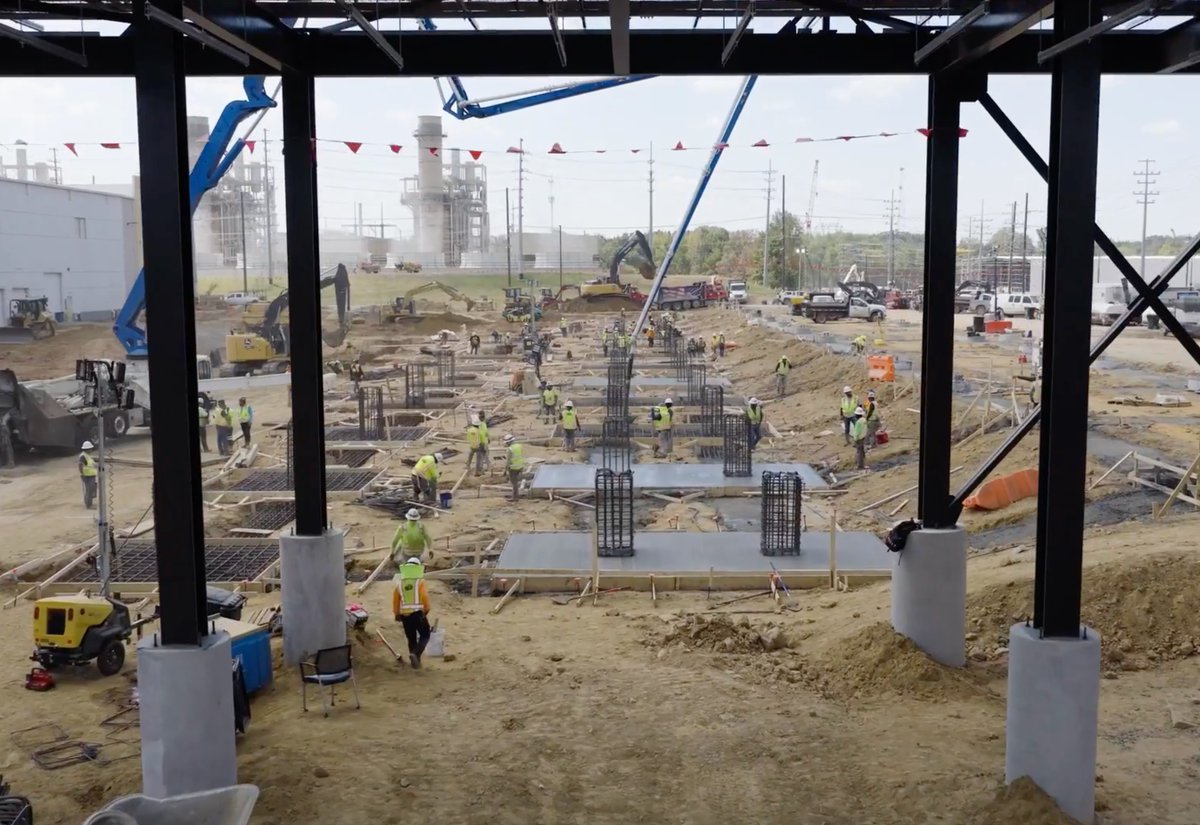
SpaceX is preparing to spend between $35 billion and $40 billion in capital expenditures during Q4 2026 alone — a figure that, per Sawyer Merritt's read on the company's Q3 earnings call, equals Tesla's total capex over the past four years combined. The money is going almost entirely into one thing: a massive buildout of compute capacity for the company's superintelligence (SI) infrastructure business, with management telling investors the payback period on new deployments is less than 12 months at current pricing.
The scale of the planned Q4 ramp is unlike anything SpaceX has disclosed before, and it reframes how to think about the company's trajectory — not just as a launch and satellite operator, but as one of the largest buyers of AI compute infrastructure on the planet.

The Numbers Behind the Buildout
The Q4 projection is a sharp step up from an already-aggressive Q3. According to reports from SpaceX's Q3 2026 earnings call on October 20, capital spending in Q3 came in at $19.6 billion, with $16.4 billion of that specifically earmarked for AI-related capex. If the midpoint of Q4 guidance holds, SpaceX will nearly double its quarterly spend in a single step.
| Metric | Value |
|---|---|
| Q3 2026 total capex | $19.6B |
| Q3 2026 AI-related capex | $16.4B |
| Q4 2026 projected capex | $35B–$40B |
| Compute capacity (Sep 30, 2026) | 1.7 GW |
| Compute capacity target (EOY 2026) | 2.5–3.0 GW |
| Stated payback period | <12 months |
The compute-capacity figures are the most concrete part of the disclosure. According to the earnings call, SpaceX exited September with 1.7 gigawatts of compute online and expects to reach 2.5 to 3.0 GW by the end of 2026 — effectively a doubling in a single quarter. That is the operational reality behind the $35–40B spend number.
Why the Tesla Comparison Matters
Merritt's framing — that a single SpaceX quarter equals four years of Tesla capex — is the kind of comparison that stops you mid-scroll, but it is worth unpacking rather than taking at face value. Tesla's annual capex has run in the $7–11B range in recent years, heavily weighted toward Gigafactory buildouts, Cybertruck tooling, and more recently the Cortex AI training cluster in Austin. Four years of that spending stacked together lands roughly in the high-$30B range, which is why the comparison works arithmetically.
What it really tells you is that the capital intensity of frontier AI compute has pulled ahead of the capital intensity of global vehicle manufacturing. Building a car plant is expensive. Building a multi-gigawatt training and inference footprint — power contracts, land, cooling, silicon, networking, and the people to run it — is now meaningfully more expensive, and the pace is quarterly rather than annual.
The Payback Claim
The most provocative line in the disclosure is the sub-12-month payback period on new compute deployments. That is an extraordinary figure for infrastructure spend of this magnitude. For comparison, hyperscaler data center payback periods have historically been measured in years, not months, and traditional telecom and satellite infrastructure can take the better part of a decade.
A payback period under 12 months implies either (a) extremely strong demand pricing for SI compute capacity relative to its all-in cost, or (b) a tightly captive internal customer whose willingness to pay is being used as the reference point. SpaceX has not publicly broken out the revenue mix of its SI business, so the claim should be read as management's internal view rather than an audited external benchmark. Still, it is the number investors will anchor on when they try to justify the $35–40B quarterly run rate.
What This Means for the Musk Ecosystem
For Tesla owners and investors reading this through the Tesla lens, there are a few knock-on observations worth sitting with. First, the scale of SpaceX's compute spend validates — in dollars — the strategic bet Elon Musk has been making across his companies that AI inference and training capacity is the single most valuable capital asset to accumulate right now. Tesla's own Cortex and Dojo buildouts, xAI's Colossus cluster in Memphis, and now SpaceX's SI infrastructure all point to the same thesis.
Second, the capital commitment on this scale affects how the market thinks about SpaceX's eventual public-market valuation and the relative weighting of the Starlink, launch, and SI businesses within it. A business line spending $35–40B in a quarter with sub-12-month payback is not a side project.
Third, there is a supply-chain question that Tesla watchers should track: SpaceX is now a very large buyer of the same AI silicon, power infrastructure, and data-center real estate that Tesla and xAI depend on. Whether that creates internal coordination advantages or internal competition for scarce supply is one of the more interesting operational storylines heading into 2027.
What to Watch Next
Three signals will tell us whether the Q4 spending plan is tracking:
- Compute capacity milestone: SpaceX's year-end disclosure of actual gigawatts online — if the 2.5–3.0 GW target is hit, the capex is being deployed as advertised.
- SI business revenue breakout: Any further disclosure that puts dollars behind the payback-period claim will be the single most scrutinized data point in the next earnings cycle.
- Power and site announcements: Multi-gigawatt expansion requires substations, interconnects, and land. Expect additional site disclosures before Q4 closes.
For now, the headline is simple: SpaceX intends to spend more on compute in three months than Tesla has spent on everything over the past four years. Whether that proves to be the best capital allocation decision of the decade or an overcommitment to a cyclical peak is the question the rest of 2027 will answer.
Related Gear
Gear up your Tesla with tested, custom-fit BASENOR accessories — shop Tesla accessories →
Sources & reporting notes
The links below identify the material source records used for this report.
- @SawyerMerritt on X (2026-10-21T02:18:45.000Z) — Direct source
Source links are preserved as published or accessed. See our editorial standards and corrections policy.
The BASENOR Editorial Desk covers Tesla, SpaceX, and related technology, curating reporting from primary sources — official accounts, regulatory filings, and software release data. Every article passes source-record and fact-checking review before publication. About the newsroom.
This report was curated by the BASENOR Editorial Desk from the sources listed above. Read our editorial standards or email editorial@basenor.com to report an error.