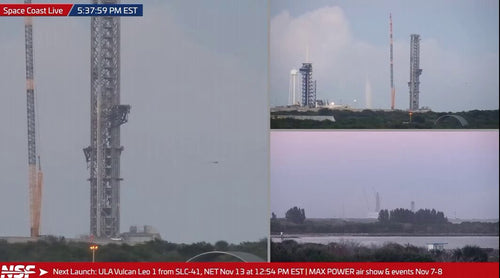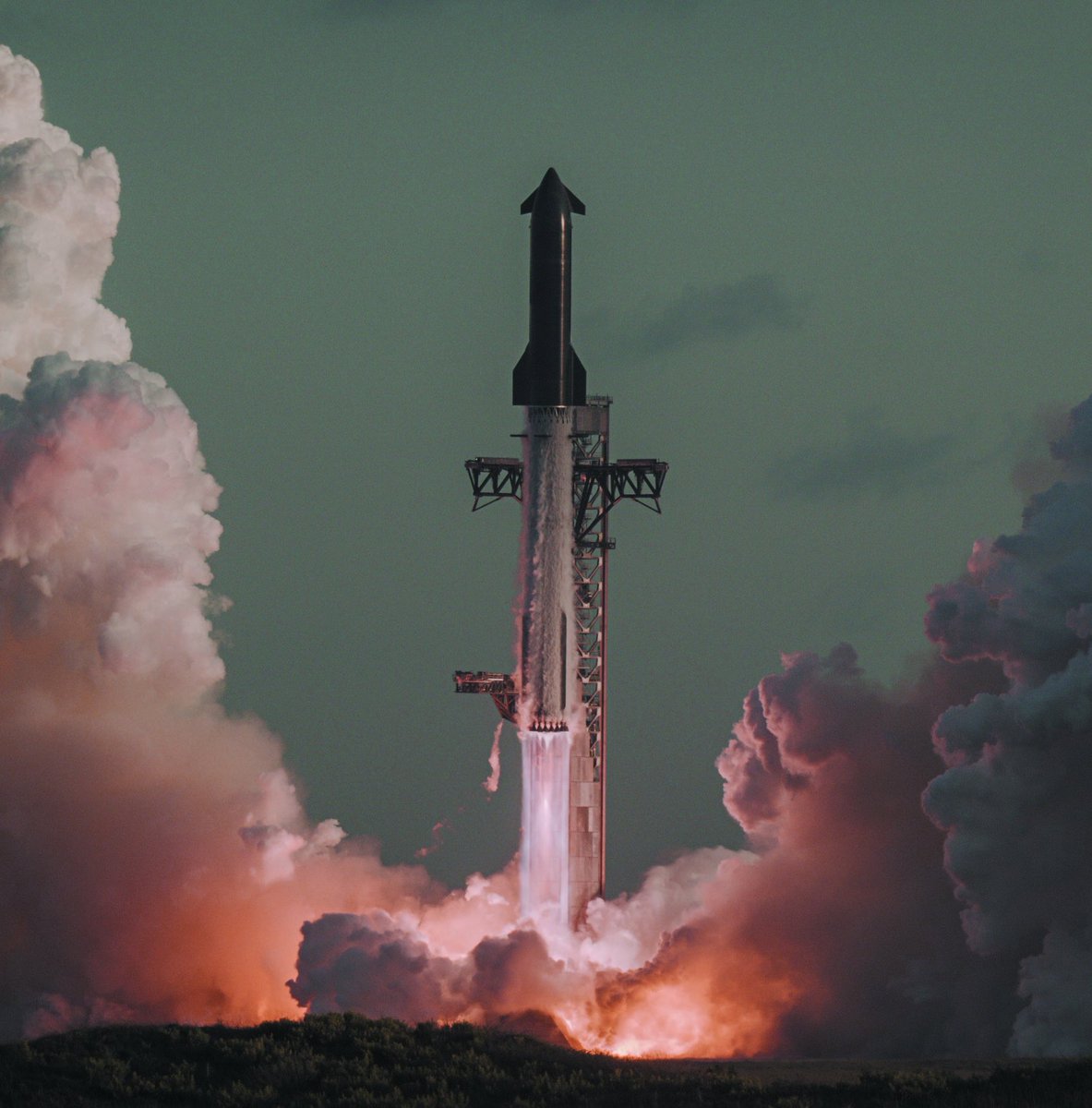
SpaceX is targeting Friday, November 13 for the 15th integrated flight test of Starship, a mission that is expected to attempt the first-ever catch of the Starship upper stage with the launch tower's chopstick arms. The date was shared by SpaceX VP of Launch Kiko Dontchev at the UP.Summit on November 5, and was echoed in the FAA's CADENA briefing the same day, which lists the launch as a tentative target rather than a confirmed NOTAM window.

Why Flight 15 Matters
Super Heavy booster catches have become something close to routine for SpaceX — the tower arms have reliably plucked returning boosters out of the sky across multiple flights. What has never been attempted is catching the upper stage itself, the much larger and more thermally stressed Starship vehicle that actually reaches orbital velocity before returning through the atmosphere.
Catching the ship is the harder half of the reusability equation. Unlike the booster, which separates in the upper atmosphere and never experiences orbital reentry heating, the upper stage comes back glowing from roughly 25 times the speed of sound, has to survive a complete reentry profile, and then needs to arrive at the tower with pinpoint accuracy after a long cross-range maneuver. Pulling it off would compress the Starship turnaround cycle dramatically and remove one of the last big question marks hanging over Elon Musk's vision of a fully and rapidly reusable launch system.
Hardware and Flight Profile
According to background reporting on the mission, Flight 15 is expected to fly Booster 22 paired with Ship 42 — the fourth pair of Block 3 vehicles. Block 3 is the latest generation of Starship hardware, featuring upgraded Raptor engines, revised propellant systems, and a heat shield reworked after lessons learned on earlier upper-stage reentries. This will also be the second operational flight of the Starship launch system following the program's transition out of its purely developmental testing phase.
The mission is slipping one day from the FAA's earlier tentative target of Thursday, November 12. That kind of 24-hour movement is routine on the Starship program and typically reflects range coordination, weather forecasting, or final vehicle readiness rather than any specific hardware issue.

How We Got Here
Starship's path to a ship catch has been incremental and deliberate. Early flights ended in dramatic breakups during ascent or reentry. Later flights demonstrated controlled splashdowns in the Indian Ocean, proving that the upper stage could survive reentry and perform a precise flip-and-burn maneuver before touching down on target. Each of those water landings was effectively a dress rehearsal for returning to the launch site — the vehicle hit its intended coordinates, but there was no tower waiting to catch it.
SpaceX has publicly signaled for more than a year that once the ship could consistently demonstrate a controlled soft landing over water, the next logical step would be bringing it back to the tower. Flight 15 is where that step appears to take shape.
What to Watch
- Final FAA clearance. The November 13 date is a planning target from the CADENA briefing, not a NOTAM. The real confirmation comes when the FAA issues the formal airspace and maritime closures, typically a few days before launch.
- SpaceX's catch decision criteria. The booster program showed that SpaceX will wave off a catch and divert the vehicle to a water landing if any of the dozens of commit criteria aren't green. Expect the same posture for the ship — the attempt only happens if the vehicle hits every gate on its descent profile.
- Heat shield performance. Previous upper-stage reentries have revealed tile losses and localized burn-through. A ship catch requires the vehicle to arrive at the tower structurally intact and aerodynamically controllable, which puts heat shield performance under sharper scrutiny than ever.
- Downstream manifest. The FAA's planning dates also list a Starlink 30-1 Starship mission for December 10 and Blue Origin's New Glenn 4.1 for December 28. A clean Flight 15 keeps SpaceX's operational Starlink-via-Starship cadence on track; a setback would ripple into that December window.
Editor's View
Catching a returning booster was the moment Starship stopped looking like a prototype and started looking like infrastructure. Catching the ship is the moment it stops looking like infrastructure and starts looking like an airline. If November 13 holds and the attempt succeeds, SpaceX will have closed the loop on full reusability in a way no other launch provider is positioned to match in this decade. If it doesn't hold — or if SpaceX waves off the catch at the last minute and sends Ship 42 to a water landing instead — it's still a data-gathering flight on the path to the same outcome. Either way, this is the launch to clear the calendar for.
🚀 Following the Starship program? See every test flight, official outcome and the next launch window in our SpaceX Starship Tracker.
Sources & reporting notes
The links below identify the material source records used for this report.
- @SawyerMerritt on X (2026-11-05T21:09:27.000Z) — Direct source
- @LabPadre on X (2026-11-05T21:59:31.000Z) — Direct source
Source links are preserved as published or accessed. See our editorial standards and corrections policy.
The BASENOR Editorial Desk covers Tesla, SpaceX, and related technology, curating reporting from primary sources — official accounts, regulatory filings, and software release data. Every article passes source-record and fact-checking review before publication. About the newsroom.
This report was curated by the BASENOR Editorial Desk from the sources listed above. Read our editorial standards or email editorial@basenor.com to report an error.