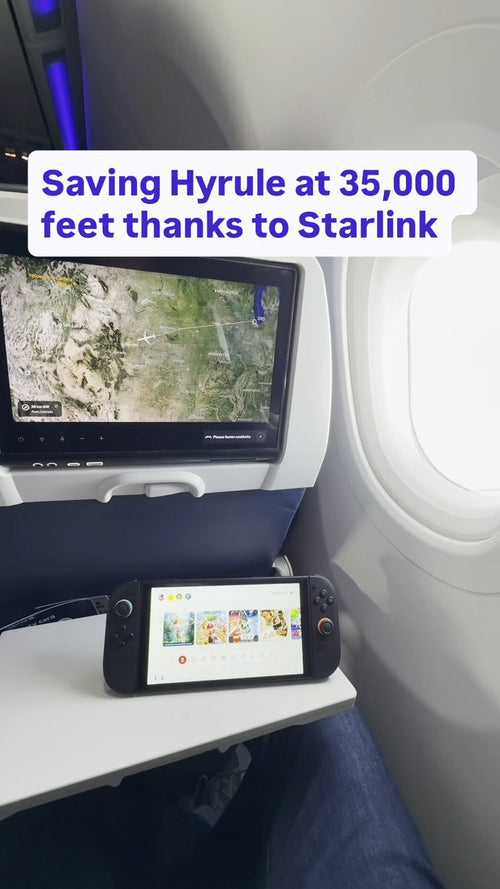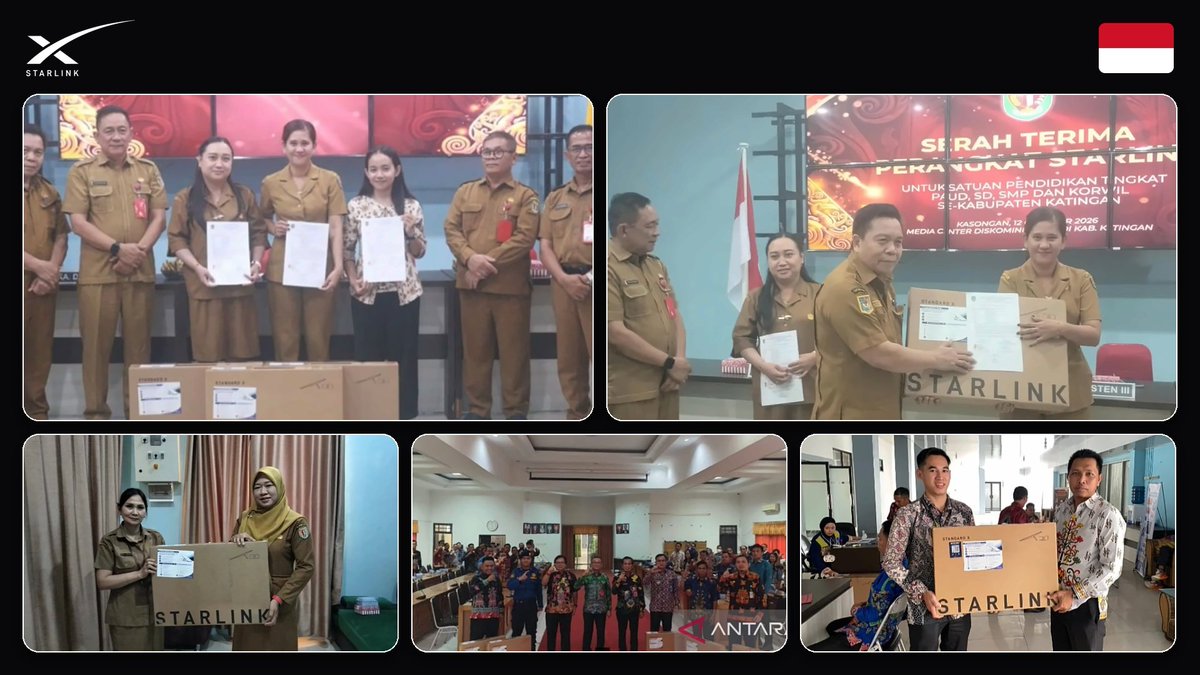
Elon Musk posted a simple three-word observation on November 6: 'Starlink enables education in remote areas.' Behind that understated caption is a growing body of real-world deployments — government contracts, school connectivity programs, and measurable learning outcomes — that together paint a picture of satellite internet becoming foundational infrastructure for education in the developing world.

The Deals Behind the Claim
The most concrete example of Starlink's education push is a formalized agreement with Argentina's government, approved by ENACOM — the country's National Communications Agency — and published in Argentina's Official Gazette on September 7, 2026. The deal covers 6,000 rural schools and carries a combined value of US$21.9 million. Starlink's share is approximately US$9.98 million, covering 6,000 complete satellite kits and 24 months of high-capacity priority service at up to 5 TB per month per site. Argentina's ENACOM contributes the remaining US$11.90 million for installation, technical support, monitoring, and a third year of service.
Argentine President Javier Milei first announced the initiative on July 27, 2026 — a post Musk retweeted the same day — before the formal regulatory approval followed roughly six weeks later. It's a significant signal: a national government treating low-Earth orbit satellite internet as a legitimate substitute for fiber or cellular in rural school infrastructure.
In Kenya, the deployment is already operational. According to Grow X Education, which originated the initiative in partnership with the Centre for Mathematics, Science and Technology Education in Africa (CEMASTEA), Starlink has connected 30 schools across 30 distinct districts in remote parts of the country. The official device handover took place on February 2, 2026. The program benefits more than 32,000 students and roughly 1,000 teachers.
The outcome data from Kenya is worth examining closely. Within one month of installation, the proportion of teachers using digital tools in the classroom rose from 57% to 82%. The share of students completing digital tasks doubled — from 18% to 36%. Those are unusually fast improvements for any education initiative, and they point to a specific bottleneck being removed: reliable connectivity, not hardware or curriculum, was the limiting factor.
Where the Network Stands Technically
Starlink's low-Earth orbit architecture is what makes these deployments viable where geostationary satellites previously failed. The network delivers 20–60 ms latency and download speeds in the 65–115 Mbps range — more than sufficient to run virtual classrooms, video-based learning platforms, and collaborative tools simultaneously across a school. Traditional geostationary satellite internet carried latency above 600 ms, which made real-time interaction impractical.
The Stalled Frontier: South Africa
Not every proposal has translated into a live deployment. SpaceX has offered to provide free high-speed internet to more than 5,000 rural schools in South Africa — a program that could benefit an estimated 2.4 million learners annually — through a proposed investment of approximately R500 million (roughly USD $27–29 million). The offer was submitted in 2025 as part of Starlink's bid to secure operating approval in the country.
As of late October 2026, the program remains stalled. South Africa's telecommunications regulations require at least 30% ownership by historically disadvantaged groups, a condition Starlink has not met. SpaceX has proposed an Equity Equivalent Investment Programme as an alternative, but the regulatory dispute remains unresolved. The South Africa situation illustrates the friction point that recurs in Starlink's global education push: the technology is ready, the demand is clear, but market access often depends on local regulatory frameworks that were written for a different era of infrastructure.
India: The Next Campaign
On October 9, 2026, Musk made a public appeal for Starlink to be approved for operation in India, framing the regulatory delay explicitly as a children's education issue — arguing that a lack of internet access denies students learning opportunities. India represents one of the largest potential markets for rural school connectivity in the world, and Starlink's approval there remains pending.
What the Pattern Shows
Taken together — Argentina's signed contract, Kenya's live deployment with published outcome data, South Africa's stalled proposal, and India's active regulatory campaign — Starlink's education push looks less like a PR narrative and more like a deliberate market strategy. Rural school connectivity gives Starlink a socially compelling entry point into government procurement in markets where consumer adoption alone would be slow. It also creates durable, multi-year service contracts anchored by public institutions rather than individual subscribers.
The question worth watching is whether the Argentina model — a formal government contract with a national communications regulator — becomes the template Starlink replicates across Latin America, Sub-Saharan Africa, and South and Southeast Asia. If it does, the education angle stops being a side story and starts being a core growth driver for the network's next phase of expansion. For more on SpaceX's global connectivity push, see our SpaceX coverage.
Sources & reporting notes
The links below identify the material source records used for this report.
- @elonmusk on X (2026-11-06T09:32:24.000Z) — Direct source
Source links are preserved as published or accessed. See our editorial standards and corrections policy.
The BASENOR Editorial Desk covers Tesla, SpaceX, and related technology, curating reporting from primary sources — official accounts, regulatory filings, and software release data. Every article passes source-record and fact-checking review before publication. About the newsroom.
This report was curated by the BASENOR Editorial Desk from the sources listed above. Read our editorial standards or email editorial@basenor.com to report an error.