📌 UPDATE — March 21, 2026
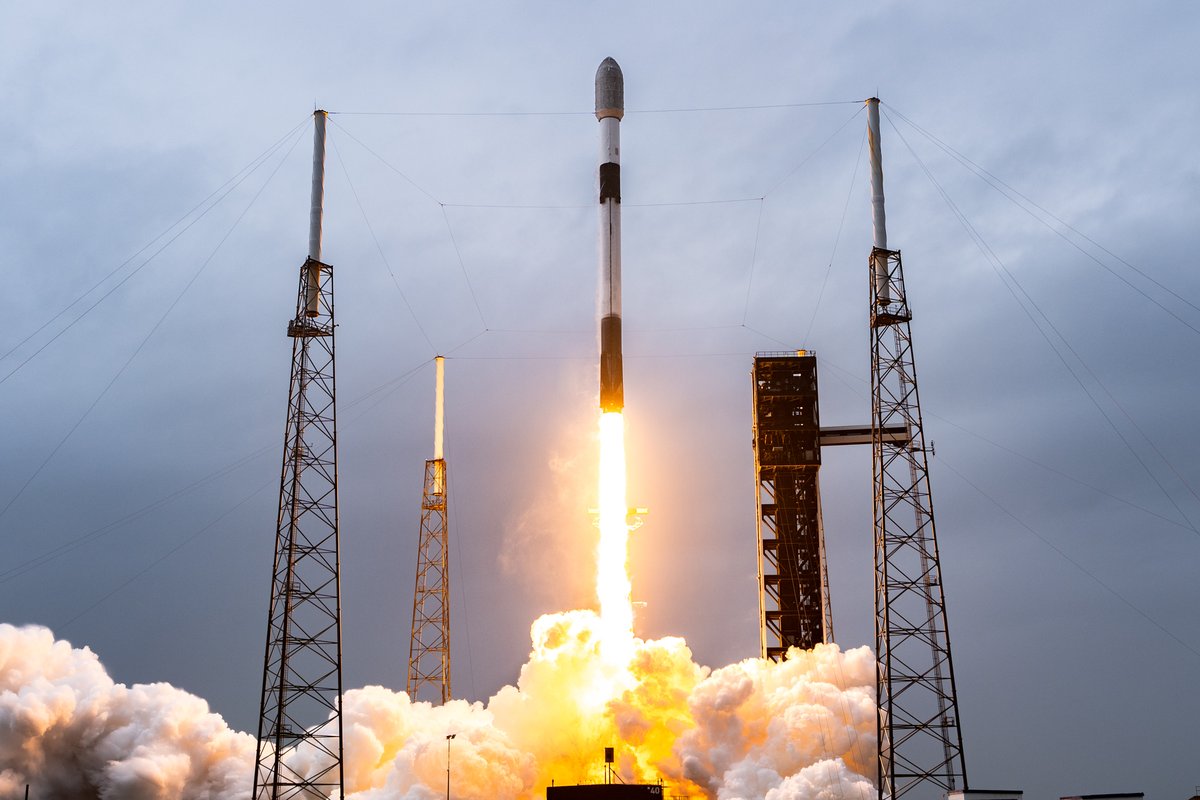
SpaceX has officially confirmed via its own channels that Falcon 9 will launch the U.S. Space Force's GPS III-8 mission, describing it as the fourth accelerated mission for the program. The announcement underscores SpaceX's deepening role in national security launches as it continues to absorb missions previously assigned to ULA. No launch date has been publicly specified yet.

📣 @SpaceX via X — March 21, 2026
📌 UPDATE — March 21, 2026
SpaceX has officially confirmed via its own channels that Falcon 9 will carry the GPS III-8 mission, describing it as the rocket's fourth accelerated national security mission for the U.S. Space Force. The announcement underscores SpaceX's growing role as the go-to provider for time-sensitive government launches previously assigned to other vehicles. No launch date has been publicly specified in the confirmation.

📣 @SpaceX on X — March 21, 2026
The News: The U.S. Space Systems Command has reassigned the GPS III-8 national security launch from United Launch Alliance (ULA) to SpaceX, switching the mission from ULA's Vulcan Centaur rocket to SpaceX's Falcon 9.
Why It Matters: SpaceX continues to consolidate its dominance in U.S. national security launches, picking up a critical GPS satellite mission after reliability concerns grounded ULA's newest rocket.
Source: @SawyerMerritt on X
U.S. Space Force Swaps Vulcan for Falcon 9 on Critical GPS Mission
SpaceX has landed another major national security contract — and this one came at a direct competitor's expense. The U.S. Space Systems Command, the branch of the Space Force responsible for procuring military launch services, has officially reassigned the GPS III-8 mission from United Launch Alliance to SpaceX. The satellite will now ride to orbit on a proven Falcon 9 rocket instead of ULA's newer Vulcan Centaur.
This isn't just a routine contract award. It's a reassignment — a mission that was already allocated to ULA being pulled and handed to SpaceX. That distinction matters, and it speaks volumes about the current state of the U.S. launch market.

Why ULA Lost the Mission
The reassignment stems from ongoing reliability concerns with ULA's Vulcan Centaur rocket, specifically issues with its solid rocket boosters (SRBs). According to background research from verified sources, the Vulcan experienced anomalies with its SRBs during two separate flights — one in October 2024 and another in February 2026. Those incidents prompted the Space Force to pause all Vulcan national security flights pending an anomaly investigation.
With the GPS III-8 mission on the schedule and ULA's rocket effectively grounded for military purposes, the Space Systems Command made the practical call: move the mission to SpaceX's Falcon 9, which has an extensive track record of successful national security launches.
What's at Stake: The Last GPS III Satellite
The GPS III-8 mission isn't a routine payload. It will deliver SV-10, the final satellite in the GPS III constellation, to orbit. The GPS III program represents the latest generation of Global Positioning System satellites, delivering improved accuracy, enhanced anti-jamming capabilities, and better signal strength for both military and civilian users. Getting this satellite into its operational orbit on schedule is a national security priority — one the Space Force clearly wasn't willing to delay while waiting for ULA to resolve its booster issues.

🔭 The BASENOR Take
| Impact Level | High — for the national security launch market |
| SpaceX Confidence | Very High — Falcon 9 is the most-flown active rocket |
| ULA Impact | Significant — raises questions about Vulcan's NSSL future |
| Timeline | Launch date TBD pending mission integration |
This contract reassignment is a watershed moment in the ongoing competition between SpaceX and ULA for national security launch business. For years, the Department of Defense maintained a deliberate strategy of funding two independent launch providers to ensure assured access to space. ULA's Atlas V and now Vulcan were supposed to serve as the counterweight to SpaceX's Falcon 9.
But when a mission-critical GPS satellite needs to get to orbit and one provider's rocket is grounded, strategy meets reality. The Space Force chose reliability and schedule certainty over maintaining competitive balance — and that's a decision that could have lasting implications for how future NSSL contracts are awarded.
For SpaceX, this is validation of a simple thesis: launch often, fail rarely, and the contracts will follow. Falcon 9's cadence — routinely launching multiple times per week — gives the Space Force confidence that a mission can be slotted into the manifest without significant delay. ULA's Vulcan, still early in its operational life, simply can't match that track record yet.
📰 Deep Dive
The broader context here is worth examining. The National Security Space Launch program was designed with redundancy as a core principle. The U.S. government explicitly wanted two providers so that if one rocket experienced issues, the other could pick up the slack. In theory, that's exactly what's happening here — the system worked as intended. But in practice, when SpaceX is consistently the provider picking up the slack, it raises questions about whether true competition still exists in this market.
ULA, now fully under Sierra Nevada Corporation's ownership following L3Harris's acquisition restructuring, faces a critical moment. Vulcan was supposed to be the company's next-generation workhorse, replacing the venerable Atlas V. Two SRB anomalies in the span of roughly 16 months have put that trajectory in jeopardy — not because the rocket can't be fixed, but because every mission reassigned to SpaceX makes it harder for ULA to build the flight heritage the Space Force demands.
For Tesla owners and investors watching the broader Elon Musk ecosystem, SpaceX coverage consistently reinforces a pattern: the company's engineering culture of rapid iteration and high flight cadence continues to translate into market dominance. SpaceX isn't winning these contracts on price alone — it's winning them on demonstrated reliability at scale, a competitive moat that grows deeper with every successful launch.
The GPS III-8 reassignment may be a single mission, but it's a signal. When the U.S. military needs certainty, it's increasingly turning to Falcon 9. That trend shows no signs of reversing.

Sarah focuses on Tesla Energy, SpaceX missions, and the broader Musk AI portfolio. Former data analyst in clean energy. Based in San Francisco.
Sources verified at publish time. Spotted an inaccuracy? Email editorial@basenor.com.