📌 UPDATE — August 6, 2026
Starship Flight 14 now has a target launch window: No Earlier Than (NET) August 28, according to CADENA tracking data shared by Avid Space (@LabPadre). This is the first specific date target to emerge for the flight, which is expected to deploy operational Starlink V3 satellites and attempt the first-ever Starship catch. As a NET date, it remains subject to change pending regulatory approvals, hardware readiness, and range availability.
@LabPadre · Aug 6, 2026
"Starship Flight 14 NET Aug 28 per CADENA."

📌 UPDATE — August 4, 2026
Elon Musk confirmed on a call that Starship Flight 14 will attempt a ship catch, targeting the end of August pending regulatory approval — adding a second ship catch attempt to the mission profile already reported. More ambitiously, Musk stated he expects SpaceX to be flying at least one Starship per day within a year, though reporter Jeff Foust noted the caveat to "calibrate for Elon time." If realized, the cadence would represent a step-change in launch operations, supporting both Starlink V3 deployment and future point-to-point or deep-space missions at scale.
@jeff_foust · Aug 4, 2026
"Musk adds later in the call that they will attempt a catch of the ship on Flight 14, planned for the end of the month, pending regulatory approval. Expects that a year from now the company will be doing at least one Starship flight a day. (Calibrate for Elon time.)"
SpaceX is about to raise the stakes on Starship. Elon Musk announced that the vehicle's next test flight will attempt two firsts simultaneously: deploying next-generation Starlink V3 satellites into a real operational orbit, and catching the returning Starship upper stage with the launch tower's mechanical arms. Either milestone alone would headline a flight campaign. Doing both on the same mission is a signal that SpaceX believes Starship is transitioning from experimental rocket to operational launch system.

What Musk Announced
The core of the announcement is straightforward. The next Starship test flight will:
- Carry next-generation Starlink V3 satellites and place them into orbit for operational service — not a suborbital demise test.
- Attempt to catch the Starship upper stage on return, using the launch tower's mechanical arms — the same "chopsticks" technique SpaceX has already demonstrated with the Super Heavy booster.
Musk framed the ship catch as contingent on data review from the previous mission, but the intent is clear: SpaceX wants Starship reusable end-to-end, and it wants Starlink V3 flying on it as soon as possible.
How We Got Here: Flight 13 Set the Stage
The announcement makes sense in the context of Starship's thirteenth test flight, which launched from Starbase, Texas on July 24, 2026 at 5:51 p.m. CT, according to SpaceX. That mission was the first to carry Starlink V3 satellites — 20 of them — but they were deployed on a suborbital trajectory and designed to demise on reentry roughly 20 minutes later. It was a rehearsal, not a real deployment.
What made Flight 13 significant was the data SpaceX pulled from those short-lived satellites. According to SpaceX, engineers successfully communicated with all 20 V3 units using both radio frequency and laser links, downloaded telemetry, confirmed solar-array and antenna deployment, and validated that the satellites could connect to the broader Starlink constellation via high-capacity laser links. In other words: the hardware works. What was missing was an orbit worth putting it in.
On the vehicle side, Flight 13 was mixed. The Super Heavy booster completed its boostback burn using all 33 Raptor 3 engines before experiencing a hard splashdown in the Gulf of Mexico. The Starship upper stage flew its full-duration ascent burn and performed a controlled splashdown in the Indian Ocean. Controlled splashdowns are the qualification gate that precedes catch attempts, which is why the next flight is now the ship-catch candidate.
Key Figures
| Metric | Value | Source |
|---|---|---|
| V3 satellites deployed on Flight 13 | 20 (suborbital, demised on reentry) | SpaceX |
| Max V3 capacity per future Starship | Up to 60 per launch to LEO | SpaceX |
| Starlink downlink capacity vs. Falcon 9 | ~20x increase | SpaceX |
| Raptor 3 engines on Super Heavy | 33 | SpaceX |
| Next ship catch attempt | Next flight, pending Flight 13 data review | Elon Musk |
Why Operational V3s Change the Math
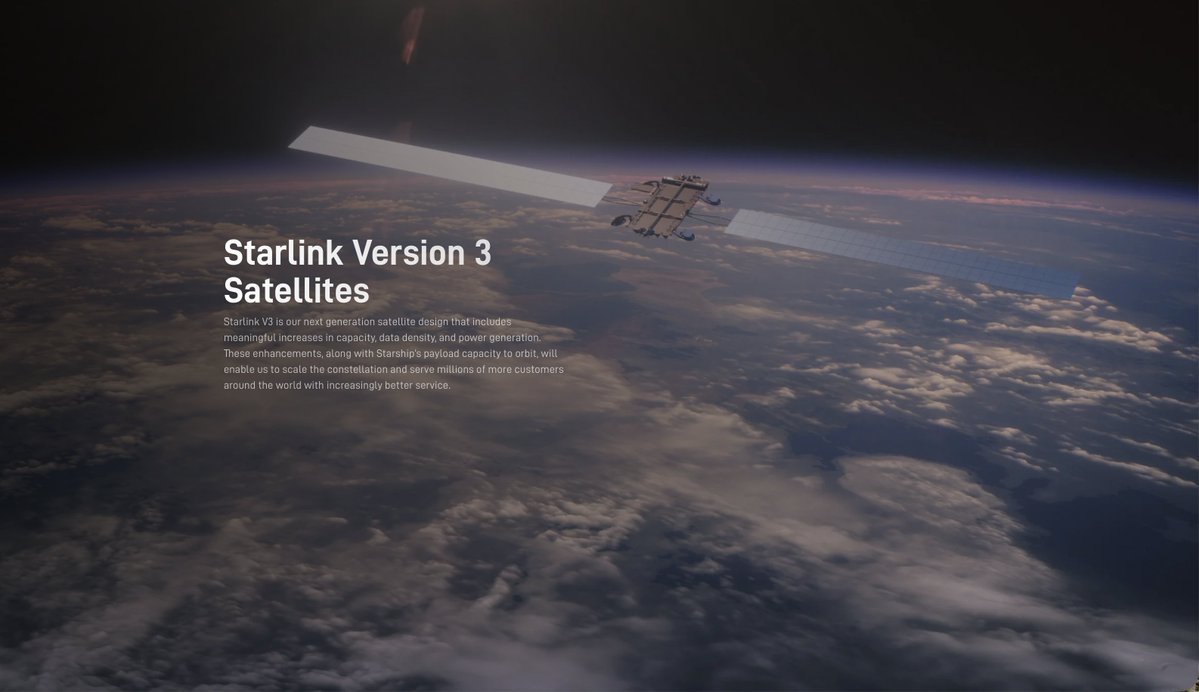
Starlink V3 is not just a bigger satellite — it's the piece that makes Starship commercially self-justifying. According to SpaceX, a single Starship launch can eventually deploy up to 60 V3 satellites, delivering roughly a twenty-fold increase in downlink capacity compared to a Falcon 9 Starlink mission. That ratio is what turns Starship from a moonshot into the workhorse SpaceX has been designing toward: a launcher whose payload economics leave Falcon 9 behind for the constellation's next phase.
The catch is that V3 satellites are physically too large for Falcon 9's fairing. Starlink's ability to scale to gigabit-class service tiers, higher user counts, and expanded direct-to-cell capacity depends on getting V3 hardware flying at cadence. Every month of delay on operational V3 deployment is a month the constellation runs on the older architecture.
That's the strategic weight behind Musk's announcement. Placing V3s into an operational orbit — not a demise trajectory — means the next flight is no longer a pure test. It becomes a revenue-relevant Starlink mission wearing a test-flight badge.
The Ship Catch: The Harder Half
Catching Super Heavy has become almost routine on SpaceX's terms. Catching the Starship upper stage is a different problem. The ship returns from orbital velocity, endures a much more punishing reentry, and has to arrive at the tower with the precision and structural health to be gripped mid-air by the chopsticks. A hard splashdown is survivable during testing; a hard tower approach is not.
Flight 13's controlled Indian Ocean splashdown is what earned this next attempt. But Musk's framing — contingent on data review — is the operative caveat. If reentry telemetry from Flight 13 shows heat-shield or control-surface issues that would compromise a tower approach, the catch attempt gets deferred and the flight reverts to another controlled splashdown. SpaceX has repeatedly shown it will scrub high-risk milestones rather than lose vehicles unnecessarily, and the ship is the harder half of the reusability equation to rebuild.
What to Watch Next
- Flight 13 data review outcome. SpaceX's public communication on reentry performance will telegraph whether the catch is actually on the table for the next launch or gets pushed.
- V3 count on the next flight. Will SpaceX push toward the 60-satellite ceiling or start smaller to validate an operational deployment sequence?
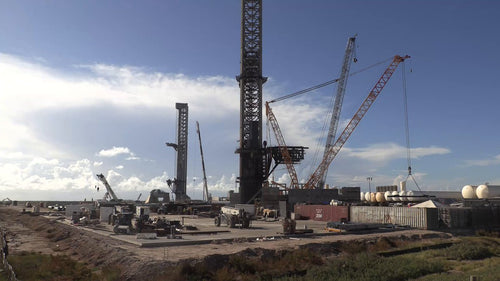
- Launch tower configuration at Starbase. Any visible modifications to the chopsticks or tower catch hardware would confirm the catch attempt is being actively prepped.
- FAA licensing. An operational Starlink deployment plus a ship catch attempt is a materially different mission profile from Flight 13 and may require an updated launch license amendment.
Editor's View
Two firsts on one flight is aggressive even by SpaceX standards, and that's the point. Musk is treating the Starship program as if the vehicle is already operational and the remaining tests are formalities. Whether the ship catch succeeds on the first try is almost beside the question — what matters is that SpaceX is willing to fly a real Starlink payload on the same mission. That's the tell. When you stop treating cargo as ballast, the rocket has graduated.
🚀 Following the Starship program? See every test flight, official outcome and the next launch window in our SpaceX Starship Tracker.
Sources & reporting notes
The links below identify the material source records used for this report.
- @SawyerMerritt on X (2026-08-04T20:36:26.000Z) — Direct source
Source links are preserved as published or accessed. See our editorial standards and corrections policy.
The BASENOR Editorial Desk covers Tesla, SpaceX, and related technology, curating reporting from primary sources — official accounts, regulatory filings, and software release data. Every article passes source-record and fact-checking review before publication. About the newsroom.
This report was curated by the BASENOR Editorial Desk from the sources listed above. Read our editorial standards or email editorial@basenor.com to report an error.