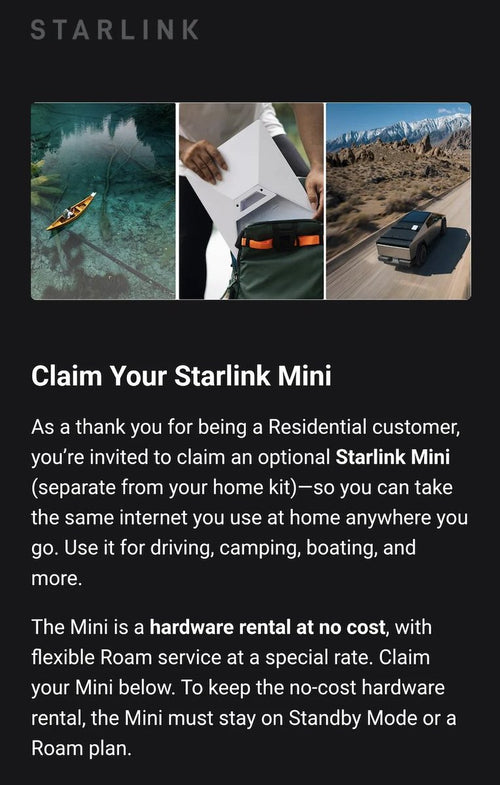
Starlink built its reputation as the internet option of last resort — the solution for ranchers, remote cabins, and anyone stuck with no viable wired alternative. That narrative is changing fast. According to recent market data and a growing wave of consumer interest, satellite broadband is now actively competing for households that already have a cable or fiber connection. Here's what you need to know.

Why is Starlink suddenly relevant to people who already have broadband?
The core shift is infrastructure independence. Traditional broadband — cable, fiber, DSL — is only as good as what's been physically built in your area, and that infrastructure is owned and priced by a small number of providers. Starlink bypasses all of that. Because it operates via a low-Earth orbit satellite constellation, it doesn't matter whether your street has fiber or your building has a cable monopoly. That independence is increasingly valuable even in areas with existing service, particularly where local providers have raised prices, degraded speeds, or simply face no competitive pressure to improve.
Is there actual data showing urban adoption, or is this just hype?
There's real data. According to Speedtest data from Ookla analyzed in April 2026, five U.S. states — Florida, Massachusetts, Hawaii, New Jersey, and Connecticut — had more Starlink users in urban areas than rural areas during the second half of 2025. These aren't frontier states. They're densely populated, well-served markets where consumers are actively choosing satellite broadband alongside or instead of terrestrial options. That's a meaningful signal about where Starlink's growth is coming from.
How big has Starlink actually gotten?
Larger than most people realize. According to publicly available figures, Starlink passed 10 million subscribers globally in February 2026, up from approximately 4.5 million at the start of 2025 — more than doubling in a single year. The service now operates across more than 155 countries and markets. On the financial side, Starlink's connectivity segment generated $11.39 billion in revenue and $4.42 billion in operating profit for the full year 2025, making it a significant and profitable business in its own right, not just a side project for SpaceX.
What's actually driving the price and value equation now?
Two things: pricing adjustments and hardware improvements. In mature markets like North America and Europe, SpaceX has lowered monthly fees and introduced free kit rental options, reducing the upfront barrier that previously made Starlink a tough sell for anyone with a working alternative. On the technical side, the rollout of V2 Mini satellites — which carry roughly four times the capacity of first-generation hardware — combined with inter-satellite links has pushed total network capacity beyond 600 Tbps. More capacity generally means more consistent speeds even as the subscriber base grows. In some international markets, such as the United Kingdom, a Starlink subscription is now reportedly cheaper than the lowest-priced plans from the national incumbent provider.
Is Starlink only for home internet, or has it expanded elsewhere?
It has expanded well beyond residential use. By January 2026, Starlink had equipped over 1,000 business jets across 36 airframe types from five manufacturers — making in-flight connectivity a significant growth vertical. In the maritime sector, Starlink connected more than 150,000 vessels in 2025 and served an estimated 20 million cruise passengers. SpaceX has also deployed over 650 Direct to Cell satellites that can deliver voice, video, and messaging services directly to standard unmodified cell phones, which opens an entirely different category of potential users who may never own a Starlink dish at all.
What comes next for the network?
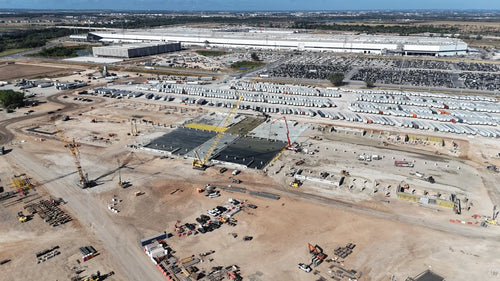
SpaceX is planning to roughly double Starlink kit production at its Bastrop, Texas facility in 2026 to keep pace with demand. Further out, a new generation of V3 satellites — larger and significantly more capable than current hardware — is scheduled to begin launching in mid-2027 aboard Starship. The goal is to deploy approximately 1,200 of these upgraded satellites within six months of the first launch to achieve global contiguous coverage. If that timeline holds, the network's capacity and performance floor in 2028 will look very different from what it is today. For consumers sitting on the fence about switching or adding Starlink as a backup connection, the trajectory of the service is pointing in one direction. You can follow our SpaceX coverage for updates as the V3 rollout approaches.
Sources & reporting notes
The links below identify the material source records used for this report.
- @SawyerMerritt on X (2026-07-27T14:28:39.000Z) — Direct source
Source links are preserved as published or accessed. See our editorial standards and corrections policy.
The BASENOR Editorial Desk covers Tesla, SpaceX, and related technology, curating reporting from primary sources — official accounts, regulatory filings, and software release data. Every article passes source-record and fact-checking review before publication. About the newsroom.
This report was curated by the BASENOR Editorial Desk from the sources listed above. Read our editorial standards or email editorial@basenor.com to report an error.