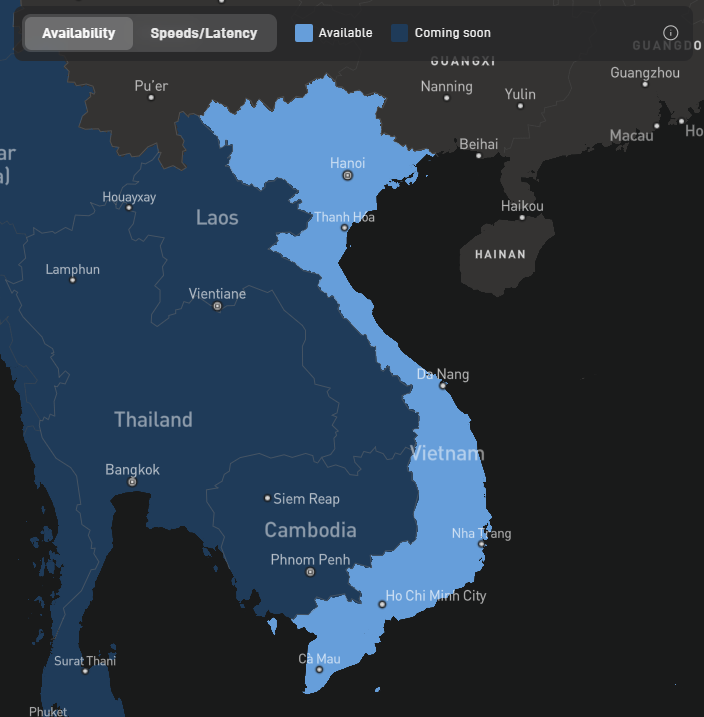
Starlink officially switched on high-speed, low-latency satellite internet service in Vietnam on August 12, 2026, completing a regulatory journey that began in earnest with a Prime Minister-level pilot program approval in March 2025. The launch adds Vietnam to a growing list of Southeast Asian markets where SpaceX's LEO constellation is reshaping what connectivity looks like outside major urban centers.

How Vietnam Got Here
The path to launch was methodical. Vietnam's government authorized Starlink to operate in the country in February 2026, granting Starlink Services Vietnam Co., Ltd. licenses to provide satellite-based telecommunications services with local network infrastructure. The Radio Frequency Department issued a separate approval covering spectrum use and radio equipment. Both clearances flowed from Prime Minister Decision 659/QD-TTg, signed March 26, 2025, which established a five-year pilot program for low-Earth-orbit satellite telecom services running until January 1, 2031.
The pilot framework is notable for what it permits: foreign ownership without the caps that typically apply to Vietnamese telecom ventures, provided national defense and security conditions are met. That carve-out was a prerequisite for SpaceX to operate the service directly rather than through a local joint-venture structure, according to reporting from vietnamlawmagazine.vn.
Orders began opening on August 11, 2026 — one day before the official announcement — and the subscriber cap under the pilot is set at 600,000 users.
Infrastructure on the Ground
Starlink is authorized to deploy four gateway stations across three locations: Phu Tho in the north, Da Nang in the center, and Ho Chi Minh City in the south. According to vietnamplus.vn, SpaceX has committed $3 million to build out those initial stations, with plans that could eventually scale to 15 ground stations nationwide. The geographic spread of the first four sites reflects a deliberate strategy — anchor the backhaul at points that give the constellation reasonable coverage across Vietnam's elongated coastline.
Pricing and Performance
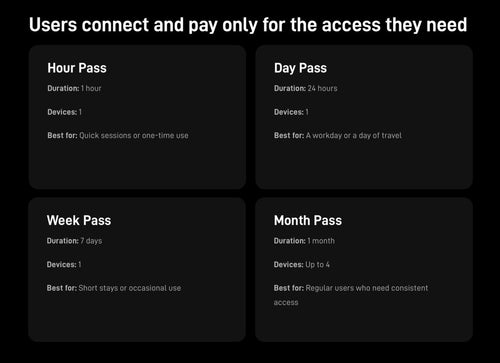
Draft pricing figures circulating ahead of launch put the first-month cost for individual users at approximately US$435 — roughly US$350 for the terminal hardware and US$85 for the monthly subscription. From month two onward, the recurring fee sits at around US$85. These figures are described as part of a draft plan and have not been confirmed as final by Starlink, so prospective subscribers should verify current pricing directly at starlink.com before ordering.
On performance, typical speeds on the Starlink network run between 20 and 200 Mbps with latency low enough for video calls. On land, most users can expect to land in the 80–200 Mbps range, according to vietnamnet.vn. That performance envelope is more than sufficient for the service's stated primary target: remote villages, border regions, island communities, and emergency connectivity during typhoons and flooding — scenarios where Vietnam's fixed and mobile networks have historically struggled.
Vietnam Launch: Key Numbers
| Pilot program duration | 5 years (to Jan 1, 2031) |
| Subscriber cap | 600,000 users |
| Initial gateway stations | 4 (Phu Tho, Da Nang, HCMC) |
| SpaceX infrastructure investment | US$3 million |
| Est. hardware cost (draft) | ~US$350 |
| Est. monthly subscription (draft) | ~US$85 |
| Typical land speeds | 80–200 Mbps |
The Broader Southeast Asia Picture
Vietnam's launch is part of a sustained push by Starlink into markets where terrestrial broadband investment has been uneven. The flat-rate pricing model — no data caps — is a meaningful differentiator in a region where mobile data throttling is common. For SpaceX, Vietnam's 600,000-subscriber ceiling under the pilot program represents a defined but commercially meaningful beachhead. Whether the government extends the pilot, expands the cap, or moves toward a permanent licensing regime after 2031 will depend largely on how the service performs against its stated mandate of reaching underserved communities.
The $3 million ground station commitment is modest by infrastructure standards, but it signals a long-term operational posture rather than a soft launch. If the 15-station expansion materializes, Vietnam would have one of the denser Starlink ground networks in the region — which matters for latency consistency across a country that stretches nearly 1,650 kilometers from north to south. For SpaceX coverage news, see our SpaceX coverage.
Sources & reporting notes
The links below identify the material source records used for this report.
- @Starlink on X (2026-08-12T22:56:19.000Z) — Direct source
Source links are preserved as published or accessed. See our editorial standards and corrections policy.
The BASENOR Editorial Desk covers Tesla, SpaceX, and related technology, curating reporting from primary sources — official accounts, regulatory filings, and software release data. Every article passes source-record and fact-checking review before publication. About the newsroom.
This report was curated by the BASENOR Editorial Desk from the sources listed above. Read our editorial standards or email editorial@basenor.com to report an error.