Elon Musk confirmed on August 4 that the Starmind V1 satellite design — the same hardware architecture being built for SpaceX's orbital AI constellation — will be stripped of its space-specific components and deployed inside terrestrial data centers. The claim: a "major improvement in data center efficiency." Here's what we actually know about what that means.

What exactly is the Starmind V1 design?
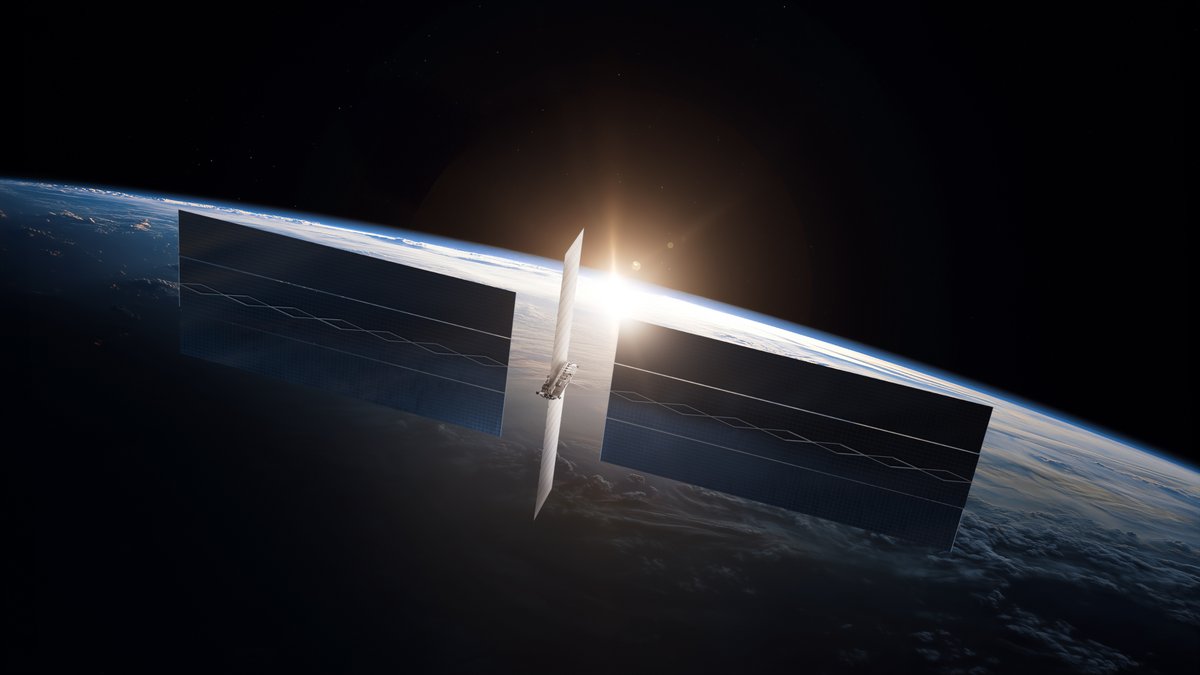
Starmind is SpaceX's orbital AI compute constellation. The core hardware unit — referred to as the AI1 satellite — is built around high-density GPU compute, with the orbital version designed to carry an Nvidia Rubin NVL72 rack containing 72 Rubin GPUs. According to background reporting, the compute payload is modular and can integrate NVIDIA GB300, Rubin, or TPU-class silicon depending on the customer. The orbital design peaks at roughly 250kW of power (battery-assisted) with an average draw around 160kW. What Musk is now saying is that the core compute architecture of that satellite — without the solar arrays and thermal radiators needed to survive in orbit — translates directly into a ground-deployable unit.
Why remove the solar panels and radiators specifically?
In space, a satellite has no access to grid power and no atmosphere for convective cooling, so it needs large solar arrays to generate electricity and radiator panels to dump waste heat into the void. On the ground, both problems are solved differently: you plug into utility power and use conventional data center cooling infrastructure. Stripping those two subsystems from the Starmind V1 design removes mass, volume, and cost while preserving the part that actually matters — the densely engineered compute core. The result is a unit that was already optimized for extreme size and weight constraints in orbit, now repackaged for a rack or pod environment where those same constraints translate into higher compute density per square foot.
Whose data centers are these?
Musk said "our data centers" — which most likely refers to xAI's infrastructure, given that Starmind is a high-performance AI compute platform and xAI is the entity actively scaling AI training and inference capacity. SpaceX itself also operates significant compute infrastructure. No specific facility or deployment timeline for the ground-based version has been confirmed publicly as of this writing.
What does "major improvement in data center efficiency" actually mean?
Musk didn't attach a specific number to that claim, so it's worth being precise about what's likely driving it. Satellite hardware is engineered to extreme tolerances — every watt, every gram, every cubic centimeter is accounted for. When that level of integration discipline gets applied to a ground-based compute module, the theoretical gains come from two places: higher compute density (more GPUs in less physical space) and a tighter, purpose-built thermal and power delivery architecture rather than the general-purpose rack infrastructure most data centers use. Whether the efficiency claim refers to performance-per-watt, performance-per-square-foot, or total cost of ownership hasn't been specified.
Where does the broader Starmind program stand?
According to background research, two AI1 prototype satellites are scheduled for launch in early 2027, with volume production for the orbital constellation targeted by end of 2027 and first operational orbital AI deployments slated for 2028. SpaceX is also building a dedicated "Gigasat" manufacturing facility in Bastrop, Texas, for large-scale satellite production. The ground-based data center application appears to be a parallel track — using the same validated design for terrestrial deployment while the orbital program ramps up. SpaceX is also developing its own radiation-tolerant chip internally, referred to as D3 (AI7), though that component is specific to the orbital environment and presumably not part of the ground adaptation.
What's still unknown?
Quite a bit. The specific efficiency metrics, deployment timeline for the ground-based units, which facilities will receive them first, and whether this hardware will eventually be offered to third-party hyperscalers or remain internal — none of that has been disclosed. What Musk confirmed is the intent and the design lineage. The engineering details of how the orbital unit translates to a rack-mountable or pod-based ground system are still to come.
The announcement is notable less for what it reveals about data center specs and more for what it signals about SpaceX's engineering strategy: design once for the hardest environment (orbit), then harvest the efficiency gains everywhere else. If the ground-based Starmind units perform at anything close to the density implied by the orbital design, it would represent a meaningful departure from how hyperscale compute infrastructure is typically built. The specifics will matter — and they haven't arrived yet.
Sources & reporting notes
The links below identify the material source records used for this report.
- @elonmusk on X (2026-08-04T20:09:42.000Z) — Direct source
Source links are preserved as published or accessed. See our editorial standards and corrections policy.
The BASENOR Editorial Desk covers Tesla, SpaceX, and related technology, curating reporting from primary sources — official accounts, regulatory filings, and software release data. Every article passes source-record and fact-checking review before publication. About the newsroom.
This report was curated by the BASENOR Editorial Desk from the sources listed above. Read our editorial standards or email editorial@basenor.com to report an error.