📌 UPDATE — July 31, 2026
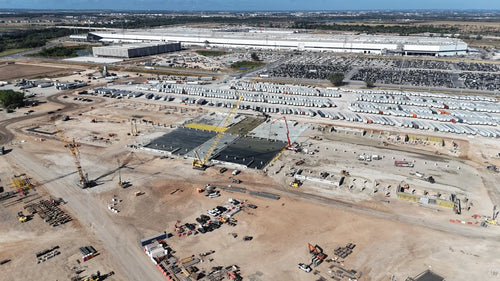
Starbase has transitioned into post-Flight 13 operations, with NASASpaceflight reporting that Starship Flight 14 could launch as early as late August 2026. That would put the next attempt — and potentially another tower catch — just weeks away. Separately, ongoing modifications to Pad 1 are focused on readying it to support Starship flights from 2027 onward, signaling SpaceX is already building out long-term launch cadence infrastructure at Starbase.

📌 UPDATE — July 29, 2026
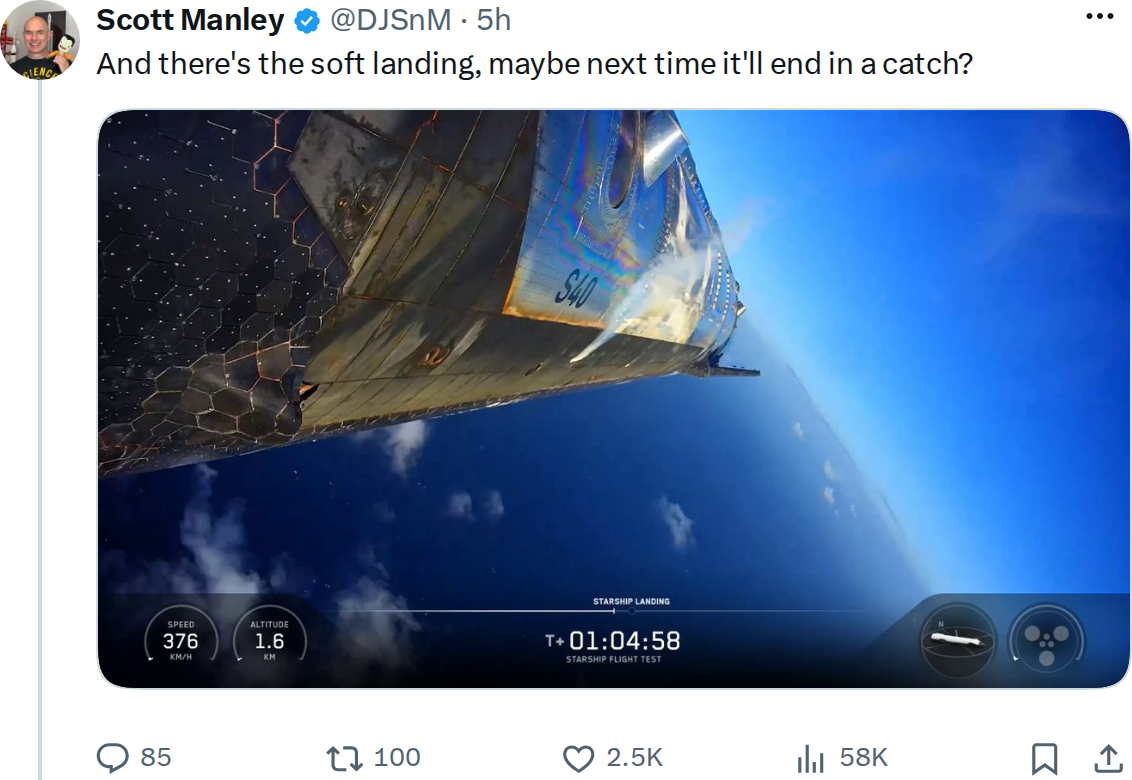
Elon Musk has confirmed that the most recent Starship ship landing was precise enough to have been caught by the launch tower's mechazilla arms — meaning the hardware and guidance systems are already performing at catch-ready accuracy. This is a significant milestone: it validates that the decision to attempt an actual tower catch on the next flight isn't just ambition, but is backed by demonstrated landing precision. Musk shared footage alongside the confirmation, underscoring that the gap between "could have been caught" and "will be caught" now comes down to operational readiness rather than technical capability.

SpaceX is moving toward its most ambitious reusability milestone yet. Elon Musk confirmed late Friday that — barring problems flagged during post-flight data review — the next Starship mission will attempt to catch the upper stage ship with the launch tower's mechanical arms, the same 'chopstick' system that already snagged the Super Heavy booster back in October 2024. Here are the five details worth understanding before that flight.

1. The Conditional Is Real — Data Review Comes First
Musk's exact wording was 'unless we discover problems after mission data review' — which means this is a go/no-go decision, not a done deal. SpaceX engineers will comb through telemetry, thermal data, and structural readings from the previous flight before committing. If something concerning surfaces, the catch attempt gets pushed. That caveat is standard SpaceX discipline, not hedging — the program has repeatedly delayed milestones rather than rush them.
2. The Booster Catch Already Proved the Concept
The tower catch isn't theoretical. On October 13, 2024, SpaceX successfully caught the Super Heavy booster — Booster 12 — with the launch tower's mechanical arms at Boca Chica during Starship's fifth flight test. That was the first time any orbital-class rocket booster had been caught mid-air by ground infrastructure. The ship catch would be the second half of that equation, completing a fully tower-recoverable stack.
3. The Ship and Booster Have Different Return Profiles
During Flight 5, the Super Heavy booster returned to the launch site for the catch while the Starship upper stage performed a controlled water landing in the Indian Ocean west of Australia. Catching the ship with the tower instead of a water splashdown is a significantly harder maneuver — the ship must reenter from orbital velocity, survive peak heating, and then execute a precision flip-and-catch back at the pad. Getting both vehicle halves back on the tower would eliminate the need for ocean recovery operations entirely.
4. Full Tower Recovery Is the Core of SpaceX's Cost Model
The entire economic argument for Starship — and by extension, missions to the Moon and Mars — depends on rapid reusability. A ship that splashes down in the ocean requires retrieval vessels, saltwater refurbishment, and days of turnaround time. A ship caught by the tower can theoretically be inspected, refueled, and reflown within hours. Musk has described this as the difference between an airline and a ship-in-a-bottle — the tower catch is what makes the airline model possible.
5. Regulatory Clearance Will Be a Parallel Track
Hardware readiness is only one gate. The FAA issued a license modification for Flight 5 the Saturday before launch after confirming SpaceX met all safety, environmental, and licensing requirements, according to Spaceflight Now. The next ship catch attempt will require its own FAA sign-off. Given the novelty of catching the upper stage — a vehicle returning from orbital velocity — the regulatory review could run on a different timeline than SpaceX's internal data review. Both gates need to open before the flight happens.
The next Starship flight is shaping up to be the program's most consequential test since Flight 5. If the data review comes back clean and the FAA clears the mission, SpaceX will attempt something that has never been done: catching an orbital-class upper stage out of the sky with a pair of mechanical arms. For more on SpaceX milestones, see our SpaceX coverage.
🚀 Following the Starship program? See every test flight, official outcome and the next launch window in our SpaceX Starship Tracker.
Sources & reporting notes
The links below identify the material source records used for this report.
- @elonmusk on X (2026-07-25T04:45:04.000Z) — Direct source
Source links are preserved as published or accessed. See our editorial standards and corrections policy.
The BASENOR Editorial Desk covers Tesla, SpaceX, and related technology, curating reporting from primary sources — official accounts, regulatory filings, and software release data. Every article passes source-record and fact-checking review before publication. About the newsroom.
This report was curated by the BASENOR Editorial Desk from the sources listed above. Read our editorial standards or email editorial@basenor.com to report an error.