Ten years ago today, Elon Musk walked onto a stage in Guadalajara, Mexico, and told the world he intended to colonize Mars. The vehicle he unveiled — the Interplanetary Transportation System, or ITS — bore little resemblance to anything flying at the time. A decade later, that presentation looks less like a fever dream and more like a founding document for the most consequential rocket program in history.

What Musk Actually Announced in 2016
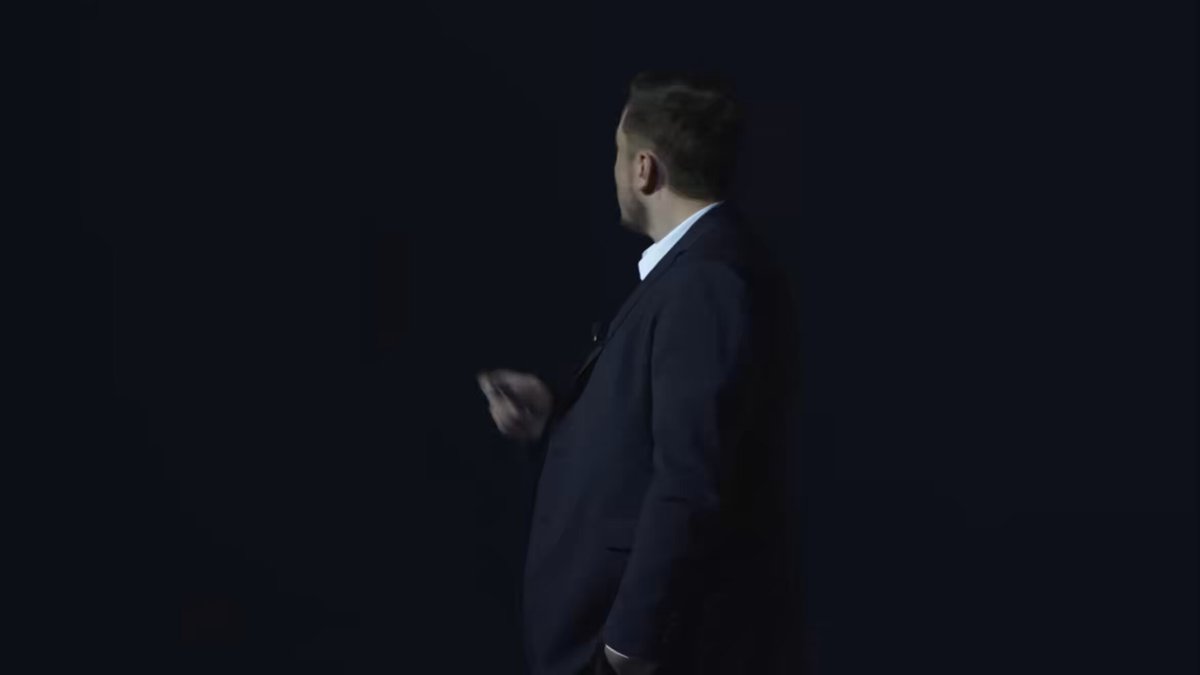
The 67th International Astronautical Congress in Guadalajara was not the typical venue for a paradigm shift. But on September 27, 2016, Musk presented a system that dwarfed anything in operation — or even on a drawing board — at the time. The ITS had previously circulated internally under the name Mars Colonial Transporter, but the IAC reveal was the first public look at the full architecture.
According to contemporaneous reports from Space.com and collectspace.com, the spacecraft component alone stood 49.5 meters tall and 17 meters wide, powered by nine Raptor engines and deployed two large solar array sails for power in deep space. Stacked on its booster, the full ITS system reached approximately 122 meters — taller than the Saturn V. The spacecraft was designed to carry between 100 and 200 passengers per flight.
The stated goal was not a flags-and-footprints mission. Musk described a self-sustaining colony of up to one million people on Mars, built over 40 to 100 years. The underpants gnome meme he deployed during the presentation — a joke about skipping the hard middle steps — became one of the more memorable moments from a talk that was, by any measure, unlike anything the space industry had seen from a private company.
From ITS to Starship: A Decade of Iteration
The ITS of 2016 never flew. What it did was establish a direction. Over the following years, SpaceX progressively scaled back the diameter, revised the propellant strategy, and renamed the program multiple times — through BFR, then Big Falcon Rocket, before settling on Starship and Super Heavy as the current nomenclature. Each iteration retained the core architecture: a fully reusable two-stage system with the booster catching the upper stage, designed for rapid turnaround and high flight cadence.
The Raptor engine, which powered the original ITS concept, survived every redesign. It became one of the most technically ambitious propulsion programs in the industry — a full-flow staged combustion engine running on liquid methane and liquid oxygen, chosen specifically because both propellants can theoretically be produced on Mars from local resources.
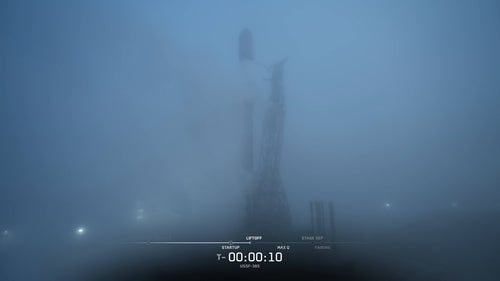
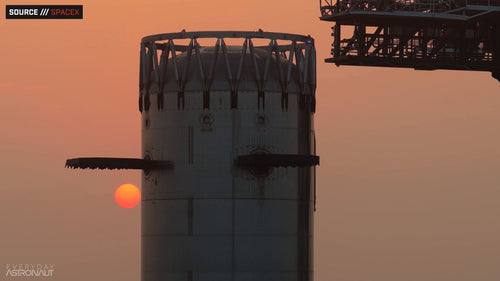
The program has since achieved orbital-class test flights, with SpaceX demonstrating booster catch operations at Starbase in South Texas — a milestone that would have seemed implausible even to optimistic observers watching the 2016 IAC presentation. For more on SpaceX's ongoing milestones, see our SpaceX coverage.
Why the Anniversary Still Matters
The ITS announcement is worth revisiting not just as nostalgia but as a case study in how long-horizon engineering commitments actually work. In 2016, the credibility gap between the vision Musk described and SpaceX's operational track record was enormous. The company had flown Falcon 9 successfully, but the leap to a 100-passenger interplanetary vehicle seemed categorically different in scale and ambition.
What the decade since has demonstrated is that the underlying technical logic of the ITS — full reusability, methane propulsion, vertical integration of manufacturing — has proven durable even as the specific numbers and configurations changed. The program absorbed enormous setbacks, including multiple high-altitude Starship prototype explosions and years of regulatory delays, without abandoning its foundational architecture.
Everyday Astronaut's Tim Dodd, one of the most closely followed independent voices in spaceflight commentary, marked the anniversary by noting Musk's use of the underpants gnome meme — and the lingering question of whether Musk already knew, even then, how much of the middle he was deliberately leaving unspecified. It's a fair read. The 2016 presentation was long on destination and deliberately vague on the intermediate engineering steps that would consume the following decade.
The Distance Between Guadalajara and Now
Ten years is a useful unit of measurement for programs of this scale. The Saturn V went from concept to Moon landing in roughly eight years. Starship has spent its first decade getting to the point where the basic architecture is flight-proven and the booster can be caught mid-air by a launch tower. The Mars timeline Musk described in 2016 — a first crewed mission within a decade — has slipped, but the hardware trajectory has remained more consistent than critics expected.
Whether the second decade closes the gap between demonstration flights and operational Mars missions is the defining open question. The ITS anniversary is a reminder that the ambition was always stated plainly, in public, with a meme about missing steps. The question now is which of those missing steps get filled in next.
🚀 Following the Starship program? See every test flight, official outcome and the next launch window in our SpaceX Starship Tracker.
Sources & reporting notes
The links below identify the material source records used for this report.
- @Erdayastronaut on X (2026-09-27T14:42:21.000Z) — Direct source
Source links are preserved as published or accessed. See our editorial standards and corrections policy.
The BASENOR Editorial Desk covers Tesla, SpaceX, and related technology, curating reporting from primary sources — official accounts, regulatory filings, and software release data. Every article passes source-record and fact-checking review before publication. About the newsroom.
This report was curated by the BASENOR Editorial Desk from the sources listed above. Read our editorial standards or email editorial@basenor.com to report an error.