📌 UPDATE — July 20, 2026
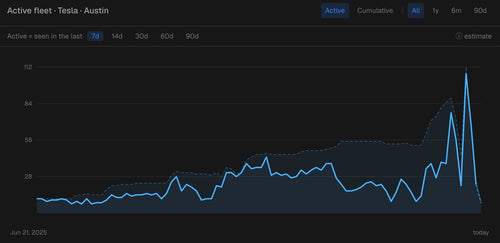
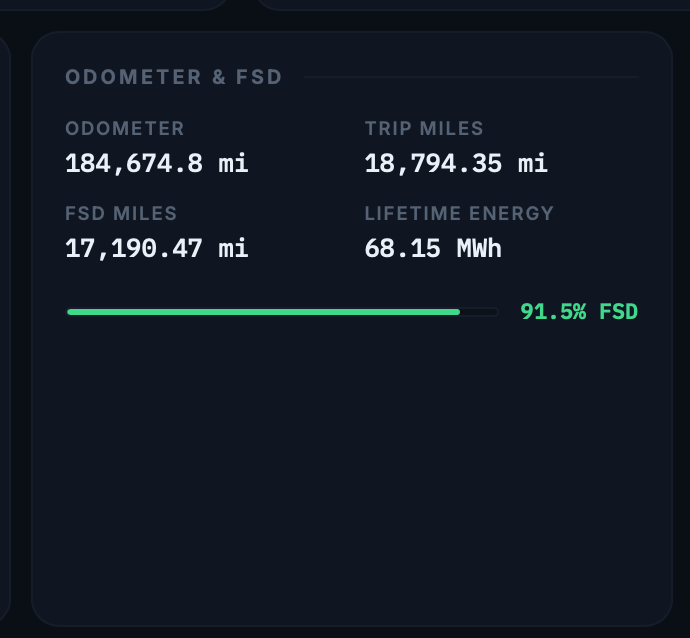
AI3-equipped Teslas are now showing up prominently on the @fsd_database weekly self-driving leaderboard, signaling a meaningful step forward in real-world FSD performance on the newer hardware. Noted Tesla observer @wholemars flagged the development on July 20, pointing to multiple AI3 vehicles ranking highly for the current week. This leaderboard data provides early community-level validation that AI3's fleet telemetry miles — as detailed in the original article — are translating into measurable on-road performance gains, not just raw mileage accumulation.

Tesla's AI3 (Hardware 3) vehicles have quietly crossed a meaningful threshold: they're now actively reporting self-driving miles through fleet telemetry. Spotted by Tesla community tracker @wholemars on July 20, this development pulls millions of older vehicles deeper into Tesla's FSD data pipeline — and it has real implications for how quickly the system improves on that hardware.

1. What AI3 (Hardware 3) Actually Is
Hardware 3 — now referred to internally as AI3 — is Tesla's custom FSD chip that began shipping in vehicles in 2019. It replaced the earlier NVIDIA-based Hardware 2.5 platform and remained Tesla's primary compute platform until the AI4 (Hardware 4) rollout began in late 2023. A substantial portion of the active Tesla fleet still runs AI3, and according to FSD Database, AI3 hardware accounts for roughly 22.6% of tracked FSD installations as of July 19, 2026. That's a large pool of vehicles, and their telemetry data now has a direct pipeline into Tesla's development systems.
2. Fleet Telemetry Is How Tesla Trains FSD at Scale
Tesla's fleet telemetry system automatically collects real-world driving data — including edge cases, near-misses, and intervention events — from vehicles operating in supervised FSD mode. This data feeds back into Tesla's neural network training pipeline, helping the system improve without requiring engineers to manually curate every scenario. According to Tesla's own reporting, the fleet had accumulated over 11.3 billion cumulative FSD miles as of June 21, 2026, with approximately 27 million miles being logged per day. AI3 vehicles contributing to that count meaningfully expands the diversity and volume of training data available.
3. FSD v14 Lite Is the Software Bridge That Made This Possible
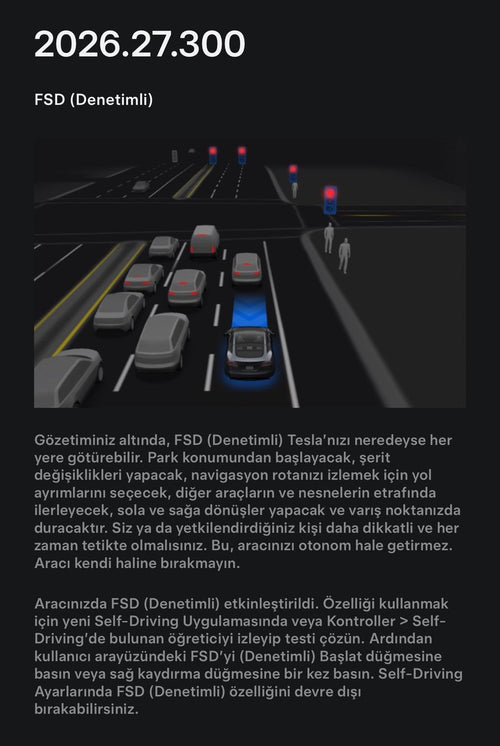
The timing here isn't coincidental. Tesla began rolling out FSD v14 Lite (firmware 2026.20.5.1) to AI3 early-access customers on June 29, 2026. This version ports the driving behavior architecture from the AI4's v14 series and optimizes it for AI3's hardware and camera configuration. As of July 15, the release remains limited — deployed to less than 0.1% of the fleet, primarily Early Access Group members — but the telemetry reporting now active on these vehicles suggests the data collection infrastructure is already in place ahead of a broader rollout.
4. Unsupervised FSD Remains Off the Table for AI3
It's worth being precise about what this development does and doesn't mean. Elon Musk confirmed during the Q1 2026 earnings call that AI3 vehicles will not achieve unsupervised Full Self-Driving. The hardware compute ceiling is the limiting factor. What AI3 owners are getting — and contributing to — is supervised FSD, a Level 2 advanced driver-assistance system that still requires an attentive driver. The telemetry reporting means their real-world miles count toward improving the system, but it doesn't change the hardware's fundamental capability boundary. For our FSD coverage on what unsupervised FSD requires, the short answer is AI4 hardware minimum.
5. What This Means for AI3 Owners Right Now
If you're driving a Tesla equipped with AI3 hardware and have FSD (Supervised) active, your miles are now feeding into Tesla's development data stream — provided you're on a recent enough firmware version to support the telemetry reporting. The practical implication is that AI3 owners in the Early Access Group running FSD v14 Lite are the most likely to see their miles reflected in third-party trackers and, eventually, any leaderboard-style visibility that emerges. For the broader AI3 population, the key watch item is when FSD v14 Lite exits its limited release phase and reaches a wider audience in the US and Canada — at that point, the telemetry contribution scales significantly.
The bigger picture: Tesla now has an expanded, hardware-diverse dataset flowing into its FSD training pipeline at a moment when the system is logging roughly 27 million miles per day fleet-wide. Whether AI3's contribution accelerates improvements specifically for that hardware — or primarily benefits the AI4 architecture — is the open question worth watching as v14 Lite rolls out more broadly.
Related Gear
Gear up your Tesla with tested, custom-fit BASENOR accessories — shop Tesla accessories →
Sources & reporting notes
The links below identify the material source records used for this report.
- @wholemars on X (2026-07-20T07:08:00.000Z) — Direct source
Source links are preserved as published or accessed. See our editorial standards and corrections policy.
The BASENOR Editorial Desk covers Tesla, SpaceX, and related technology, curating reporting from primary sources — official accounts, regulatory filings, and software release data. Every article passes source-record and fact-checking review before publication. About the newsroom.
This report was curated by the BASENOR Editorial Desk from the sources listed above. Read our editorial standards or email editorial@basenor.com to report an error.