📌 UPDATE — October 21, 2026
In a notable development amid the ongoing merger exploration, Tesla's Head of Investor Relations was observed attending SpaceX's earnings call — a cross-company appearance that raises eyebrows given the active special committee process. While no official explanation has been provided, the presence of Tesla's top IR executive on a SpaceX earnings call suggests the two companies may already be coordinating on investor communications or conducting shared due diligence ahead of any potential deal. This kind of IR-level overlap would be unusual between two separate, independent companies and could signal that merger discussions are progressing beyond early-stage exploration. Neither Tesla nor SpaceX has issued a statement explaining the attendance.
🔍 @wholemars · Oct 20, 2026
"Head of Tesla IR on SpaceX earnings call"
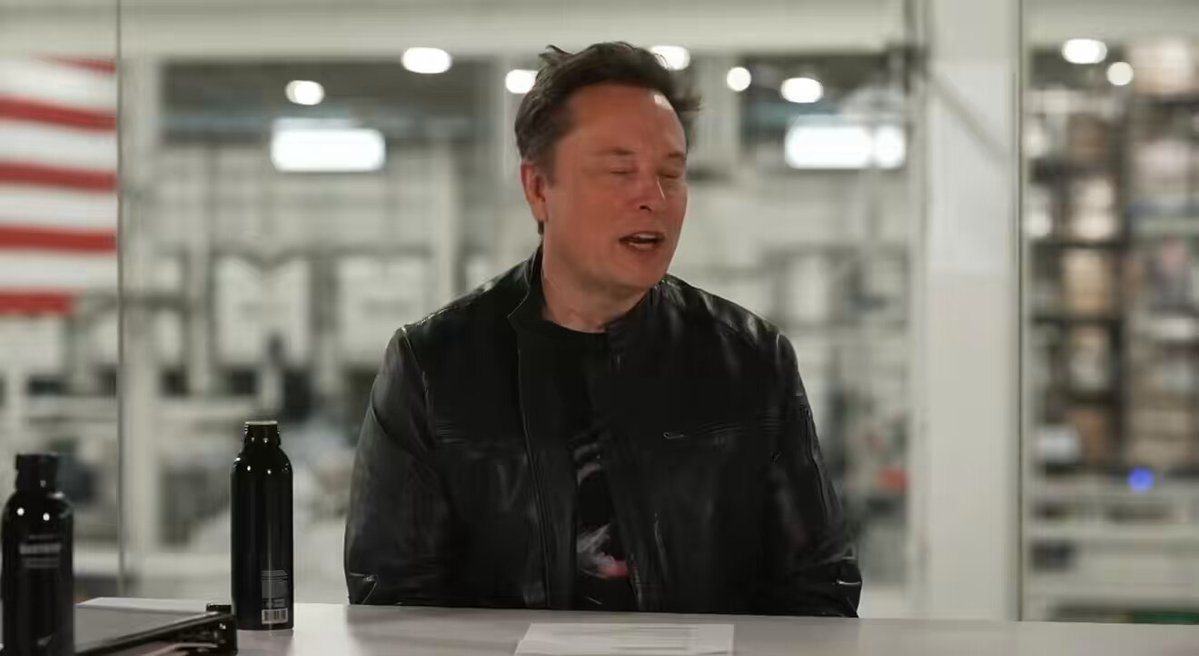
Elon Musk confirmed on Tuesday that the boards of Tesla and SpaceX have each formed independent special committees to evaluate a potential merger of the two companies, in response to shareholder requests. Speaking on SpaceX's Q3 earnings call, Musk said he is a conflicted party and has been excluded from the committee discussions — and he explicitly cautioned against assuming a deal will actually happen.
If consummated, a Tesla–SpaceX combination would be one of the largest and most unusual corporate marriages in modern business history, fusing a publicly traded automaker and AI company with a privately held space and satellite internet giant. For now, though, the news is far more procedural than definitive: forming a special committee is the step a board takes before it has decided whether a deal makes sense at all.

What Musk Actually Said
Musk's own framing on the call was deliberately cautious. "Both Tesla and SpaceX have formed special committees at the request of shareholders," he said. "Because I'm a conflicted party I can't be in on these discussions. I don't think we should assume that a merger is a certainty."
Three things stand out in that short statement. First, the committees exist, which is itself news — this is the furthest the two companies have ever publicly moved toward a formal combination. Second, Musk is recused, which is standard governance for a controlling or conflicted executive, but notable given how closely he is identified with both entities. Third, he is actively tamping down expectations, which suggests the committees are at an exploratory stage rather than negotiating terms.
How the Signals Lined Up
The announcement did not come out of nowhere. According to reporting from Business Insider and Electrek, Tesla's 2026 proxy statement — filed around October 19 — contained language that governance observers flagged as consistent with preparation for a potential SpaceX transaction. Specific items cited include a board member serving on both companies and voting procedures tied to deal terms. The earnings-call confirmation effectively validates those readings.
Musk has publicly mused about a combination for years, usually in the context of letting Tesla shareholders participate in SpaceX's upside without SpaceX going public. According to prior reporting, SpaceX's most recent private valuations have placed it among the most valuable private companies in the world, which is part of why the governance mechanics around any merger are unusually heavy.
The Shareholder Hurdle
Even if both special committees eventually recommend a deal, the path to closing is steep. Musk himself characterized the required Tesla vote as a "quite a high hurdle," noting any merger would need the support of 50% of all outstanding Tesla shares — not just 50% of shares voted. That is a materially harder bar than a typical corporate vote, because abstentions and non-votes effectively count as "no."
SpaceX, as a private company, has its own cap-table considerations: a mix of institutional investors, employees, and secondary-market holders whose equity would need to be converted or exchanged under whatever structure the committees land on. None of that has been disclosed.
Key Figures
| Item | Detail |
|---|---|
| Announcement date | October 20, 2026 (SpaceX Q3 call) |
| Tesla shareholder approval threshold | 50% of all outstanding shares |
| Musk's role in talks | Recused (conflicted party) |
| Deal terms agreed | None disclosed |
| Timeline | No decision date provided |
The Strategic Logic — and the Friction
On the call, Musk framed the strategic rationale around artificial intelligence and advanced hardware, pointing to synergies across "super intelligence software, chip design, Terafab, robotics, mass-to-orbit with the Starmind constellation, and connectivity." In other words: a combined company could, in theory, align Tesla's AI chips, Optimus robotics program, and vehicle fleet with SpaceX's launch capacity and Starlink's connectivity backbone under a single capital structure.
The friction is just as real. Tesla's public shareholders have a very different risk profile than SpaceX's private investors. Automotive investors are focused on near-term delivery and margin trends; SpaceX backers are tolerant of long-dated, capital-intensive bets like Starship and Starmind. Reconciling those bases inside one entity is a non-trivial governance problem — which is precisely the kind of question a special committee is built to study.
What It Means for Tesla Shareholders
In the short term, nothing operationally changes. Tesla continues to build cars, roll out FSD updates, and operate its energy and robotics businesses on its current trajectory. SpaceX continues launching Falcon and Starship on its own cadence. The committees' work is a parallel, back-office process.
What does change is the information environment. Investors should now expect:
- Periodic disclosures in Tesla's SEC filings referencing the special committee's status.
- Potential appointment of independent financial and legal advisors — a standard next step for committees of this type.
- Heightened scrutiny of any Tesla board decisions that could affect merger optionality.
What to Watch Next
- Advisor retentions. Watch for Tesla 8-K filings disclosing the engagement of independent bankers or counsel by the special committee.
- SpaceX secondary valuations. Any shift in SpaceX's private-market valuation will directly affect the exchange ratio math.
- Tesla's next proxy. If a deal advances, expect preliminary proxy materials outlining terms, fairness opinions, and the voting mechanics Musk flagged.
- Musk's public comments. Because he's recused, substantive deal commentary from him would itself be newsworthy — and governance-sensitive.
For now, the headline is accurate but narrow: two boards have agreed the question is worth studying. That is a meaningful step, but it is not a deal — and as Musk himself warned, it should not be mistaken for one.
Related Gear
Gear up your Tesla with tested, custom-fit BASENOR accessories — shop Tesla accessories →
Sources & reporting notes
The links below identify the material source records used for this report.
- @SawyerMerritt on X (2026-10-20T21:26:08.000Z) — Direct source
Source links are preserved as published or accessed. See our editorial standards and corrections policy.
The BASENOR Editorial Desk covers Tesla, SpaceX, and related technology, curating reporting from primary sources — official accounts, regulatory filings, and software release data. Every article passes source-record and fact-checking review before publication. About the newsroom.
This report was curated by the BASENOR Editorial Desk from the sources listed above. Read our editorial standards or email editorial@basenor.com to report an error.