📌 UPDATE — March 20, 2026
A real-world incident has surfaced showing Tesla's FSD actively reacting to a dooring hazard in motion — going beyond the passive blind spot warning system described below. Tesla owner @ray4tesla shared dashcam footage of their FSD-enabled Tesla automatically swerving left to avoid a parked driver who suddenly swung their door open into traffic without checking for approaching vehicles. The system reacted faster than the driver could, preventing what could have been a serious collision. This demonstrates that while Tesla's built-in blind spot alerts warn occupants before exiting, FSD adds an active layer of protection for the moving vehicle itself when encountering doors opened by others.
@ray4tesla · March 20, 2026
"The driver of the parked vehicle ahead didn't check traffic from behind and swung his door open all of sudden, which scared me. FSD swerved left to avoid hitting it."

The News: Anti-dooring protection for cyclists comes standard on every Tesla, using blind spot cameras to prevent occupants from opening doors into the path of approaching riders.
Why It Matters: Dooring is one of the most common and dangerous cyclist injuries in urban areas — and Tesla has quietly built a multi-layered system to prevent it that most owners don't even know they have.
Source: @wholemars on X

What Is Anti-Dooring — and Why Does It Matter?
"Dooring" is when a vehicle occupant opens a door directly into the path of an oncoming cyclist. It's a leading cause of serious cycling injuries in cities, and it happens fast — a door swings open, a cyclist has no time to react, and the result can be catastrophic. Traditional solutions have been limited to driver awareness campaigns and painted bike lanes. Tesla took a different approach: use the hardware already on the car.
Every Tesla is equipped with multiple side cameras that continuously monitor the area around the vehicle. Tesla's anti-dooring system puts those cameras to work even when the car is parked, watching for cyclists, pedestrians, and other objects approaching from behind before a door can swing open.
How the System Actually Works
The feature — officially called Blind Spot Warning While Parked — activates when the vehicle is stationary or idle. Here's the sequence when it detects a threat:
- Detection: Side cameras identify an approaching object (cyclist, pedestrian, passing vehicle) in the blind spot zone alongside the door.
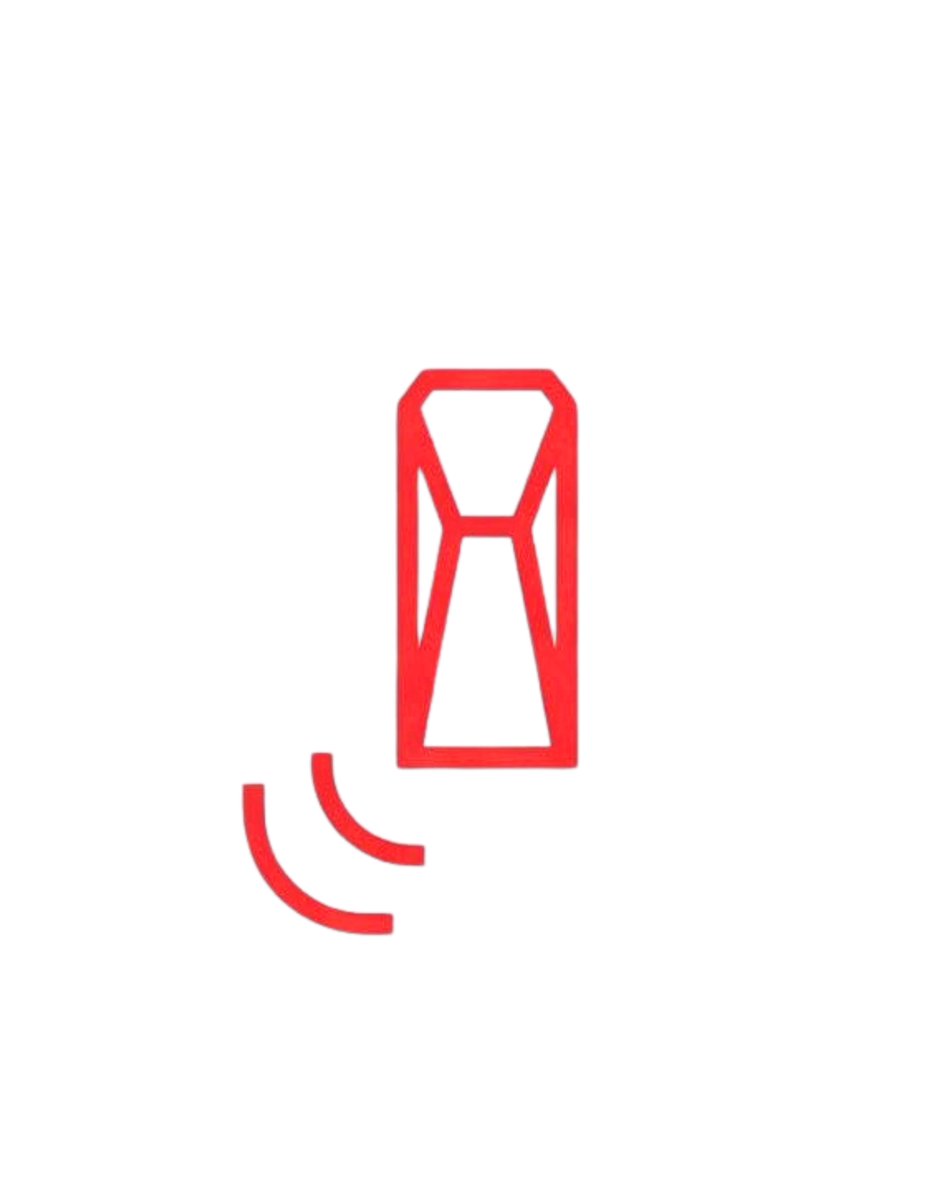
- Visual Warning: A warning light flashes in the front speaker area — a red LED alert that's hard to miss even in daylight.
- Audio Warning: An audible alert sounds inside the cabin to get the occupant's attention.
- Door Lockout: The door will not open on the first press of the button. The occupant must press again to override — giving them a critical extra second to look and reconsider.
That last step is the key design decision. The system doesn't permanently lock the door — it introduces deliberate friction. A second press overrides it, which means occupants retain full control while being forced to make a conscious choice rather than an automatic one.
📊 Anti-Dooring Feature: Model & Region Rollout
| Model | Region | Available Since |
|---|---|---|
| Model 3 Highland | China | September 2024 (SW 2024.26.9) |
| Cybertruck | China | September 2024 (SW 2024.26.9) |
| All supported models | North America | November 2024 (SW 2024.44) |
| Model 3 Highland & Model Y Juniper | US (official confirmation) | February 2025 |
Beyond the Door: Tesla's Broader Cyclist Safety Stack
Anti-dooring is one layer of a broader pedestrian and cyclist protection system Tesla has been building out. The Model 3 also features an Active Hood system — a passive pedestrian protection mechanism that uses front sensors to detect impacts when the vehicle is moving between approximately 19 and 32 mph (30–52 km/h). On impact, the rear of the hood automatically raises by about 80mm to create a crumple zone that reduces head injury severity. It's a feature more commonly associated with European safety regulations, and Tesla has quietly included it.
The combination of pre-collision door protection and post-impact hood deployment means Tesla has thought about cyclist safety at multiple points in a potential incident chain — not just one.
🔭 The BASENOR Take
Timeline: Feature first confirmed by Elon Musk in January 2020 → first deployed in China September 2024 → North America rollout November 2024 → confirmed standard across all models February 2025
Impact Level: 🟢 High — affects every Tesla owner who parks in urban environments
Confidence: ✅ Verified — confirmed by Tesla directly and documented across multiple software versions
What's notable here isn't just the feature itself — it's the delivery mechanism. Tesla didn't announce a new model with anti-dooring as a headline spec. They rolled it out silently via OTA, to existing vehicles, for free. That's the Tesla ownership model in action: the car you bought in 2023 is meaningfully safer than it was at delivery.
The design philosophy is also worth noting. A hard door lock would frustrate users and create edge cases (what if you genuinely need to exit quickly?). The "press twice to override" approach is a textbook example of friction-based safety design — it doesn't remove autonomy, it just forces a moment of intentionality. That's smart engineering.
For owners in dense urban areas — New York, San Francisco, Chicago, London — this feature is quietly doing real work every time you park near a bike lane. Most of you probably didn't know it was active. Now you do.
📰 Deep Dive
The broader context here is that cyclist safety has become an increasingly visible policy issue in major cities, with municipalities investing heavily in protected bike infrastructure and pushing automakers to take the problem seriously. Tesla's approach — embedding the solution in software and hardware that's already on the vehicle — sidesteps the regulatory lag that typically slows safety feature adoption across the industry.
It's also worth understanding what "comes standard" actually means in practice. The Blind Spot Warning While Parked feature requires the side camera hardware that is present on all current Tesla models. But the software activation has rolled out progressively — first to newer hardware configurations in China, then to North America via the 2024.44 update. If you're running a recent software version, the feature should be active. If you're unsure, check your vehicle's Safety settings or look for the blind spot warning light behavior the next time you're parked with traffic passing.
One thing to watch: as Tesla expands the Cybercab and robotaxi fleet, the anti-dooring logic will need to account for a scenario where there's no human in the front seat making the override decision. That's a design problem the current system doesn't fully solve — but for personal vehicles today, the implementation is solid and the protection is real.
📋 Tracking Tesla software? See every firmware, FSD and app version in one place in our Tesla Software Update Tracker.
Related Gear
Gear up your Tesla with tested, custom-fit BASENOR accessories — shop Tesla accessories →
Sources & reporting notes
The links below identify the material source records used for this report.
- @wholemars on X (2026-03-14T20:47:48.000Z) — Direct source
- @ray4tesla on X (2026-03-20T01:24:12.000Z) — Direct source
Source links are preserved as published or accessed. See our editorial standards and corrections policy.
The BASENOR Editorial Desk covers Tesla, SpaceX, and related technology, curating reporting from primary sources — official accounts, regulatory filings, and software release data. Every article passes source-record and fact-checking review before publication. About the newsroom.
This report was curated by the BASENOR Editorial Desk from the sources listed above. Read our editorial standards or email editorial@basenor.com to report an error.