📌 UPDATE — August 6, 2026
Tesla has released a new video highlighting its battery recycling processes, with particular relevance to 4680 cell recycling operations at Giga Texas. Giga Texas observer Joe Tegtmeyer (@JoeTegtmeyer) flagged the clip, noting it offers context for why significant quantities of 4680 cans are regularly seen being recycled at the Austin facility — a question he says Patreon followers have raised. While the video isn't a direct explanation, Tegtmeyer suggests it points toward Tesla's closed-loop manufacturing approach, where off-spec or production-reject cells are fed back into the recycling stream rather than discarded as waste. This aligns with the 90%+ material recovery rates cited in Tesla's 2025 Impact Report covered in this article, and underscores that the 4680 recycling activity at Giga Texas reflects quality-control discipline, not production failure.
@JoeTegtmeyer · Aug 6, 2026
"Tesla just posted a video clip about recycling batteries and it is very good … worth the watch! To add context, I was recently asked by a Patreon why we see so many 4680 cans being recycled at Giga Texas. Although this new video isn't a direct answer, I think it suggests why."
View on X →
Tesla published new details from its 2025 Impact Report this week, putting hard numbers behind its battery recycling program for the first time in a while. The headline figure — over 3,000 metric tons of battery material recycled at its Nevada facility alone — comes with enough context to understand both how far the program has come and where it's heading next.

1. The Nevada facility processed the equivalent of 9,000 Model Y RWDs
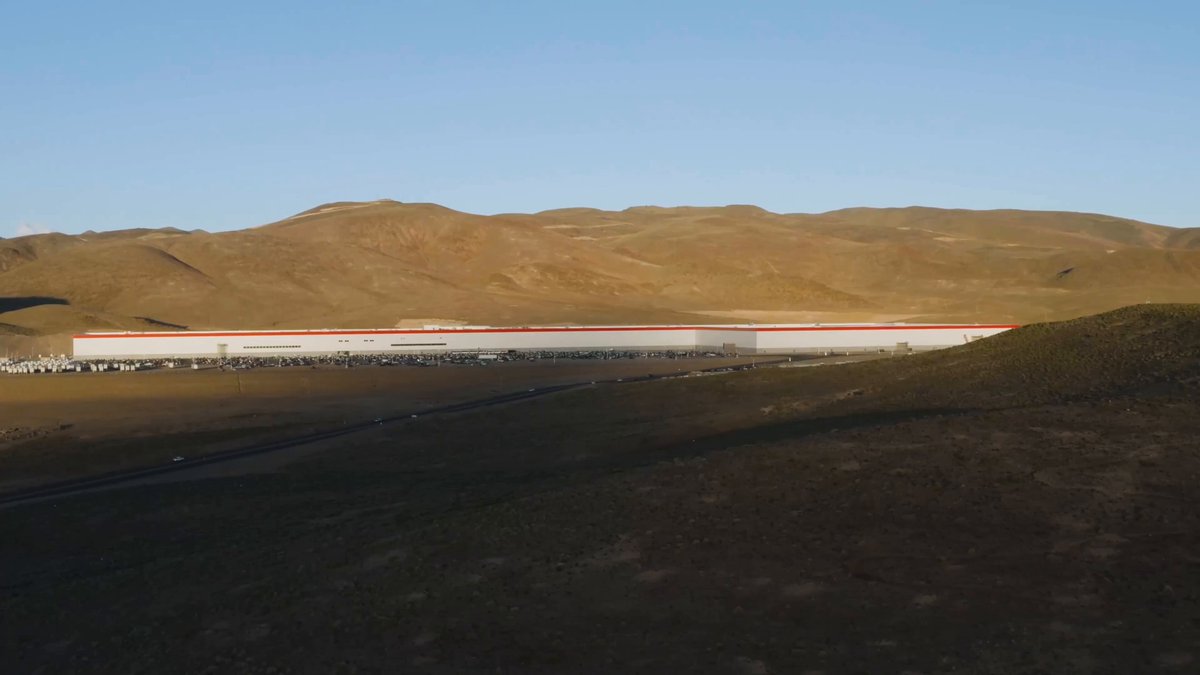
Tesla's Gigafactory Nevada recycled over 3,000 metric tons of battery material in 2025. To make that tangible: Tesla itself benchmarks that figure against the battery material in approximately 9,000 Model Y RWD vehicles. That's a meaningful throughput for a single facility, and it comes from Tesla's integrated in-house recycling operation built into the Gigafactory campus — not a separate off-site contractor.
2. More than 90% of key materials are being recovered
Across its US operations, Tesla reports recovering more than 90% of critical battery materials — specifically nickel and cobalt — from cells that go through the recycling process. According to the 2025 Impact Report, the company's hydrometallurgical processes are capable of achieving recovery rates up to 98% for metals including lithium, nickel, cobalt, and copper. The gap between 90% and 98% likely reflects real-world variation across cell chemistries and pack conditions rather than a process ceiling.
3. The zero-landfill policy covers 100% of decommissioned packs
Tesla's stated goal — "no Tesla battery ends up in a landfill" — is backed by a policy that applies to 100% of its decommissioned lithium-ion battery packs across US operations, according to the Impact Report. That includes both manufacturing scrap from cell production and end-of-life packs returned from vehicles. The policy covers in-house processing at Gigafactories and partnerships with third-party recyclers for material that doesn't flow through Tesla's own lines.
4. Texas is the next major recycling node
Gigafactory Texas — already Tesla's primary 4680 cell production site — is expected to contribute significantly to battery recycling output as the program scales. Tesla hasn't published a specific tonnage target for the Texas facility yet, but given that it's the home of Tesla's highest-volume cell manufacturing, co-locating recycling capacity there follows the same logic that made Nevada's integrated model work. Watch for Texas figures to appear in the 2026 Impact Report cycle.
5. Total US recycling volume grew 20% year-over-year
Combining in-house Gigafactory processing with third-party recycling partners, Tesla recycled over 14,000 metric tons of battery material across all US operations in 2025 — a 20% increase over 2024, according to reporting on the Impact Report data. That total volume is roughly equivalent to the battery resources needed for approximately 46,000 long-range battery packs. The year-over-year growth rate matters here: as Tesla's fleet ages and more first-generation packs reach end-of-life, recycling throughput will need to keep scaling to stay ahead of the curve.
The full 2025 Impact Report is available via the link in Tesla's post. For owners, the practical takeaway is straightforward: when your pack eventually reaches end-of-life, Tesla's infrastructure is designed to capture the materials rather than discard them — and the numbers suggest that infrastructure is genuinely working at scale.
Related Gear
Gear up your Tesla with tested, custom-fit BASENOR accessories — shop Tesla accessories →
Sources & reporting notes
The links below identify the material source records used for this report.
- @tesla_na on X (2026-08-06T16:04:18.000Z) — Direct source
- @SawyerMerritt on X (2026-08-06T16:10:48.000Z) — Direct source
Source links are preserved as published or accessed. See our editorial standards and corrections policy.
The BASENOR Editorial Desk covers Tesla, SpaceX, and related technology, curating reporting from primary sources — official accounts, regulatory filings, and software release data. Every article passes source-record and fact-checking review before publication. About the newsroom.
This report was curated by the BASENOR Editorial Desk from the sources listed above. Read our editorial standards or email editorial@basenor.com to report an error.