Tesla is framing 2026 as its most consequential investment year since the Model 3 ramp of 2018 — but this time, the object of that spending is the Robotaxi program, not a mass-market sedan. That parallel, drawn by longtime Tesla investor @wholemars on Monday, captures a strategic pivot that has been building across earnings calls, factory announcements, and Robotaxi city launches all year.
The shorthand is useful: in 2018, Tesla poured capital into scaling Model 3 from a niche product into the best-selling premium car in the world. In 2026, the same intensity is being redirected toward turning Robotaxi from a geofenced pilot into a national — and eventually global — autonomous ride-hailing network.

The Scale of the 2026 Bet
Tesla has guided to capital expenditures exceeding $25 billion across the 2025-2026 period, with Elon Musk telling investors that 2026 specifically will involve "substantially higher capital spending" on R&D, new factories, and new capabilities, according to prior earnings commentary. The bulk of that spending is being funneled into four buckets: AI compute, robotics (both Optimus and the autonomy stack), new vehicle manufacturing lines, and the Robotaxi service infrastructure itself.
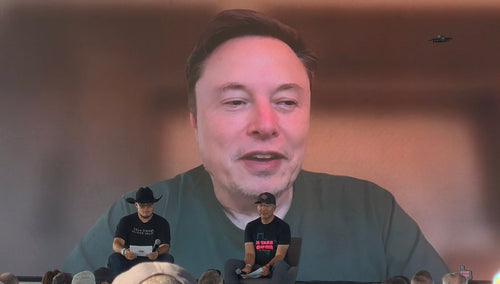
The Model 3 analogy holds because the financial pattern is similar. In 2018, Tesla burned cash to build capacity that only paid off in later years. In 2026, Musk has explicitly warned that Robotaxi revenue will "probably not be super material this year" but is expected to be "material in a significant way next year," according to reports from Tesla's most recent earnings call. Investors are being asked to underwrite the ramp, not the current-year P&L.
Where the Money Is Actually Going
Three build-outs are absorbing most of the 2026 capex:
| Investment Area | 2026 Status |
|---|---|
| Cybercab production (Gigafactory Texas) | First unit off the line Feb 2026; volume production began April 2026 |
| Robotaxi city deployments | Austin, Dallas, Houston, Miami live; SF Bay with monitors; ~12 states targeted by year-end |
| FSD architecture (V14.3 → V15) | V14.3 shipped April 2026; V15 "full architectural overhaul" targeted late 2026 / early 2027 |
| AI compute & robotics R&D | Feeding both Robotaxi autonomy and Optimus |
The Cybercab is the physical embodiment of the strategy. According to prior Tesla disclosures, the vehicle is built without a steering wheel or pedals, targets a price under $30,000 (Musk has narrowed that to roughly $25,000), and is being engineered around an internal manufacturing goal of one unit every 10 seconds — an annual capacity of 2 million vehicles, with a long-term aspiration of 5 million per year. Those numbers are only rational if Tesla believes Robotaxi is going to be the largest single product category in its history.
The Ramp Is Already Visible
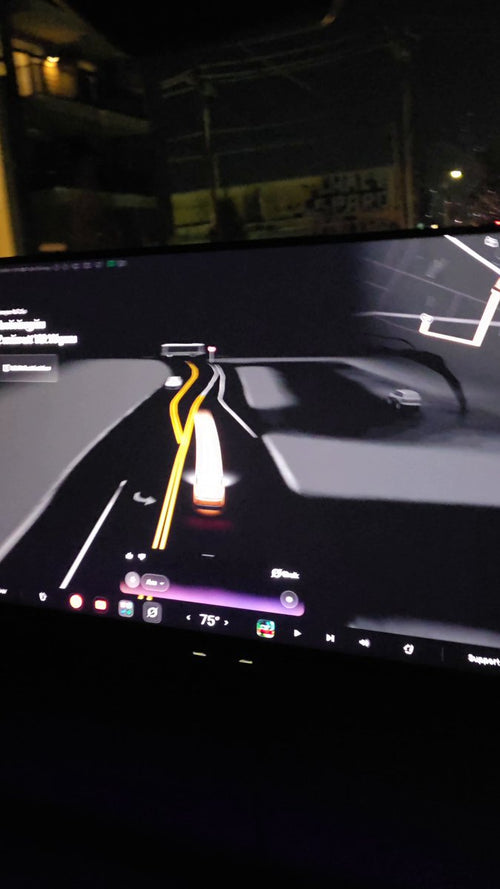
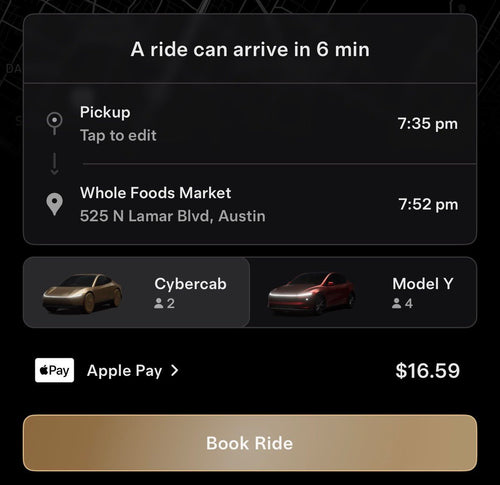
Unlike prior "future product" cycles that stayed on slide decks, the Robotaxi ramp is showing up in operational data. Unsupervised Robotaxi service — no safety driver, no monitor — launched in Dallas and Houston in April 2026 and expanded across the geofenced Austin metro in early June. The service went live in western Miami-Dade on July 3, 2026, marking the first expansion outside Texas and California, according to Tesla's rollout announcements.
Musk has publicly targeted unsupervised FSD or Robotaxi operations in "a dozen or so states by the end of this year." Phoenix, Orlando, Tampa, and Las Vegas were slated for the first half of 2026, some of which have slipped. In Q1 2026, paid Robotaxi miles nearly doubled sequentially — a small base, but a sharp curve. Tesla has also reported no accidents or injuries in the unsupervised program to date, which matters both for regulators and for the insurance model that will eventually sit underneath the service.
What This Means for Tesla Owners
The 2026 capex story isn't just an investor narrative — it has direct implications for the roughly 1.3 million paid FSD subscribers and the broader owner base:
- FSD V15 is the payoff. The "full architectural overhaul" targeted for late 2026 or early 2027 is the same stack that has to power unsupervised Robotaxi at scale. Current-vehicle owners get to ride the same software curve.
- City-by-city unsupervised expansion. If Musk's "dozen states" target holds, unsupervised FSD availability on personal vehicles becomes a real question by early 2027, not a hypothetical.
- Cybercab is additive, not a replacement. A $25K two-seat autonomous pod doesn't cannibalize Model 3, Model Y, or Cybertruck owners — it targets ride-hailing economics.
- Near-term financials will look noisy. Q1 2026 revenue was $22.4 billion, up 16% year-over-year, but the point of 2026 spending is not this year's margin. Expect margin pressure while capex peaks.
What to Watch Next
Four signals will show whether the 2018 comparison actually holds:
- Cybercab weekly production run-rate at Gigafactory Texas by Q4 2026.
- The list of states cleared for unsupervised Robotaxi service by December 31, 2026.
- FSD V15 release timing and whether it ships to consumer vehicles or Robotaxi-first.
- Q3 and Q4 2026 disclosures on paid Robotaxi miles and revenue per mile.
The Model 3 ramp took years to translate into the profit engine Tesla ultimately became. If 2026 really is the Robotaxi equivalent, the operational proof won't be in 2026's numbers — it'll be in 2027's.
Related Gear
Gear up your Tesla with tested, custom-fit BASENOR accessories — shop Tesla accessories →
📋 Tracking Tesla software? See every firmware, FSD and app version in one place in our Tesla Software Update Tracker.
🚕 Following the Robotaxi rollout? See every operating city, launch date and announced market in our Tesla Robotaxi Tracker.
Sources & reporting notes
The links below identify the material source records used for this report.
- @wholemars on X (2026-07-07T17:10:30.000Z) — Direct source
Source links are preserved as published or accessed. See our editorial standards and corrections policy.
The BASENOR Editorial Desk covers Tesla, SpaceX, and related technology, curating reporting from primary sources — official accounts, regulatory filings, and software release data. Every article passes source-record and fact-checking review before publication. About the newsroom.
This report was curated by the BASENOR Editorial Desk from the sources listed above. Read our editorial standards or email editorial@basenor.com to report an error.