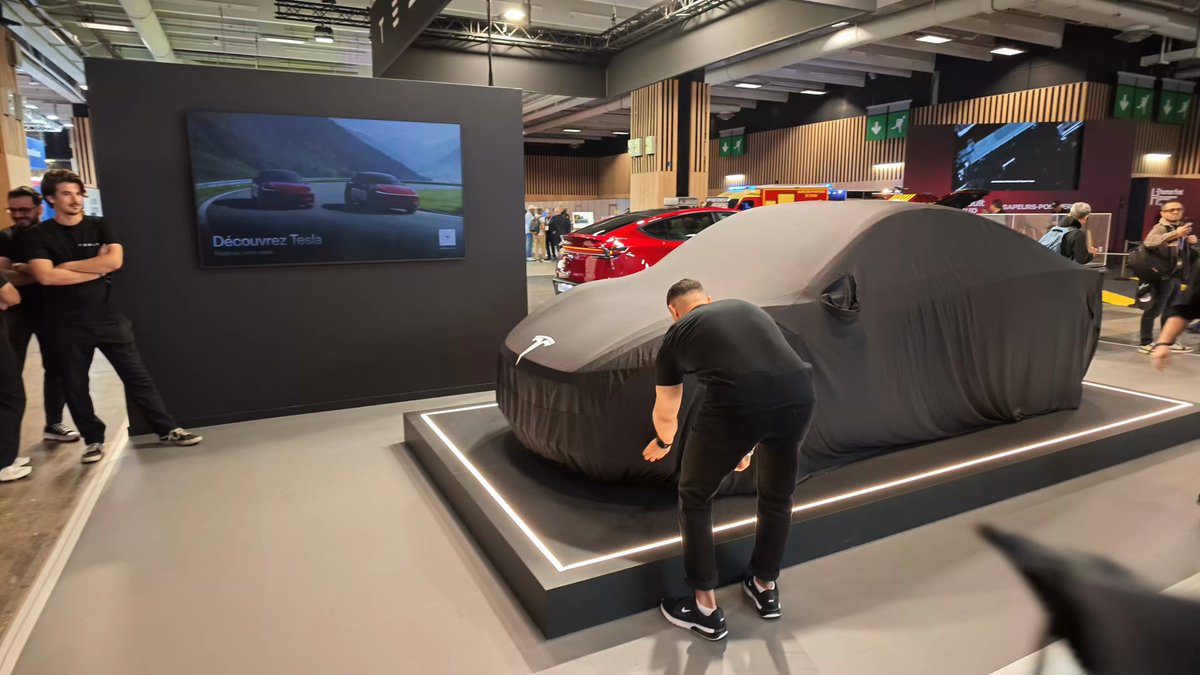
The Tesla Cybercab has arrived in Europe — and Paris is where it's making its first public appearance on the continent. Running through October 18, 2026, the Mondial de l'Auto gives European attendees their first real-world look at the purpose-built robotaxi that's already operating commercially in the United States. Here's what you need to know before you go, or just to understand what this moment actually means.

1. This Is the Cybercab's First European Public Showing
The Paris Motor Show marks the Cybercab's debut on European soil as a publicly viewable vehicle. While the car has been operating as a commercial robotaxi in the US, European audiences are only now getting their first in-person look. Tesla chose one of the continent's most prominent auto shows to make the introduction — a deliberate signal about where the company sees its autonomous ambitions heading next.
2. The Car on Display Is from Tesla's Active US Fleet
This isn't a concept car or a mock-up. According to background research, the Cybercab on display at Stand C25 in Hall 7 is drawn directly from Tesla's operational robotaxi fleet in the United States. That said, it's a static display — attendees can view it but cannot ride in it. The distinction matters: you're looking at a working vehicle, not a show prop.
3. You Can Actually Experience FSD — With a Catch
Tesla's Paris stand includes a separate "Autonomous Lab" offering free 25-minute test drives in Model 3 vehicles equipped with Full Self-Driving (Supervised). Slots are booked on-site via QR code. The catch: France has not yet officially approved FSD (Supervised) for public roads, which makes these demonstration drives a notable regulatory grey area to watch. A broader EU-wide authorization decision on Tesla's FSD system is expected in December 2026.
4. The Cybercab's Specs Are Genuinely Impressive
For those who haven't tracked the EPA filings from June 2026, the Cybercab's numbers are worth knowing. The two-seat, steer-wheel-free robotaxi runs a single front-wheel-drive motor producing 163 kW (219 hp), paired with a 48 kWh battery pack. EPA lab tests returned a 418-mile combined range figure, with real-world expectation sitting around 300 miles after standard adjustments. Its certified efficiency of 165 Wh/mi makes it, according to EPA data, the most efficient production EV to date.
5. Europe Could See Cybercab Service as Early as 2027
No European launch date has been announced, but the Paris appearance isn't purely symbolic. According to background research, a potential Cybercab service launch in Europe could come as early as 2027 — contingent on regulatory approvals. The December EU decision on FSD authorization will be a key milestone to watch. Tesla's decision to bring the vehicle to Paris, alongside Optimus Gen 2 and Tesla Energy products, suggests the company is actively laying groundwork for a European autonomous driving push.
If you're in Paris before October 18, Tesla is at Stand C25, Hall 7.1 at Paris Expo Porte de Versailles. Whether or not you can make it, the Cybercab's European debut is a meaningful step — and the December FSD authorization decision will tell us a lot about how quickly that 2027 window becomes realistic.
🚕 Following the Robotaxi rollout? See every operating city, launch date and announced market in our Tesla Robotaxi Tracker.
Related Gear
Gear up your Tesla with tested, custom-fit BASENOR accessories — shop Tesla accessories →
Sources & reporting notes
The links below identify the material source records used for this report.
- @TeslaNewswire on X (2026-10-12T11:20:12.000Z) — Direct source
Source links are preserved as published or accessed. See our editorial standards and corrections policy.
The BASENOR Editorial Desk covers Tesla, SpaceX, and related technology, curating reporting from primary sources — official accounts, regulatory filings, and software release data. Every article passes source-record and fact-checking review before publication. About the newsroom.
This report was curated by the BASENOR Editorial Desk from the sources listed above. Read our editorial standards or email editorial@basenor.com to report an error.