
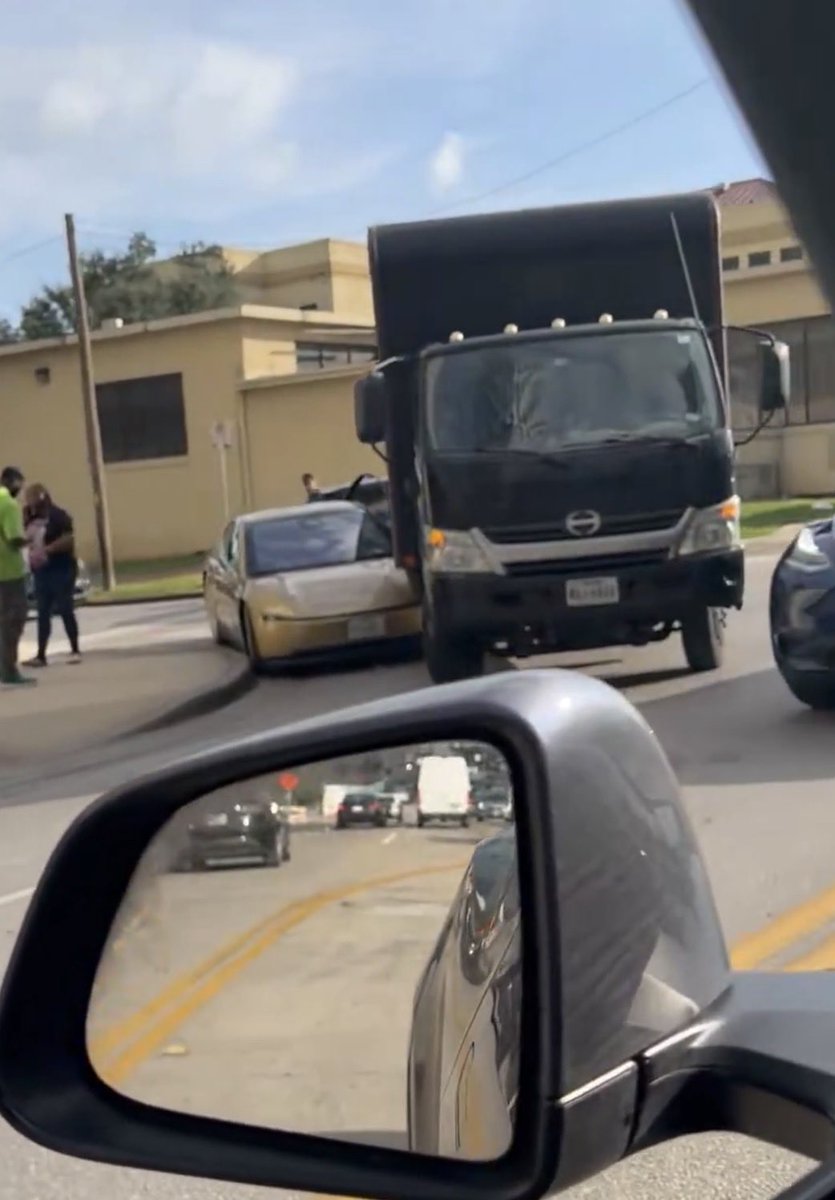
A Tesla Cybercab was involved in a collision with a truck in Austin, Texas, adding to a growing — though still modest — incident record for the driverless robotaxi since its public launch. Early indications from the scene suggest the truck may have been at fault, according to @TeslaNewswire.


What the NHTSA Record Shows
This incident doesn't exist in isolation. According to data from the National Highway Traffic Safety Administration updated on November 16, 2026, the Cybercab has been involved in eight reported crashes total during August and September 2026 — the first two months after public robotaxi rides launched in Austin on September 3, 2026.
Four of those eight crashes involved the fully driverless automated driving system (Level 4) operating in Austin. The pattern across all four driverless Austin incidents is consistent: low speeds, no injuries, and in most cases the Cybercab was either stationary or moving at 5 mph or less when contact occurred. One prior Austin incident matches today's scenario closely — a Cybercab was rear-ended by a pickup truck after stopping in traffic. No injuries were reported in that case either.
Cybercab Crash Record: Austin Driverless Incidents (Aug–Sep 2026)
| Incident | Speed | Injuries |
|---|---|---|
| Rear-ended by pickup truck while stopped | ≤5 mph | None |
| Hit by car reversing from parking space | ≤5 mph | None |
| Drove into water-filled pothole | ≤5 mph | None |
| Drove over raised concrete edge / sidewalk | ≤5 mph | None |
Source: NHTSA, updated November 16, 2026. Data covers Aug–Sep 2026 incidents only.
The remaining four Cybercab crashes in the NHTSA record involved a test driver onboard with the Level 2 driver-assist system engaged. Those incidents include a 5 mph collision with an SUV in Austin that resulted in a minor injury and hospitalization, and a 53 mph highway crash in Philadelphia. Tesla has redacted the narratives for those supervised crashes, and fault has not been established publicly for either.
What Riders and Bystanders Should Know
If you're riding in or near a Cybercab in Austin, here's the practical picture based on what the data shows so far:
- The Cybercab tends to stop or slow dramatically in uncertain situations. All four driverless Austin crashes occurred at 5 mph or less. The vehicle is programmed to yield rather than push through ambiguous scenarios — which means other drivers approaching from behind need to account for sudden stops.
- If you're involved in or witness a Cybercab incident, document everything immediately. Take photos of vehicle positions, any damage, road markings, and traffic signals. NHTSA requires Tesla to report these incidents, but eyewitness documentation is valuable for any insurance or regulatory follow-up.
- Report incidents through official channels. Passengers can report safety concerns directly to NHTSA at safercar.gov or by calling 1-888-327-4236. Tesla's in-app support is a parallel channel, but NHTSA filing creates a public record.
- Fault determination takes time. Initial scene impressions — including the truck-at-fault indication in today's report — are preliminary. Official fault findings come from police reports, insurance investigations, and in some cases NHTSA review. Don't treat early social media reports as settled conclusions.
The Bigger Picture
Eight crashes across two months of commercial operation in a new vehicle category isn't a number that exists in a vacuum — context matters. The driverless incidents have all been low-speed and injury-free, and in the cases where fault can be assessed from public records, third parties appear to have initiated contact. That's a meaningful distinction for a robotaxi operating in dense urban traffic without a human backup driver.
What's less clear is the supervised testing record. Tesla's decision to redact crash narratives for the Level 2 incidents limits public understanding of how the system performs at higher speeds. As the Austin fleet grows and NHTSA's incident database accumulates more months of data, the statistical picture will sharpen. For now, today's truck collision is one more data point in a program that regulators, riders, and the broader public are watching closely.
🚕 Following the Robotaxi rollout? See every operating city, launch date and announced market in our Tesla Robotaxi Tracker.
Related Gear
Gear up your Tesla with tested, custom-fit BASENOR accessories — shop Tesla accessories →
Sources & reporting notes
The links below identify the material source records used for this report.
- @TeslaNewswire on X (2026-11-19T21:55:51.000Z) — Direct source
Source links are preserved as published or accessed. See our editorial standards and corrections policy.
The BASENOR Editorial Desk covers Tesla, SpaceX, and related technology, curating reporting from primary sources — official accounts, regulatory filings, and software release data. Every article passes source-record and fact-checking review before publication. About the newsroom.
This report was curated by the BASENOR Editorial Desk from the sources listed above. Read our editorial standards or email editorial@basenor.com to report an error.