Tesla's upcoming Cybercab introduces a door handle design that's a first for the brand — and one every future owner should understand before they ever need it. Details have emerged confirming the interior door handle uses a two-detent system, where a full lift engages a mechanical cable release that works even when the car has no low-voltage power. It's a meaningful safety upgrade, and it's worth knowing how it works before you're ever in a situation where it matters.

How the Two-Detent System Works
Unlike current Tesla models — which separate the electronic door release from a hidden mechanical backup — the Cybercab combines both functions into a single lever. Here's the distinction between the two stages:
- First detent (gentle pull): Activates the standard electronic door release. This is how you'll exit the vehicle in normal, everyday operation.
- Second detent (full lift): Engages a physical mechanical cable that directly unlatches the door. This override works regardless of whether the vehicle has electrical power.
The key word is completely. A partial lift won't engage the mechanical release — you need to pull the handle all the way through to the second detent. According to verified reports, this is the first Tesla model to integrate both release functions into a single, unified lever rather than requiring occupants to locate a separate hidden mechanism.
Action Plan: Using the Emergency Release
If you're ever in a Cybercab and need to exit without electrical power, the process is straightforward:
- Locate the interior door handle. It's a lever-style handle on the door panel — not a button or a touch surface.
- Lift the handle firmly and completely. Don't stop at the first detent. Continue lifting until you feel the second stage engage.
- Push the door open. Once the mechanical latch releases, push the door outward to exit.
There's no need to search for a hidden compartment, remove a panel, or locate a secondary lever — a deliberate design choice that addresses longstanding criticism of Tesla's door release ergonomics in emergency scenarios.
A Notable Accessibility Addition
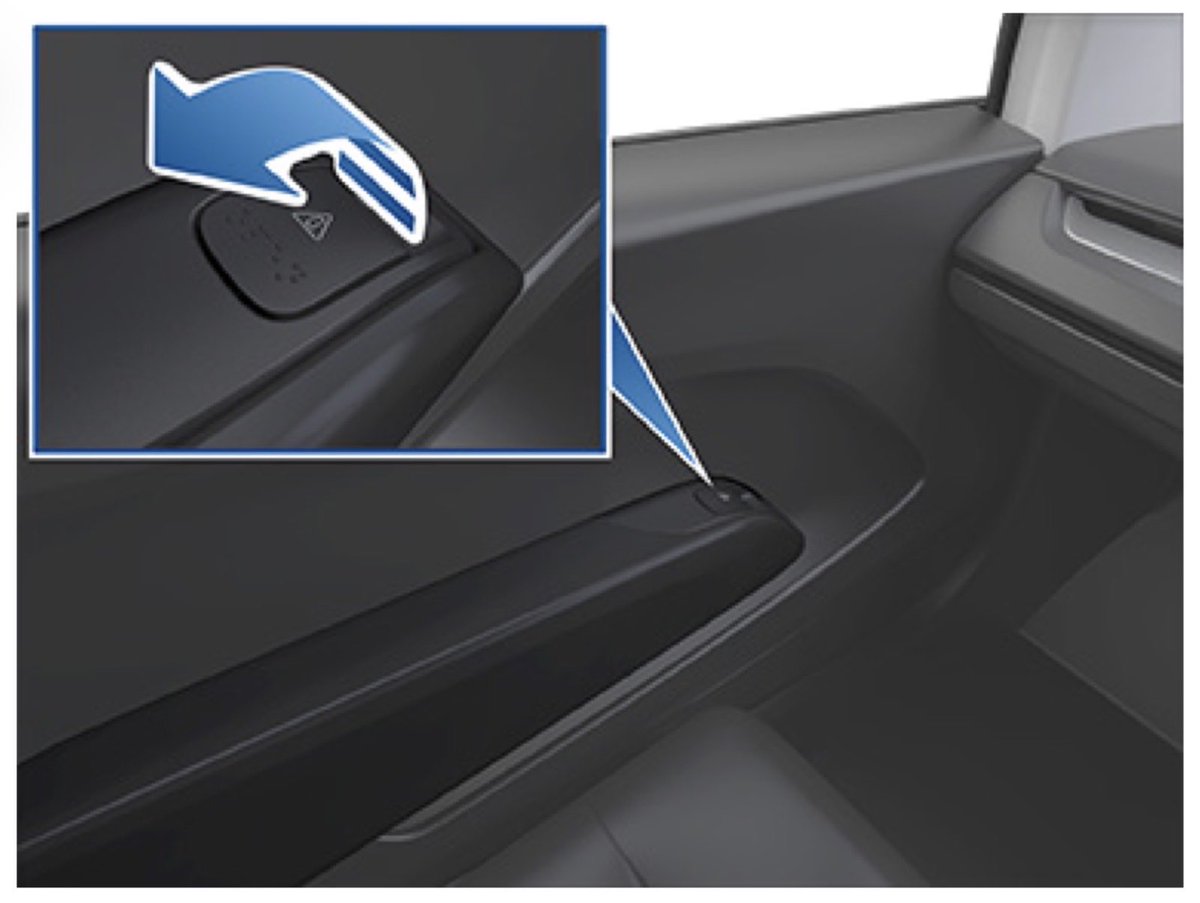
The Cybercab's door handles also include raised braille lettering — including the word "Open" — to assist visually impaired passengers. For a vehicle designed to operate as a robotaxi without a driver present, this kind of passive guidance is a practical necessity, not just a nice-to-have.
Why This Design Matters
Tesla's door release systems have faced regulatory and public scrutiny over the years, particularly in scenarios where first responders or occupants struggled to exit vehicles after accidents. The Cybercab's unified two-detent handle is a direct response to that feedback — it removes ambiguity. There's one handle, two stages, and the second stage always works mechanically.
The first mass-produced Cybercab rolled off the Gigafactory Texas line in February 2026, with volume production reported to have begun in April 2026. As deliveries approach, understanding this system now means you won't be figuring it out under pressure later.
🚕 Following the Robotaxi rollout? See every operating city, launch date and announced market in our Tesla Robotaxi Tracker.
Related Gear
Gear up your Tesla with tested, custom-fit BASENOR accessories — shop Tesla accessories →
Sources & reporting notes
The links below identify the material source records used for this report.
- @TeslaNewswire on X (2026-06-28T07:13:24.000Z) — Direct source
Source links are preserved as published or accessed. See our editorial standards and corrections policy.
The BASENOR Editorial Desk covers Tesla, SpaceX, and related technology, curating reporting from primary sources — official accounts, regulatory filings, and software release data. Every article passes source-record and fact-checking review before publication. About the newsroom.
This report was curated by the BASENOR Editorial Desk from the sources listed above. Read our editorial standards or email editorial@basenor.com to report an error.