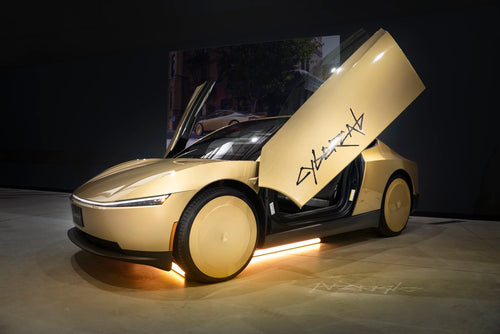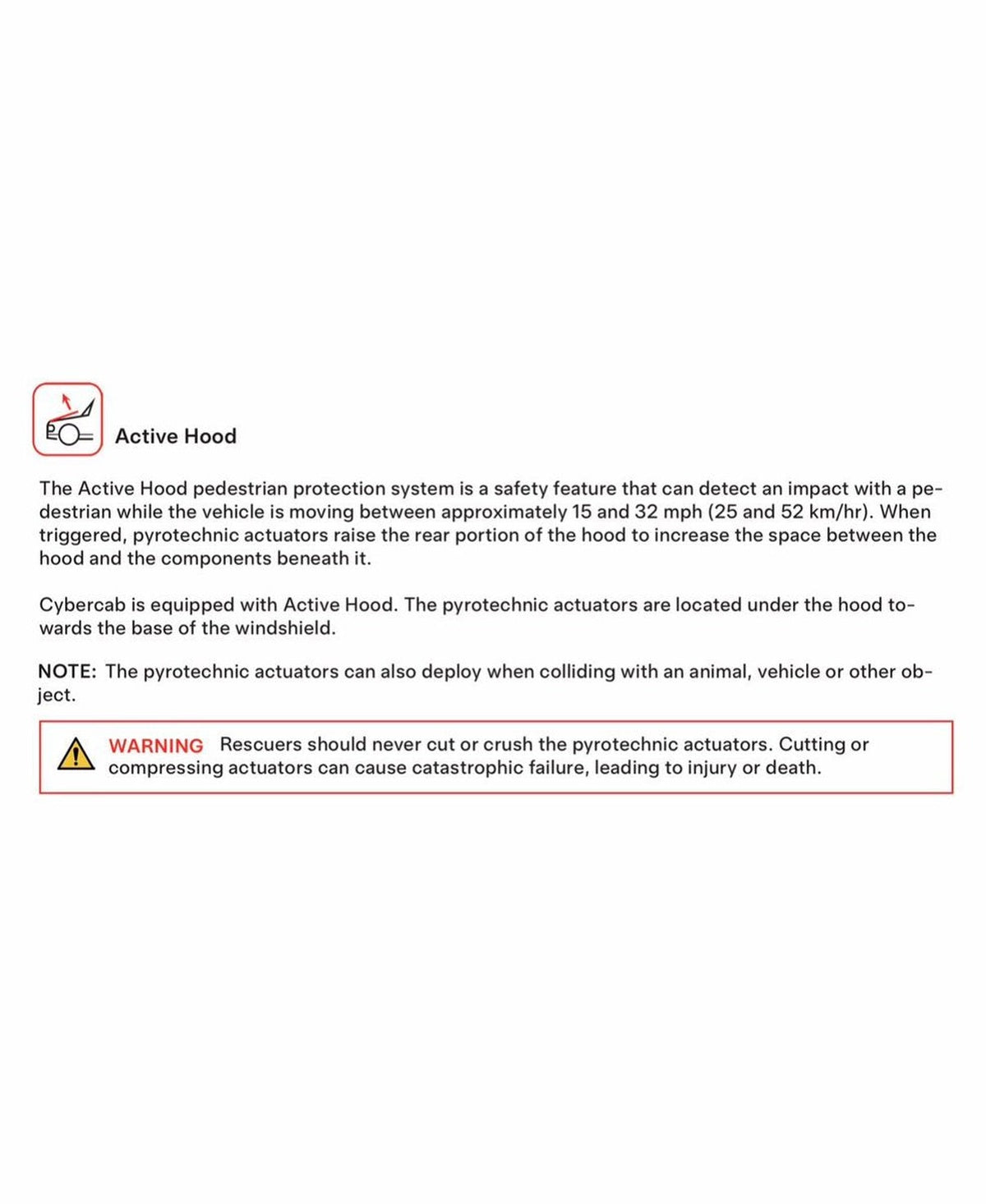
Tesla's upcoming Cybercab robotaxi will include an Active Hood pedestrian protection system — a safety feature designed to reduce the severity of head injuries during pedestrian impacts. The system activates automatically at speeds between 15 and 32 mph (25–52 km/h), raising the rear portion of the hood to create additional clearance between the hood surface and the hard components underneath.

The mechanism works on a straightforward principle: when a pedestrian is struck, the most dangerous outcome is the head impacting the hood directly over rigid engine or chassis components. By rapidly lifting the rear hood section at the moment of impact, the system buys critical milliseconds of deceleration distance — the same physics that make crumple zones effective. According to Tesla's documentation, the system is specifically calibrated for the speed range where pedestrian collisions are most survivable yet still carry serious injury risk.
Active Hood systems aren't new to the automotive industry — they've appeared on European-market vehicles for years, driven in part by Euro NCAP pedestrian safety requirements. Tesla including this feature in the Cybercab is notable because the vehicle is designed primarily as a fully autonomous robotaxi operating in urban environments, exactly the setting where pedestrian interaction is highest. A robotaxi that can't be manually overridden by a driver makes passive and active safety systems even more consequential — the car has to handle every edge case on its own.
No deployment timeline or additional safety specification details have been confirmed beyond what's in Tesla's materials. As the Cybercab moves closer to broader production, expect pedestrian safety ratings to become a focal point for regulators and fleet operators alike.
🚕 Following the Robotaxi rollout? See every operating city, launch date and announced market in our Tesla Robotaxi Tracker.
Related Gear
Gear up your Tesla with tested, custom-fit BASENOR accessories — shop Tesla accessories →
Sources & reporting notes
The links below identify the material source records used for this report.
- @TeslaNewswire on X (2026-06-28T06:24:39.000Z) — Direct source
Source links are preserved as published or accessed. See our editorial standards and corrections policy.
The BASENOR Editorial Desk covers Tesla, SpaceX, and related technology, curating reporting from primary sources — official accounts, regulatory filings, and software release data. Every article passes source-record and fact-checking review before publication. About the newsroom.
This report was curated by the BASENOR Editorial Desk from the sources listed above. Read our editorial standards or email editorial@basenor.com to report an error.