
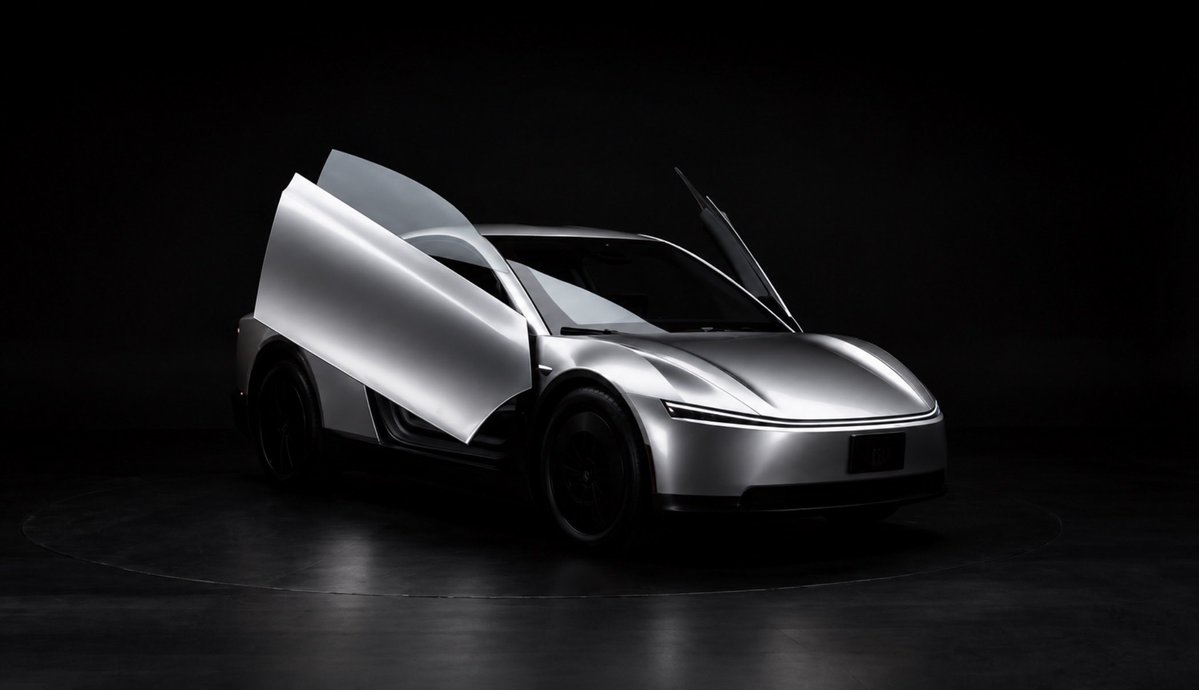
Tesla's Cybercab is shaping up to be more than a robotaxi fleet vehicle. In a pair of disclosures surfacing November 7, Tesla indicated the two-seat autonomous car will be offered for personal purchase, come in a new Liquid Silver finish, and eventually ship with a battery pack roughly 20% smaller than what's in current builds — around 40 kWh, down from the ~48 kWh pack documented in earlier EPA filings.
The signals arrived via The Tesla Newswire and Whole Mars Catalog, both relaying comments tied to Elon Musk. Taken together, they reframe what many analysts had assumed was a Tesla-owned-only platform into a product line with a consumer retail path — even if that path starts narrow.

What Tesla Just Confirmed
Three separate pieces of news landed in the same window, and each one changes the Cybercab's positioning in a different way.
First, personal ownership. Whole Mars Catalog's post — relaying commentary tied to Musk — states plainly that buyers will be able to purchase a Cybercab and use it as a personal vehicle. This aligns with Tesla's stated goal, according to prior reporting, of beginning customer deliveries by the end of 2026. Musk has previously cautioned that the "vast majority" of Cybercabs will remain Tesla-owned and operate within a transport-as-a-service model, so initial retail allocation is expected to be limited.

Second, a new color. Tesla will produce the Cybercab in Liquid Silver — Musk's reasoning, according to the post, is that a fleet painted entirely in one or two shades would become visually monotonous. It's a small detail, but it's also the first strong hint that the Cybercab color palette will expand beyond the gold tone shown at the We, Robot reveal.
Third, the battery shrinks. The Tesla Newswire reports that a 40 kWh pack is coming, enabled by "additional efficiency improvements currently in development." That's roughly a 20% reduction from the ~47.6 kWh pack identified in EPA certification documents surfaced earlier this year, according to prior reporting on the filing.
Key Figures
| Spec | Current Build | Planned Update |
|---|---|---|
| Battery pack | ~47.6 kWh | ~40 kWh (−20%) |
| Colors | Gold (reveal) | + Liquid Silver |
| Ownership model | Tesla fleet only | Personal purchase enabled |
| Target price (historical) | — | Under $30,000 (per prior Musk statements) |
| Motor / drivetrain | 163 kW single AC PM, FWD | Unchanged (per EPA filing) |
Why the Smaller Battery Matters
A 40 kWh pack would make the Cybercab one of the smallest EV batteries on the North American market by capacity. That is only viable if efficiency numbers are extreme — and the EPA filing on current Cybercab builds already points in that direction, listing an unadjusted combined range of 418.2 miles on the ~48 kWh pack, with real-world targets estimated around 293–300 miles according to the filing-based reporting.
Applied proportionally, a 40 kWh pack built on top of further efficiency gains could still land in a usable real-world range band for a fleet vehicle whose duty cycle involves short urban trips and frequent charging stops. For a personal buyer, that math gets tighter — which is likely why Tesla is holding its pricing and range messaging close until the efficiency work matures.
The strategic logic is clear enough: a smaller battery means lower bill-of-materials cost, less lithium per vehicle, and more Cybercabs produced per gigawatt-hour of cell output. If Tesla wants to hit the sub-$30,000 target it has publicly referenced multiple times, the pack is the single biggest line item it has room to compress.
What It Means for Would-Be Buyers
Treat this as directional, not a buy-signal. Three things are still unresolved:
- Order path. There is no public MSRP, no configurator, and no order page for individual Cybercab purchases. Initial customer deliveries are expected to skew toward fleet operators and businesses, according to prior Tesla guidance.
- Which battery ships first. The 40 kWh pack is tied to efficiency work "currently in development," per the source post. Early VINs will almost certainly ship on the existing ~48 kWh architecture documented by the EPA.
- Color availability by region. Liquid Silver is confirmed as a planned option but there's no indication yet whether it launches alongside the first deliveries or as a later addition.
For now, the single actionable signal for private buyers is simply this: Cybercab is no longer being talked about as a Tesla-fleet-only vehicle. That's a meaningful shift, and it's the first step toward an actual consumer retail program. You can follow the broader rollout in our FSD and autonomy coverage as the order path takes shape.
What to Watch Next
- A public order page or reservation system — Tesla has yet to open one for individual buyers.
- Official EPA re-certification reflecting the 40 kWh pack, which would confirm the efficiency gains are production-ready.
- First personal delivery VINs, which will reveal whether retail buyers get current-spec cars or wait for the smaller-battery variant.
- Expanded color options beyond Liquid Silver, signaling Tesla is treating Cybercab as a true consumer product line rather than a livery fleet.
The Cybercab started life as Tesla's bet on a steering-wheel-free transport service. It's now looking like a consumer vehicle as well — one with a notably small battery, an unusual silhouette, and a price point no competitor has matched on paper. Whether Tesla can actually deliver all three at scale is the question of 2027.
🚕 Following the Robotaxi rollout? See every operating city, launch date and announced market in our Tesla Robotaxi Tracker.
Related Gear
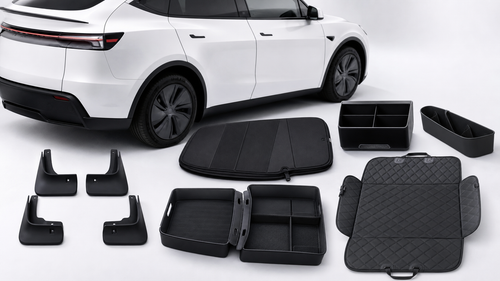
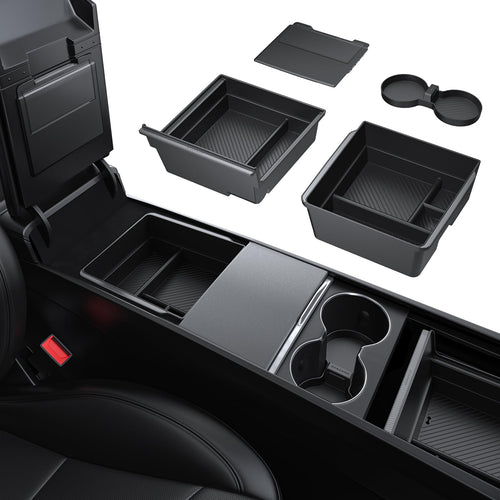
Gear up your Tesla with tested, custom-fit BASENOR accessories — shop Tesla accessories →
Sources & reporting notes
The links below identify the material source records used for this report.
- @TeslaNewswire on X (2026-11-07T21:09:55.000Z) — Direct source
- @wholemars on X (2026-11-07T21:49:36.000Z) — Direct source
Source links are preserved as published or accessed. See our editorial standards and corrections policy.
The BASENOR Editorial Desk covers Tesla, SpaceX, and related technology, curating reporting from primary sources — official accounts, regulatory filings, and software release data. Every article passes source-record and fact-checking review before publication. About the newsroom.
This report was curated by the BASENOR Editorial Desk from the sources listed above. Read our editorial standards or email editorial@basenor.com to report an error.