📌 UPDATE — July 6, 2026
Tesla is now conducting hands-on accessibility testing for the Cybercab, specifically working with blind and visually impaired individuals to evaluate ease of entry and exit — a strong signal that the autonomous robotaxi is being designed for the broadest possible range of passengers. Separately, observers noted that the Cybercab's footwell area is surprisingly spacious, with enough room to comfortably fit a large dog, offering a practical data point on the cabin's real-world dimensions despite its minimalist, storage-free interior. The testing underscores that the deliberate removal of traditional storage — including the absent glove box — is part of a broader passenger-first philosophy that prioritizes open, accessible space over compartmentalization.

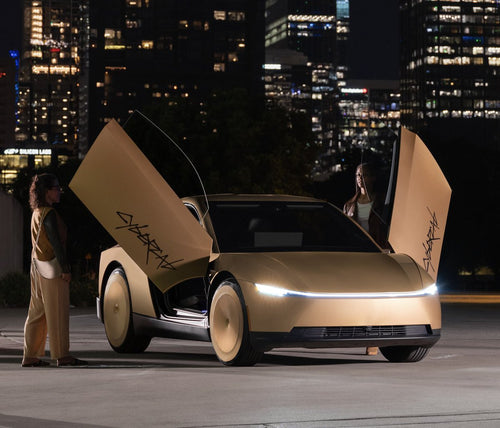
Tesla's Cybercab isn't just a car without a steering wheel — it's a vehicle where even the smallest storage details have been reconsidered from the ground up. A closer look at the interior reveals no door pockets, no cubbies, and no glove compartment. That's not an oversight. It's a deliberate design choice rooted in how autonomous vehicles actually operate.

The logic is straightforward: in a robotaxi, passengers come and go. A glove compartment or seat pocket is an invitation to leave personal items behind — your phone, your sunglasses, your keys. By eliminating those surfaces entirely, Tesla removes the problem before it exists. The cabin stays clean, anonymous, and ready for the next rider without any intervention from a driver who isn't there.
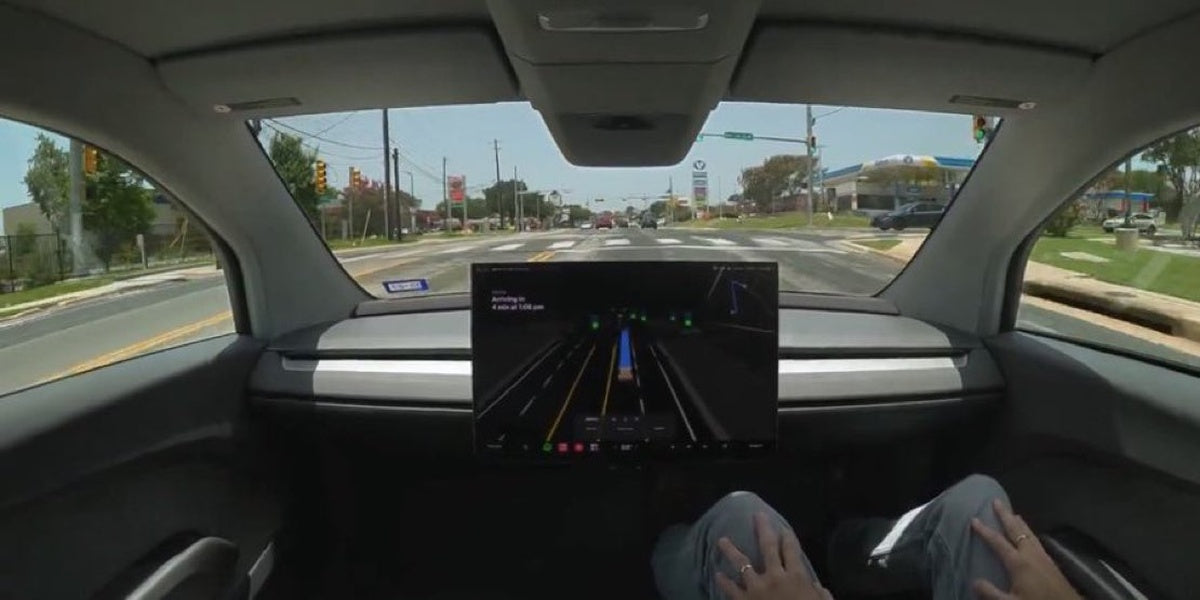
This fits the broader philosophy behind the Cybercab's interior. According to verified specs, the cabin replaces all traditional driver controls with a single 21-inch central display — the largest screen Tesla has put in any production vehicle. There's no steering wheel, no pedals, and now, no hidden corners to stash belongings. What storage does exist is deliberate: the trunk is confirmed to fit two carry-on suitcases, keeping luggage where it can be easily tracked and retrieved.
The Cybercab was unveiled by Elon Musk in October 2024, with mass production beginning at Gigafactory Texas in late April 2026. It's a two-seater built on Tesla's next-generation platform, priced under $30,000, and powered by a 48 kWh battery with a 219 HP front-wheel-drive motor. Every one of those specs points toward the same goal: a vehicle optimized for cost, simplicity, and high-turnover autonomous operation — not personal ownership habits.
The no-storage interior is a small detail that says something large about where Tesla is heading. When a vehicle is designed assuming you won't own it, won't drive it, and won't be alone in it for long, the entire concept of "your space" inside the cabin disappears. What's left is a shared environment that has to work equally well for everyone and belong permanently to no one.
🚕 Following the Robotaxi rollout? See every operating city, launch date and announced market in our Tesla Robotaxi Tracker.
Related Gear
Gear up your Tesla with tested, custom-fit BASENOR accessories — shop Tesla accessories →
Sources & reporting notes
The links below identify the material source records used for this report.
- @wholemars on X (2026-07-01T02:26:32.000Z) — Direct source
- @SawyerMerritt on X (2026-07-06T00:25:53.000Z) — Direct source
- @wholemars on X (2026-07-06T00:43:33.000Z) — Direct source
Source links are preserved as published or accessed. See our editorial standards and corrections policy.
The BASENOR Editorial Desk covers Tesla, SpaceX, and related technology, curating reporting from primary sources — official accounts, regulatory filings, and software release data. Every article passes source-record and fact-checking review before publication. About the newsroom.
This report was curated by the BASENOR Editorial Desk from the sources listed above. Read our editorial standards or email editorial@basenor.com to report an error.