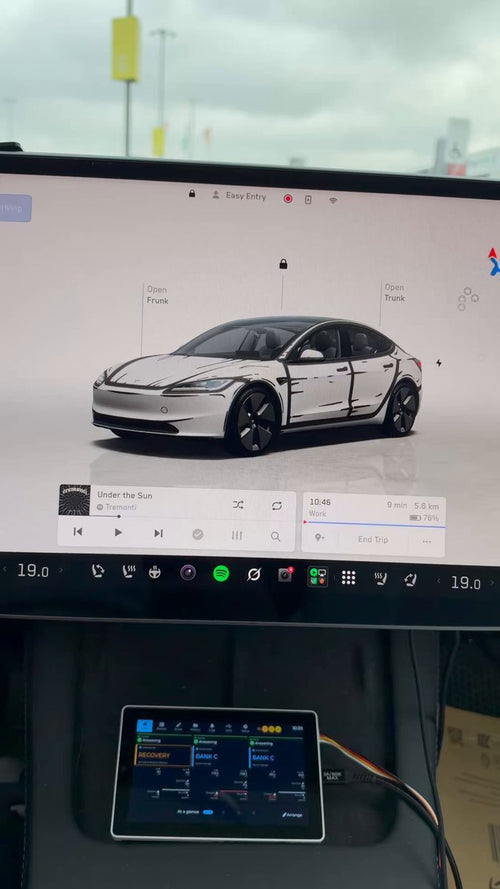
Tesla's Cybercab service in Austin is generating real operational data now — not from Tesla's press releases, but from riders logging dozens of trips and sharing what they find. Dirty Tesla, a well-known Tesla content creator, spent time in Austin taking 20 consecutive Cybercab rides across 20 different vehicles, accumulating roughly 69 miles and 4 hours 20 minutes of autonomous driving time. The numbers offer the clearest ground-level picture yet of how the service actually behaves at scale — including a surge pricing dynamic that will raise eyebrows.

What 20 Rides Actually Tells Us
The detail that stands out most isn't the mileage — it's the fleet diversity. Twenty rides, twenty different Cybercabs. That's not a coincidence; it suggests Austin's fleet is large enough and demand is distributed enough that repeat vehicles are rare in normal usage. According to Tesla's own figures cited in recent coverage, the Austin fleet had grown to over 300 active Cybercabs as of October 10, 2026 — an eightfold increase from the service's early weeks after its commercial launch on September 4, 2026.
Four hours and twenty minutes of cumulative ride time across 69 miles works out to an average speed of roughly 16 mph — consistent with urban stop-and-go conditions in a city like Austin, and a useful baseline for anyone trying to model the service's efficiency. The Cybercab is purpose-built for exactly this environment: no steering wheel, no pedals, no side mirrors or rear window, designed from the ground up as a two-passenger autonomous vehicle.
The Surge Pricing Problem
The most commercially significant data point from this report is the pricing swing. A $13.73 ride became $30.98 for the return trip — the same route, reversed, at a different time. That's a 125% increase, more than doubling the fare. This is aggressive surge pricing by any standard, and it's the kind of variability that will shape rider behavior and public perception of the service far more than the novelty of autonomous driving.
For context, this pricing model mirrors what ride-hail incumbents have deployed for years, but the stakes are different for Tesla. The Cybercab's value proposition rests partly on the promise of lower costs through the elimination of a human driver. If surge multipliers routinely push fares above what a conventional rideshare would charge at the same moment, that core argument weakens — at least for price-sensitive riders during peak demand windows.
Tesla has not publicly detailed the algorithm or thresholds governing Cybercab surge pricing. What this report confirms is that the multipliers are real, they can be substantial, and they apply even on short urban trips.
Fleet Scale in Context
| Metric | Detail |
|---|---|
| Commercial launch date | September 4, 2026 (Austin) |
| Fleet size (as of Oct 10) | 300+ active Cybercabs |
| Fleet growth | ~8× increase since early weeks |
| Rides logged (this report) | 20 rides, 20 unique vehicles |
| Total distance | ~69 miles |
| Total ride time | ~4 hours 20 minutes |
| Surge pricing example | $13.73 outbound → $30.98 return (+125%) |
What This Means Going Forward
The fleet diversity finding — 20 rides, 20 different cars — is actually a quiet indicator of operational health. It suggests Tesla has enough vehicles deployed that the dispatch algorithm isn't cycling through a thin pool. That matters for reliability and wait times as the service tries to build rider habits.
The surge pricing data is the more urgent variable to watch. If Tesla's goal is to position the Cybercab as an affordable, everyday transportation layer, the pricing algorithm will need to be tuned carefully. A 125% surge on a return trip isn't just a bad rider experience — it's the kind of story that travels. Tesla hasn't commented publicly on how it plans to manage surge thresholds as the fleet grows and demand patterns become more predictable. That transparency gap is worth noting as the Austin rollout continues to scale.
🚕 Following the Robotaxi rollout? See every operating city, launch date and announced market in our Tesla Robotaxi Tracker.
Related Gear
Gear up your Tesla with tested, custom-fit BASENOR accessories — shop Tesla accessories →
Sources & reporting notes
The links below identify the material source records used for this report.
- @DirtyTesLa on X (2026-10-14T20:08:48.000Z) — Direct source
Source links are preserved as published or accessed. See our editorial standards and corrections policy.
The BASENOR Editorial Desk covers Tesla, SpaceX, and related technology, curating reporting from primary sources — official accounts, regulatory filings, and software release data. Every article passes source-record and fact-checking review before publication. About the newsroom.
This report was curated by the BASENOR Editorial Desk from the sources listed above. Read our editorial standards or email editorial@basenor.com to report an error.