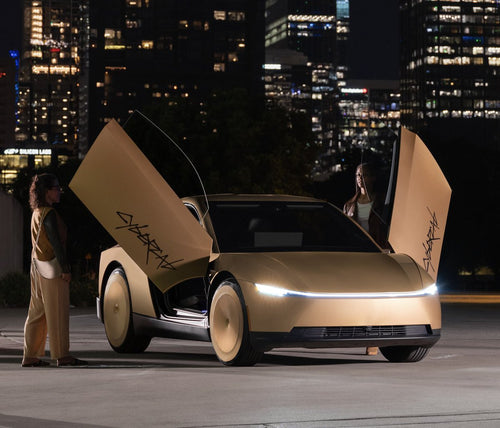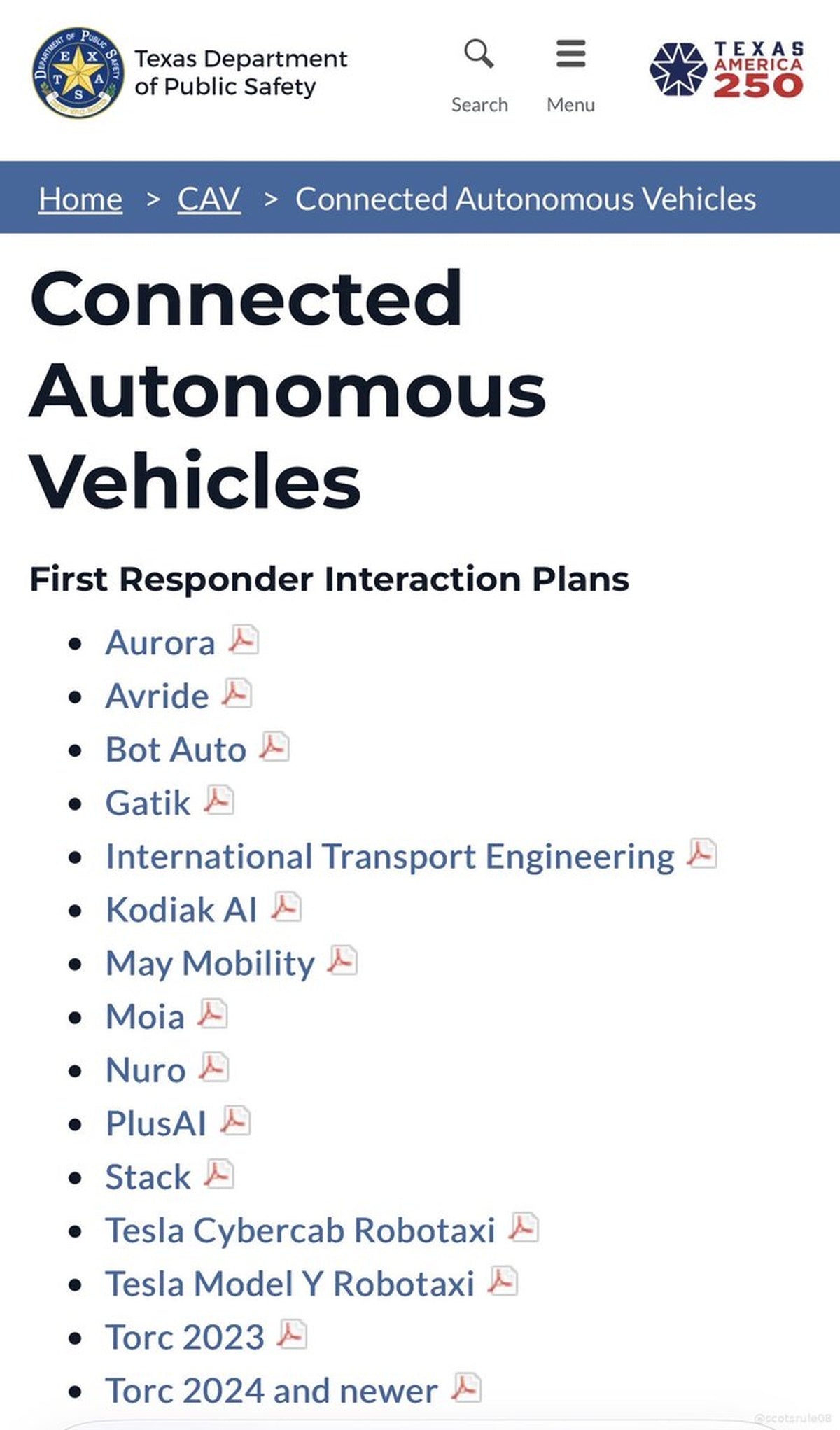
Tesla's Cybercab Robotaxi has cleared another formal regulatory hurdle in Texas: the vehicle is now officially listed in the Texas Department of Public Safety's registry of Connected Autonomous Vehicle First Responder Interaction Plans. It's a procedural step that doesn't make headlines on its own — but combined with everything else that has happened in Texas over the past few months, it signals that broad public availability is closer than most people realize.

What the Registry Listing Actually Means
The Connected Autonomous Vehicle First Responder Interaction Plan registry is a Texas DPS requirement that ensures emergency personnel — police, fire, EMS — know how to safely interact with an autonomous vehicle during an incident. It's not a launch permit, but it is a prerequisite for operating at scale on public roads. Without it, first responders encountering a driverless Cybercab in the field would have no standardized protocol to follow.
Tesla's listing in this registry, which was updated as far back as February 27, 2026 according to state records, means that documentation is now in place. The Cybercab can be stopped, accessed, and handled by emergency services according to a defined plan — a practical necessity before any high-volume deployment.
The Regulatory Stack Is Nearly Complete
This registry entry is one piece of a surprisingly complete regulatory picture Tesla has assembled in Texas over the past several months:
- On May 28, 2026, Tesla self-certified its commercial robotaxi software as compliant with SAE Level 4 autonomy under Texas state law — allowing paid rides with no driver or safety operator in the vehicle.
- Tesla Robotaxi LLC holds a Transportation Network Company (TNC) permit from the Texas Department of Licensing and Regulation, valid through August 6, 2026, explicitly covering automated vehicles operating statewide.
- The EPA issued a Certificate of Conformity for the 2026 model year Cybercab on May 26, 2026, confirming the vehicle meets federal standards for public road operation.
- As of May 28, 2026, Tesla had officially registered 42 vehicles — identified as Model Y crossovers — under the SAE Level 4 autonomous framework with the Texas DMV. Purpose-built Cybercabs are expected to follow.
Each of these steps is individually mundane. Together, they form the complete compliance foundation for a commercial robotaxi service operating without any human backup.
Where Things Stand on the Ground
Tesla's robotaxi program in Texas has been moving fast. The service launched in Austin with human safety monitors in June 2025. Unsupervised rides began in Austin on January 22, 2026. By June 3, 2026, Tesla confirmed a full metro-wide unsupervised rollout in Austin covering suburbs and the I-35 corridor. Dallas and Houston followed in April 2026 — making Texas the first state where any manufacturer is running multi-city unsupervised robotaxi operations at meaningful scale.
The hardware is accumulating rapidly too. Third-party observers tracked over 150 Cybercab units near Gigafactory Texas as of June 24, 2026. Around 45 purpose-built Cybercabs were spotted at Houston's robotaxi hub around June 20, and roughly 40 more at a Dallas hub earlier in the month. These vehicles appear to be in pre-commercial staging — not yet reflected in all official DMV filings, but clearly being positioned for deployment.
Cybercab manufacturing at Gigafactory Texas began in February 2026, with volume production targeted for the end of the year. The gap between the 42 officially registered vehicles and the 150+ units observed near the factory suggests a significant wave of Cybercabs is working through final compliance steps right now.
What to Watch Next
The TNC permit held by Tesla Robotaxi LLC expires August 6, 2026 — and renewal filings typically precede or coincide with expanded commercial operations. That date, combined with the accumulation of Cybercabs at Houston and Dallas hubs, points to July or August as the most likely window for broader public access to Cybercab rides in Texas cities beyond Austin.
The first responder registry listing is the kind of detail that gets overlooked in favor of flashier announcements. But it's exactly the type of box that has to be checked before a driverless vehicle can operate at scale without creating liability exposure. Tesla checking it quietly, without a press release, is consistent with how this entire rollout has unfolded — methodically, through official channels, one regulatory filing at a time.
🚕 Following the Robotaxi rollout? See every operating city, launch date and announced market in our Tesla Robotaxi Tracker.
Related Gear
Gear up your Tesla with tested, custom-fit BASENOR accessories — shop Tesla accessories →
Sources & reporting notes
The links below identify the material source records used for this report.
- @TeslaNewswire on X (2026-06-29T20:58:14.000Z) — Direct source
Source links are preserved as published or accessed. See our editorial standards and corrections policy.
The BASENOR Editorial Desk covers Tesla, SpaceX, and related technology, curating reporting from primary sources — official accounts, regulatory filings, and software release data. Every article passes source-record and fact-checking review before publication. About the newsroom.
This report was curated by the BASENOR Editorial Desk from the sources listed above. Read our editorial standards or email editorial@basenor.com to report an error.