📌 UPDATE — October 29, 2026
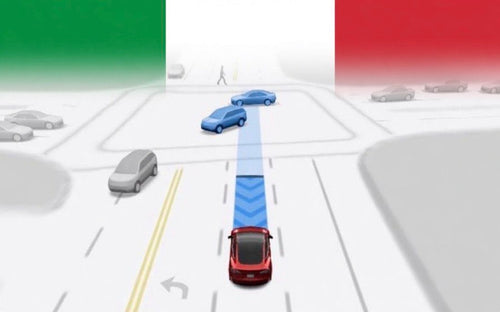
Tesla is now offering free first rides on its Robotaxi service, marking a notable push to get more members of the public into Cybercabs. The promotion appears designed to accelerate rider adoption and real-world testing of the autonomous platform in Austin. Riders can claim their complimentary trip directly through the Tesla app. This is the first known fare incentive tied to the Cybercab rollout since the service launched.

via @wholemars on X
Tesla has officially added the Cybercab to its Robotaxi lineup in Austin, Texas, marking the first commercial deployment of a purpose-built autonomous vehicle with no steering wheel, no pedals, and no driver's seat. The announcement, amplified today by Tesla's official regional channels, confirms what quietly began in early September: a dedicated two-seat driverless coupe is now picking up paying passengers on Austin streets. For Tesla, this is the pivot point the company has been building toward since Robotaxi Day in October 2024—moving from retrofitted Model Y rides to a vehicle designed from the ground up around autonomy.

What Cybercab Actually Is
The Cybercab is a two-seat, battery-electric liftback coupe with butterfly doors that open and close automatically. According to verified reporting from Autoblog and Wikipedia, the vehicle has no steering wheel, no pedals, no side mirrors, and no rear window—design choices that are only possible because the car is never meant to be driven by a human. It uses Tesla's camera-only autonomy stack, running on a modified Hardware 4 compute platform and an unsupervised version of FSD v15 that has not been released to consumer vehicles.
Under the body, the Cybercab is powered by a 47.6 kWh lithium-ion pack built with Tesla's 4680 cells, producing 219 hp (163 kW). Estimated range is approximately 293 miles at a tight 165 Wh/mile efficiency figure—unsurprising for a lightweight 3,113-lb two-seater with no driver-side hardware adding mass. Grok is integrated into the cabin for passenger voice interaction, which is the clearest signal yet of how xAI's model is being woven into the Tesla product stack.
Key Figures
| Spec | Figure |
|---|---|
| Seats | 2 |
| Battery | 47.6 kWh (4680 cells) |
| Power | 219 hp / 163 kW |
| Estimated range | ~293 miles |
| Curb weight | 3,113 lb |
| Compute | Modified HW4, FSD v15 unsupervised |
| Austin fare | $3.25 base + $1.00/mile |
How the Rollout Has Played Out
While today's social post from Tesla Malaysia frames the launch as current, the Cybercab has actually been in commercial service in Austin for nearly two months. According to Autoblog and Tesla Oracle, Tesla quietly began Cybercab operations on September 3, 2026, with public invite-only rides starting September 4 via the Robotaxi app. An invitation-only launch event was held the same evening at ACL Live in Austin.
Fleet growth has been steep. Tesla's Robotaxi account stated on October 10 that "300+ Cybercabs" were serving Austin—an eightfold increase in roughly 30 days, according to the company. Independent counts from Texas vehicle registration data placed the figure closer to 169 earlier in October, so the real number sits somewhere in that range depending on how one counts. Across the combined Robotaxi fleet (Cybercabs and Model Y units), Tesla reported more than 3.3 million unsupervised autonomous miles accumulated as of October 18, 2026.
The service area has also expanded. On October 23, Tesla widened the Austin geofence to cover the Circuit of the Americas for the US Grand Prix and extended operating hours until 1 AM. Cybercabs were actively picking up F1 attendees on October 25, according to Drive Tesla Canada and Tesla Oracle reporting.
Pricing and Early Rider Experience
Austin fares are structured at $3.25 base plus $1.00 per mile—on paper, cheaper than most ride-hail. In practice, early riders have reported surge pricing that pushes Cybercab fares above both Uber and Tesla's own Model Y Robotaxi service on identical routes. One widely-cited example from Teslarati and Tesla Oracle: a 1.3-mile trip quoted at $15.24 for a Cybercab versus $12.04 for a Model Y Robotaxi and starting at $6.41 on Uber. The premium is being driven by novelty demand rather than operating cost, and the gap will likely compress as the fleet grows past the point where every ride is a scarce-supply event.
The Regulatory Overhang
The elephant in the room is NHTSA. On the same day commercial service began—September 3, 2026—the National Highway Traffic Safety Administration opened an audit query examining Tesla's self-certification of the Cybercab against federal motor vehicle safety standards. The specific focus is the absence of a steering wheel, pedals, and mirrors, which fall outside the normal FMVSS framework for passenger vehicles. According to Autoblog, NHTSA followed up with a special order on September 10 requiring sworn answers from Tesla, with the response deadline reportedly moved to October 30, 2026—just two days from now.
That deadline is the real near-term story. Tesla's position is that the Cybercab qualifies for self-certification under existing rules; NHTSA has not yet publicly agreed. Whatever happens after October 30 will shape how quickly Tesla can expand service to the cities already on its roadmap.
What to Watch Next
- October 30, 2026 — NHTSA response deadline. Tesla's sworn answers on self-certification are due. The agency's next move will determine whether expansion plans move on schedule.
- November 2026 — Dallas launch. Tesla has indicated Dallas is next in line for Cybercab service. A firm start date has not been published.
- Further expansion cities. Las Vegas, Jacksonville, Phoenix, and San Antonio have been named by Tesla as planned markets, though specific dates remain unconfirmed.
- End of 2026 — Private customer deliveries. Tesla aims to begin delivering Cybercabs to private buyers by year-end, though Elon Musk has said the "vast majority" of production will stay in Tesla's own fleet. Musk previously floated a retail price below $30,000, but no official MSRP has been confirmed.
What It Means for Tesla Owners
For existing Tesla owners, the Cybercab is a preview, not an immediate product. The FSD v15 unsupervised build running on Cybercab is not the same software that lands on consumer cars via OTA—it is a geofenced, remotely-monitored variant tuned for a specific operational design domain in Austin. Features and capabilities will migrate to the consumer FSD stack over time, but the gap is real and intentional.
The more immediate question is what the Robotaxi network means for private vehicle economics. If Tesla eventually opens the fleet to owner-contributed vehicles—a concept Musk has repeatedly floated but not formalized—the Cybercab's existence sets the baseline for what "competitive" looks like in that marketplace. For now, Cybercab is a Tesla-owned asset earning revenue on Tesla's balance sheet. Whether that model stays closed or opens up to owners is one of the biggest unanswered questions in Tesla's transition from carmaker to mobility operator.
Mini-FAQ
Can I buy a Cybercab?
Not yet. Tesla has said it plans to begin private customer deliveries by the end of 2026, but Elon Musk has indicated the vast majority of production will remain in Tesla's fleet. No official retail price has been confirmed, though Musk previously suggested under $30,000.
Can I ride in one today?
Only in Austin, and only through the Robotaxi app on an invite basis. The service area was recently expanded to include the Circuit of the Americas, and operating hours now extend to 1 AM in parts of the geofence.
Does it use lidar or radar?
No. The Cybercab uses Tesla's camera-only autonomous driving system, running on a modified Hardware 4 compute platform. This is a departure from competitors like Waymo and Zoox, which use lidar and radar sensor suites.
Will my Model 3 or Model Y get FSD v15 unsupervised?
Not in its current form. The unsupervised FSD build running on Cybercab is geofenced and tuned for a specific operational design domain. Features will migrate to the consumer FSD stack over time, but the unsupervised capability itself is not available on consumer vehicles today.
What happens on October 30?
Tesla's response to NHTSA's special order on Cybercab self-certification is reportedly due. The agency is reviewing whether a vehicle without a steering wheel, pedals, or mirrors complies with federal motor vehicle safety standards. The outcome will directly affect how quickly Tesla can roll out Cybercab service in additional cities.
🚕 Following the Robotaxi rollout? See every operating city, launch date and announced market in our Tesla Robotaxi Tracker.
Related Gear
Gear up your Tesla with tested, custom-fit BASENOR accessories — shop Tesla accessories →
Sources & reporting notes
The links below identify the material source records used for this report.
- @Tesla_Malaysia on X (2026-10-28T07:56:20.000Z) — Direct source
Source links are preserved as published or accessed. See our editorial standards and corrections policy.
The BASENOR Editorial Desk covers Tesla, SpaceX, and related technology, curating reporting from primary sources — official accounts, regulatory filings, and software release data. Every article passes source-record and fact-checking review before publication. About the newsroom.
This report was curated by the BASENOR Editorial Desk from the sources listed above. Read our editorial standards or email editorial@basenor.com to report an error.