📌 UPDATE — August 30, 2026
Tesla's Cybercab rollout is accelerating faster than initially reported. Prominent Tesla community account Whole Mars Catalog (@wholemars) declared today "Cybercab launch week," adding that Tesla is preparing to "flood Austin with Cybercabs" — suggesting a large-scale, rapid deployment of the autonomous ride-hailing fleet in the city rather than a gradual ramp. The timing aligns with the previously announced public rides launch, but the scale of the Austin push appears more aggressive than earlier reports indicated. No official Tesla statement has confirmed exact fleet numbers for the Austin deployment.
"Tesla is about to flood Austin with Cybercabs" — @wholemars, Aug 30, 2026
📌 UPDATE — August 30, 2026
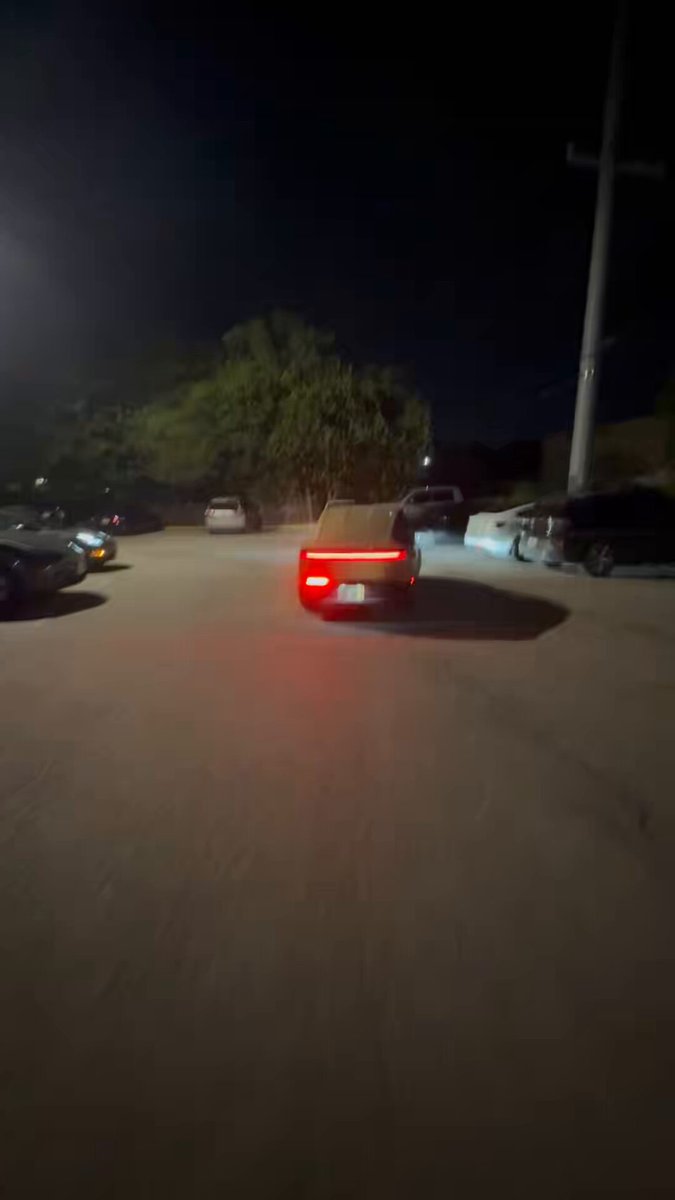
New details are emerging about how Tesla may handle edge cases and manual overrides for Cybercab. Dirty Tesla (@DirtyTesLa) highlights three potential control mechanisms: on-screen fine controls (as already seen in new footage), an optional physical controller, and full remote operation from anywhere — a capability Tesla has reportedly already deployed with the Model Y Robotaxi. The remote control fallback in particular suggests Tesla has a human-assisted safety net ready for situations where the autonomous system needs intervention, without requiring anyone physically in the vehicle.
📹 Via @DirtyTesLa · Aug 30, 2026
⚠️ Note: These are speculative observations from a third-party commentator, not official Tesla disclosures.
Tesla is set to cross a threshold next week that the autonomous vehicle industry has been circling for a decade: offering rides to members of the general public in a purpose-built, mass-producible robotaxi with no steering wheel and no pedals. According to a series of posts on X from Sawyer Merritt and Whole Mars Catalog late Friday, Tesla's Cybercab will begin carrying non-employee riders in North America within days, and newly surfaced footage reveals a practical wrinkle in the design—the vehicle can be nudged around manually using controls built into its touchscreen.
The launch, expected to be centered on Austin, Texas, would mark the first time a vehicle designed from the ground up as a driverless product has hauled ordinary passengers on public roads at scale. Waymo and Zoox operate driverless services today, but their fleets are either retrofitted production cars or bespoke shuttles produced in very limited numbers. Tesla's pitch with Cybercab is different: a two-seat vehicle engineered for mass production, with the steering wheel and pedals deliberately deleted from the architecture rather than covered up.
What the New Footage Shows
The clip circulated by Sawyer Merritt shows the Cybercab being operated at low speed with what appears to be on-screen directional controls—effectively a software joystick for manual creeping. Whole Mars Catalog summarized it plainly: "Looks like the Cybercab can be moved around using controls on the touchscreen. Great solution for those small manual movements that can't be covered by self-driving."

That detail matters more than it looks. One of the persistent questions about steering-wheel-free robotaxis has been how the vehicle handles the messy edges of real-world use: a service technician needs to reposition it in a lot, a rider needs it repositioned six feet forward at a curb, a car wash attendant needs to roll it onto a conveyor. Removing physical controls forces those cases onto software, and Tesla's answer appears to be a screen-based low-speed control mode rather than an external tether or a physical override handle.
Why Next Week Is a Milestone
Merritt's framing is worth quoting directly: "Next week will mark the first time that a purpose built Robotaxi (Cybercab) with no steering wheel or pedals that can be mass produced will offer rides to members of the general public in North America, and 99% of the population has zero clue this is about to happen."

The distinction he draws—purpose-built, mass-producible, no traditional controls, general public—is the one that separates this from every prior Tesla robotaxi milestone. Tesla's existing Robotaxi service in Austin, launched in June 2025, has been running on Model Y vehicles with the steering wheels and pedals intact. Those cars are effectively FSD-equipped consumer vehicles operating in a supervised commercial pilot. Cybercab is the actual product the service was built around.
The Austin Event on September 3
Background reporting indicates Tesla has scheduled an exclusive Cybercab event in Austin for September 3, 2026, which lines up with Merritt's "next week" timing. That event is expected to be the formal starting gun for public rides, though Tesla has not yet published details on how riders will be selected, whether the service will be geofenced within the existing Austin operational area, or how pricing will compare to the Model Y Robotaxi fleet already operating in the city.
What is known: Cybercab was unveiled at Tesla's "We, Robot" event in October 2024 with a stated production target of 2026 and a price point around $30,000. Tesla has since said mass production is expected to ramp through 2026 at Giga Texas. Whether the vehicles carrying public riders next week are true production units or late-stage validation builds remains an open question, and one Tesla is likely to address at the event.
What It Means for Owners and the Broader Fleet
For current Tesla owners, the near-term impact is indirect but significant. Every mile Cybercab drives with a paying passenger is a mile of validation data feeding back into the same FSD stack that powers consumer vehicles. The touchscreen manual-control interface, in particular, is the kind of feature that could migrate downstream—imagine using the mobile app or center screen to creep your Model 3 or Model Y forward a few feet in a tight garage without getting in.
The bigger implication is fleet economics. Tesla has spent two years telling investors that personal Teslas will eventually join the Robotaxi network as owner-operated income-generating assets. Cybercab going live with public riders is the moment that pitch stops being theoretical. If the service works, the case for existing owners to eventually opt their vehicles into the network becomes concrete rather than speculative.
What to Watch Next
- September 3 event details — ride access process, service area, pricing structure, and whether Tesla confirms production status of the deployed vehicles.
- Regulatory posture — Cybercab lacks federally mandated controls, which means it operates under NHTSA exemption rules. Any friction there would surface quickly once public rides begin.
- Touchscreen control scope — whether the on-screen manual controls are limited to service personnel or accessible to riders in defined scenarios.
- Fleet size — Tesla has not disclosed how many Cybercabs are ready for the launch. The initial number will signal how aggressively the ramp is proceeding at Giga Texas.
For a launch of this significance, the silence from Tesla's official channels heading into the week is characteristic. The company tends to let the product speak first and the announcement follow. If Merritt's timing holds, the announcement is days away.
🚕 Following the Robotaxi rollout? See every operating city, launch date and announced market in our Tesla Robotaxi Tracker.
Related Gear
Gear up your Tesla with tested, custom-fit BASENOR accessories — shop Tesla accessories →
Sources & reporting notes
The links below identify the material source records used for this report.
- @SawyerMerritt on X (2026-08-30T03:13:11.000Z) — Direct source
- @wholemars on X (2026-08-30T03:39:57.000Z) — Direct source
- @SawyerMerritt on X (2026-08-30T03:55:19.000Z) — Direct source
Source links are preserved as published or accessed. See our editorial standards and corrections policy.
The BASENOR Editorial Desk covers Tesla, SpaceX, and related technology, curating reporting from primary sources — official accounts, regulatory filings, and software release data. Every article passes source-record and fact-checking review before publication. About the newsroom.
This report was curated by the BASENOR Editorial Desk from the sources listed above. Read our editorial standards or email editorial@basenor.com to report an error.