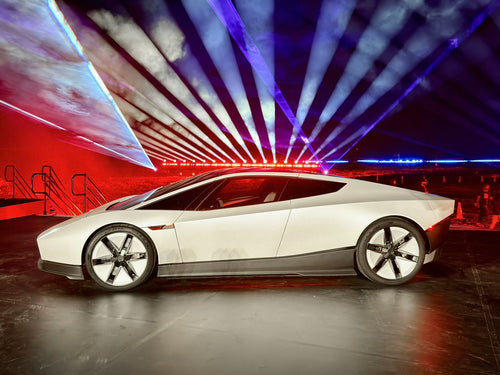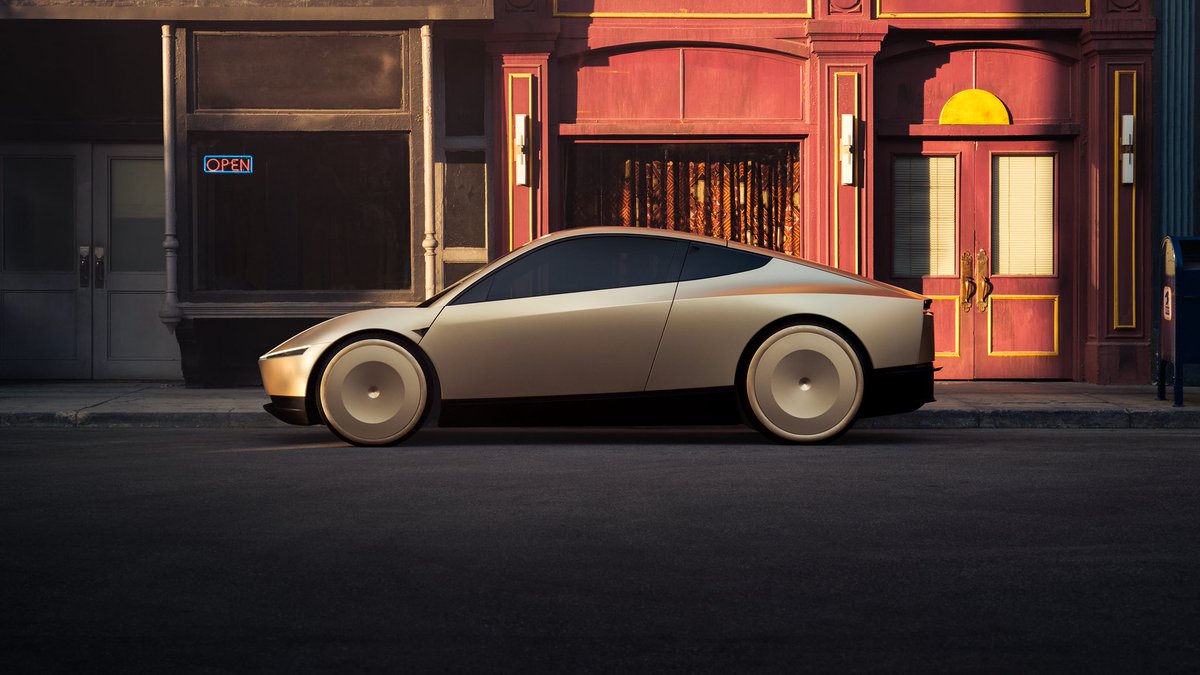
Tesla's Cybercab is now in public hands, and Whole Mars Catalog's close-up look at the vehicle on October 17 highlights what makes it a historic model for the company: it is the first Tesla ever built without a steering wheel or pedals. The two-seat robotaxi is purpose-built for autonomous operation, and the shared design language between the Cybercab and the rest of Tesla's modern lineup signals how deeply Tesla is committing to a driverless future across its product roadmap.

A Tesla Built From Scratch for Autonomy
Every Tesla before the Cybercab was designed as a driver's car first and a software platform second. The Cybercab inverts that logic. There is no steering wheel, no pedals, no side mirrors, and no rear window. According to Wikipedia and Teslarati's reporting on the vehicle, the cabin is organized around two passengers and a single 21-inch touchscreen, with USB-C ports and physical door-release and emergency-stop buttons marked with Braille lettering — a nod to the regulatory and accessibility reality of a car that nobody drives.
Whole Mars Catalog's photos also show how the Cybercab borrows styling cues from the broader Tesla family — the flush surfaces of the refreshed Model Y, the hard-edged angularity of the Cybertruck, and the aerodynamic teardrop profile Tesla has been pushing since the Model S refresh. It's a design language built for a world where the car is a service, not a possession.

How We Got Here
Tesla first unveiled the Cybercab at the "We, Robot" event in October 2024. According to Wikipedia and Teslarati, production of the first Cybercab began at Gigafactory Texas in February 2026, with volume manufacturing starting in April 2026. The company held an invitation-only commercial launch event on September 3, 2026, in Austin, and paid public rides began the following day through Tesla's existing Robotaxi service. As of early October 2026, more than 300 Cybercabs were reported to be in the fleet.
The vehicle runs on a camera-only autonomy stack — no lidar, no radar — using a modified Hardware 4 compute platform and Full Self-Driving version 15 in its unsupervised configuration. That's a meaningful distinction: owner-driven Teslas run supervised FSD, while the Cybercab operates under the unsupervised stack Tesla has been validating through its Austin and Bay Area Robotaxi pilots.
Key Specifications
| Specification | Value |
|---|---|
| Battery | 47.6 kWh lithium-ion |
| EPA Range | ~293 miles (472 km) |
| Power | 219 hp (163 kW) |
| Efficiency | ~165 Wh/mile (6.1 mi/kWh) |
| Drivetrain | Front-motor, front-wheel drive |
| Curb Weight | 3,113 lb (1,412 kg) |
| Top Speed | 85 mph |
| Target Operating Cost | Under $0.30/mile |
| Target Consumer Price | Under $30,000 (per Musk) |
Figures sourced from Wikipedia and Teslarati's Cybercab reporting. The ~165 Wh/mile efficiency, if validated at scale, would make the Cybercab one of the most aerodynamically efficient production vehicles ever built — a direct consequence of designing a small, lightweight two-seater without the compromises of accommodating a driver.
What It Means for the Rest of the Tesla Lineup
Whole Mars Catalog's observation about shared design language is worth taking seriously. The Cybercab isn't an isolated experiment — it is a preview of where Tesla's entire lineup is heading in terms of aerodynamic surfacing, interior minimalism, and software-first UX. Elements like the single-screen cabin, the removal of traditional controls, and the integration of physical emergency buttons alongside touchscreen interaction will likely filter down to future refreshes of the Model 3 and Model Y as Tesla pushes further into unsupervised autonomy on consumer vehicles.
For current Tesla owners, the more immediate implication is validation of the FSD development path. Every Cybercab mile driven in Austin is a stress test of the same camera-only neural network stack that powers supervised FSD on your Model 3, Model Y, or Cybertruck. The data flywheel keeps turning.
What to Watch Next
- Fleet expansion: Tesla needs to scale from ~300 Cybercabs in October to meaningful volumes before the Cybercab becomes a serious player against incumbent ride-hail networks.
- Geographic rollout: Austin is live. The next question is whether Tesla expands Cybercab-specific service to the Bay Area, Phoenix, or other Robotaxi pilot cities.
- Consumer sales timing: Musk has repeatedly cited a sub-$30,000 price point for consumer purchase. A firm date for private ownership availability has yet to be announced.
- Regulatory posture: A vehicle without a steering wheel or pedals requires exemptions from Federal Motor Vehicle Safety Standards. Watch NHTSA's response as fleet size grows.
Editor's View
The Cybercab is the first time Tesla has shipped a vehicle whose entire value proposition collapses if FSD doesn't work. Every other Tesla is still a usable car if the software stalls. This one isn't. That makes the Cybercab both the clearest statement of Tesla's confidence in its autonomy stack and the sharpest test of whether that confidence is earned. The next twelve months of fleet data will answer that question better than any launch event could.
🚕 Following the Robotaxi rollout? See every operating city, launch date and announced market in our Tesla Robotaxi Tracker.
Related Gear
Gear up your Tesla with tested, custom-fit BASENOR accessories — shop Tesla accessories →
Sources & reporting notes
The links below identify the material source records used for this report.
- @wholemars on X (2026-10-17T09:20:30.000Z) — Direct source
- @wholemars on X (2026-10-17T09:39:19.000Z) — Direct source
Source links are preserved as published or accessed. See our editorial standards and corrections policy.
The BASENOR Editorial Desk covers Tesla, SpaceX, and related technology, curating reporting from primary sources — official accounts, regulatory filings, and software release data. Every article passes source-record and fact-checking review before publication. About the newsroom.
This report was curated by the BASENOR Editorial Desk from the sources listed above. Read our editorial standards or email editorial@basenor.com to report an error.