📌 UPDATE — August 4, 2026
That massive 21-inch screen isn't just for show — Tesla Robotaxi passengers can watch Netflix during their commute, with movies playing through the car's speaker system in full surround sound. Early rider footage shared by @wholemars showcases the premium home theater experience inside the driverless cabin, turning a routine hour-long commute into something closer to a private screening room. This confirms that the Cybercab's oversized display is deeply integrated with Tesla's existing entertainment ecosystem, not merely a navigation interface.
"With Tesla Robotaxi, you can just watch Netflix during an hour long commute. Movies even play in full surround sound using the Tesla speakers, giving you premium home theater sound in a driverless car." — @wholemars, Aug 4, 2026

▶ Tap to view video on X — Tesla Robotaxi in-cabin entertainment demo
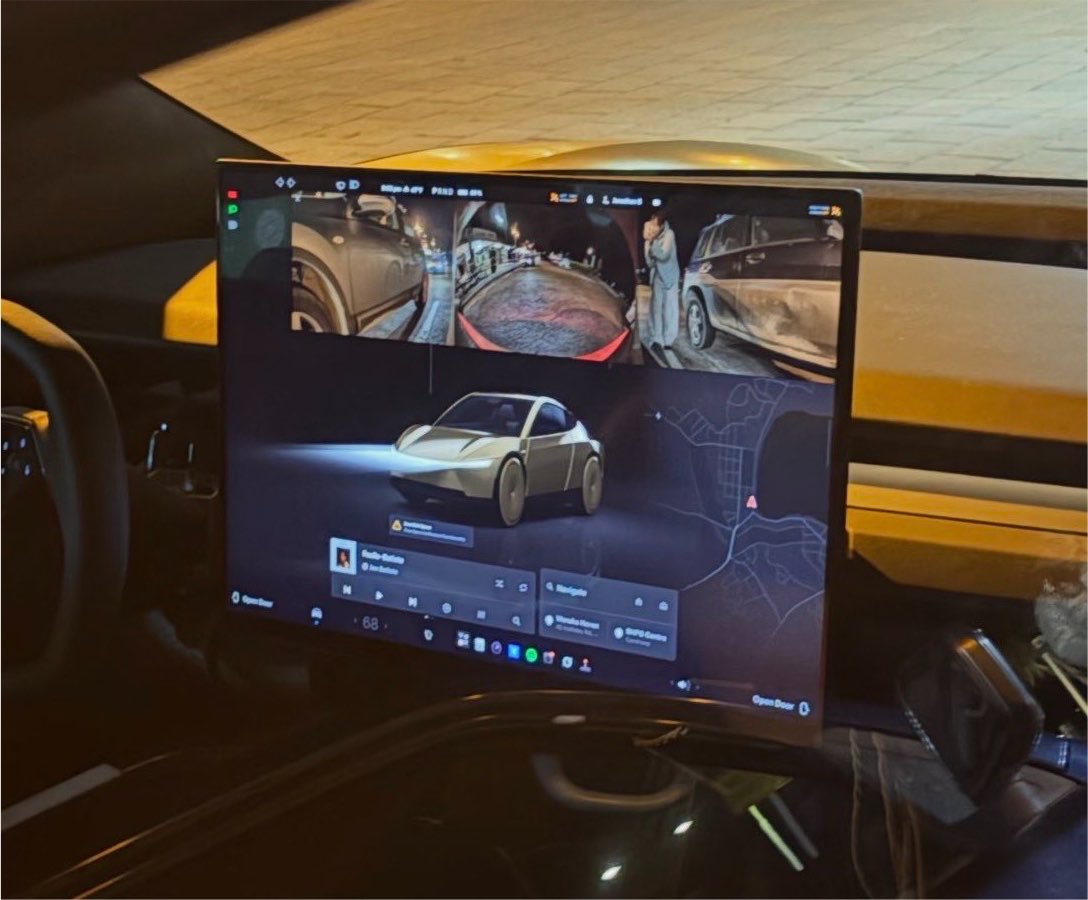
The Tesla Cybercab's interior has been one of the more closely guarded details of the robotaxi rollout — but new images circulating this week offer the clearest look yet at what passengers and operators will actually see on that enormous 21-inch display. It's Tesla's familiar software DNA, rebuilt from the ground up for a vehicle with no steering wheel and no pedals.

The Screen Itself
At 21 inches, the Cybercab's central display is the largest Tesla has ever shipped in a production vehicle. For context, the Model S and Model X used a 17-inch portrait display; the Model 3 and Model Y settled on a 15.4-inch unit. The Cybercab's screen isn't just bigger — it's the sole control surface in the cabin. There's no instrument cluster, no steering column, no stalk. Everything a passenger or remote operator needs to interact with the vehicle runs through this one panel.
The physical layout around the screen is deliberately minimal. Window controls and USB-C charging ports sit beneath the display. Physical door-release and emergency stop buttons are positioned in the cabin and include Braille lettering — a detail that signals Tesla is thinking about accessibility from the hardware level up, not as an afterthought.

What the Software Reveals
The UI itself is unmistakably Tesla — the same menu architecture and visual language that owners of current vehicles will recognize immediately. But several of the menu items expose just how much the software has been adapted for autonomous operation. Early factory-build screenshots documented by researchers show a 'Pedals & Steering' menu despite the vehicle having neither. That's almost certainly a diagnostic or configuration remnant from the shared codebase, not a feature passengers will encounter. Similarly, 'Mirrors Settings' and a 'Fold Mirrors' button manage the Cybercab's camera-based vision system rather than traditional glass mirrors.
A dedicated 'Self-Driving' menu is confirmed present. Pre-production builds carried a 'Factory Sentinel' watermark, which is standard for software not yet cleared for public release. Earlier footage also captured 'emergency stop' and 'pull over' buttons — whether those surface in the customer-facing build remains an open question.
The passenger-facing layer is handled through the Tesla Robotaxi app, currently in use by Giga Texas employees. Screenshots from that app show controls for A/C temperature, vent direction, and trip details including destination. Airflow direction control is a newly documented feature — a small but telling sign that Tesla is treating the Cybercab cabin experience more like a premium lounge than a standard car interior.
Context: Where the Cybercab Stands Right Now
The UI reveal comes as the Cybercab program is moving fast on multiple fronts. Tesla expanded its Robotaxi Service to two additional Florida cities on July 22, 2026, the same day Starlink V5 integration into the Cybercab fleet was confirmed. Vehicles have been observed testing on Austin roads without a steering wheel or pedals since at least July 11. The service is no longer a concept — it's operational and scaling.
The software's shared codebase with existing Tesla vehicles is a strategic advantage that's easy to underestimate. It means the Cybercab benefits from every FSD improvement Tesla ships across its fleet, and it means the engineering team isn't maintaining a parallel software branch. The menus look familiar because they largely are — the novelty is in what they're controlling underneath.
The 21-inch display is the most visible symbol of what makes the Cybercab a genuinely different product: a vehicle designed around the passenger experience rather than the driver's. How Tesla continues to evolve that interface — and what ends up in the final customer-facing build versus the diagnostic menus visible in factory software — will define whether the cabin feels polished or provisional when the service reaches wider markets.
🚕 Following the Robotaxi rollout? See every operating city, launch date and announced market in our Tesla Robotaxi Tracker.
Related Gear
Gear up your Tesla with tested, custom-fit BASENOR accessories — shop Tesla accessories →
Sources & reporting notes
The links below identify the material source records used for this report.
- @TeslaNewswire on X (2026-07-31T07:52:53.000Z) — Direct source
Source links are preserved as published or accessed. See our editorial standards and corrections policy.
The BASENOR Editorial Desk covers Tesla, SpaceX, and related technology, curating reporting from primary sources — official accounts, regulatory filings, and software release data. Every article passes source-record and fact-checking review before publication. About the newsroom.
This report was curated by the BASENOR Editorial Desk from the sources listed above. Read our editorial standards or email editorial@basenor.com to report an error.