On Tesla's Q3 2026 earnings call, Elon Musk put two numbers on the table that reframe the company's long-term ambitions: a target of 5 million vehicles per year by 2030, and a claim that the Terafab semiconductor facility will generate economic output rivaling the top 20 countries on Earth — all inside a single building. Neither figure is a casual boast. Both carry specific timelines, capital commitments, and supply-chain partnerships that make them worth unpacking.
The 5 Million Vehicle Target
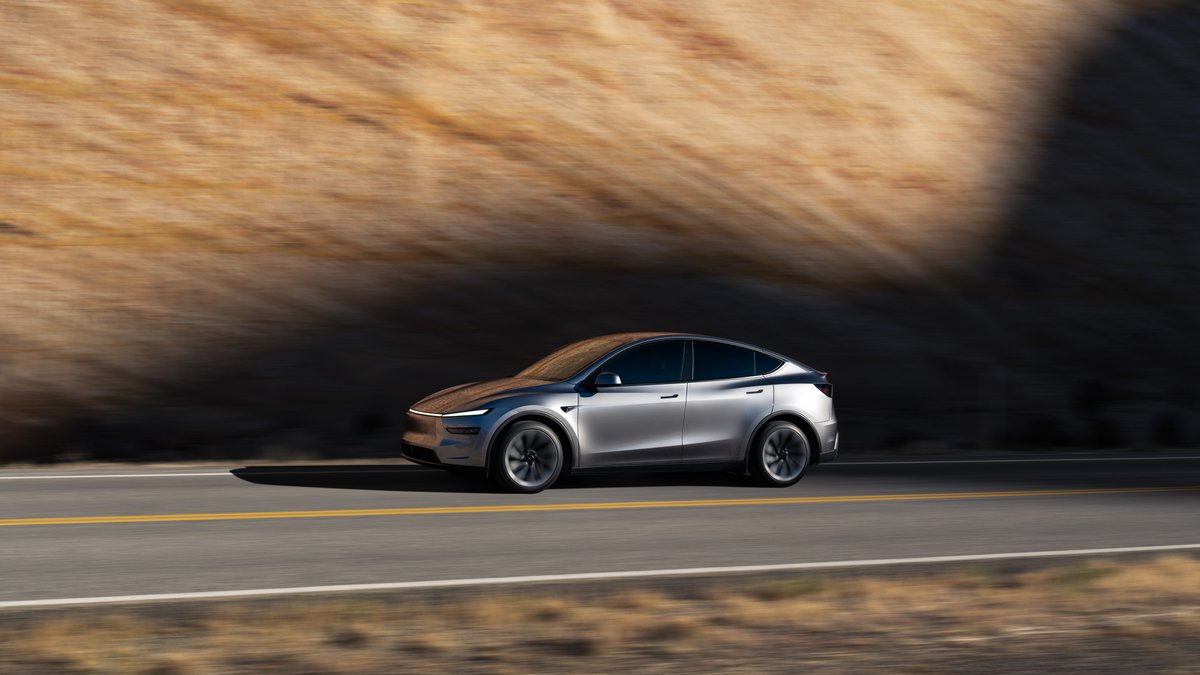
Tesla produced just over 464,000 vehicles in Q3 2026 and delivered more than 486,000 — a healthy quarter, but one that puts the current annualized run rate somewhere around 1.85 million units. Getting to 5 million by 2030 means roughly tripling output in four years, which is an extraordinary manufacturing challenge even by Tesla's own historical standards.

Musk's framing — "we've been laying the groundwork" — signals that this isn't a cold-start ambition. According to background reporting, Giga Berlin is already being prepared for a significant expansion: a second production hall is set to begin construction in 2027, with a long-term output target of 1 million vehicles per year for that facility alone. Berlin currently runs at a target of 7,500 vehicles per week, or roughly 375,000 annually. Scaling it to 1 million would represent nearly a 3x increase from a single site.
The math implies Tesla will need multiple factories running at or near peak capacity simultaneously — Fremont, Austin, Berlin, Shanghai, and likely at least one additional Gigafactory not yet announced — to reach 5 million. That's the groundwork Musk is referring to: land, permits, tooling decisions, and supplier negotiations that don't show up in quarterly production numbers but determine whether a 2030 target is achievable or purely aspirational.
Terafab: A Country-Sized Economy in One Building
The Terafab claim is harder to benchmark but arguably more consequential. Musk stated on the call that Terafab's economic output "will place it in the top 20 of countries, in a building." For context, the GDP of the 20th-largest economy on Earth runs into the trillions of dollars annually. That's the scale being invoked — not a large factory, but a facility whose chip production would, if valued at market rates, rival national economies.

Terafab is a joint venture between Tesla and SpaceX, sited on a 3,000-acre plot in Gibbons Creek, Texas, covering approximately 1 million square feet. The initial investment exceeds $15 billion, with the state of Texas approving a $30 million grant toward the project. The facility is designed to manufacture advanced AI chips and other semiconductors — directly addressing the supply constraints that have throttled AI compute buildout across the industry.
The timeline Musk laid out is specific but comes with caveats he stated himself. Test chip production is targeted for May–June 2027, focused on proving basic manufacturing capability. Volume production is the goal for Q3 or Q4 2028 — a timeline Musk described as "highly aspirational" with "big error bars." That kind of candor is notable; it suggests the internal forecast is real rather than a promotional number.
The supply chain is already moving. According to background reporting, ASML — the Dutch company that makes the extreme ultraviolet lithography machines essential for advanced chip fabrication — has expedited shipments to support Terafab's build-out schedule. Intel is also involved as a co-optimization partner, helping implement next-generation 14A process technology within the facility. These aren't vague partnerships; expedited ASML shipments represent some of the most constrained and expensive equipment in the semiconductor industry.
What It Means in Practice
The two announcements are connected. Tesla's path to 5 million vehicles per year runs directly through its ability to secure the AI compute needed for full autonomy at scale — both for training FSD models and for the in-vehicle inference chips that power them. A captive, high-volume semiconductor facility changes Tesla's cost structure and supply security in ways that no amount of third-party chip procurement can replicate.
For owners, the near-term implication is less about Terafab's chip output and more about what it signals: Tesla is betting that the bottleneck to its next phase of growth is compute, not cars. If Terafab hits its 2028 volume targets, the downstream effect on FSD capability and Optimus production could be substantial — and it would arrive just as the 2030 vehicle production ramp is entering its most critical years.
Both targets carry genuine uncertainty. But the specificity of the details — construction timelines, supplier names, square footage, investment figures — suggests these are operational plans, not investor-day slides. The next concrete checkpoint is the Terafab test chip run, currently slated for mid-2027.
Related Gear
Gear up your Tesla with tested, custom-fit BASENOR accessories — shop Tesla accessories →
Sources & reporting notes
The links below identify the material source records used for this report.
- @SawyerMerritt on X (2026-10-21T21:34:31.000Z) — Direct source
- @SawyerMerritt on X (2026-10-21T21:41:24.000Z) — Direct source
Source links are preserved as published or accessed. See our editorial standards and corrections policy.
The BASENOR Editorial Desk covers Tesla, SpaceX, and related technology, curating reporting from primary sources — official accounts, regulatory filings, and software release data. Every article passes source-record and fact-checking review before publication. About the newsroom.
This report was curated by the BASENOR Editorial Desk from the sources listed above. Read our editorial standards or email editorial@basenor.com to report an error.