📌 UPDATE — July 5, 2026
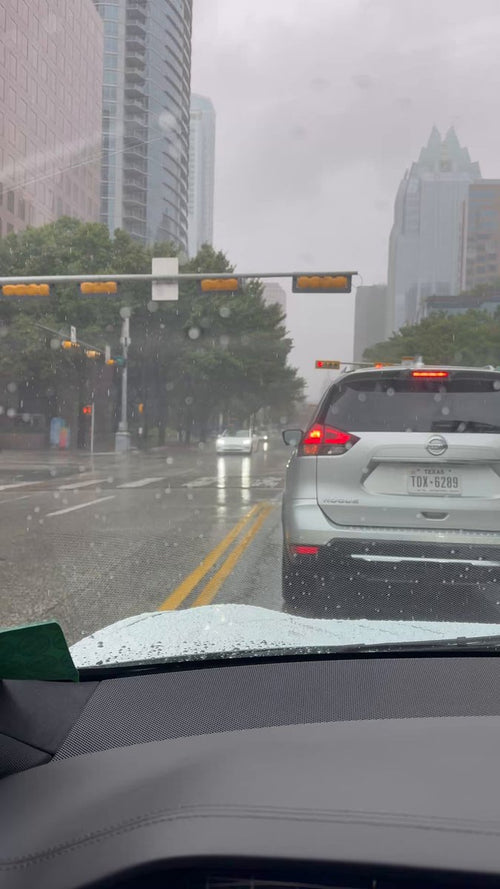
New real-world footage is reinforcing just how broadly Tesla FSD can operate across vastly different environments. User @wholemars documented FSD navigating dirt roads in rural Oklahoma during a thunderstorm — the same system that routinely handles rush-hour traffic on the 405 in Los Angeles and gridlocked Midtown Manhattan. Separate clips also captured FSD autonomously swerving around a massive pothole and avoiding a raccoon in the road, demonstrating improved hazard detection beyond just other vehicles. The key takeaway: no other autonomous driving program comes close to training across this sheer diversity of real-world conditions daily — and with 10 million vehicles on the road, that data advantage only compounds.
"It blows my mind how this model can handle everything from rush hour traffic on the 405 in Los Angeles, to mid town Manhattan, to rural Oklahoma, without skipping a beat." — @wholemars


Tesla's self-driving fleet has reached a milestone that no competitor can match: 10 million vehicles capable of running its Full Self-Driving software. That number, highlighted by Tesla observer Whole Mars Catalog on Thursday, underscores just how far ahead Tesla is in real-world autonomous driving data collection — and the gap keeps widening.

To put the number in context: according to previous reports, Tesla had 1.1 million active FSD users at the end of 2025, and the FSD fleet surpassed 10 billion cumulative miles driven in early May 2026. The 10 million capable-vehicle figure is a broader count — every Tesla on the road that has the hardware to run the software, whether or not the owner has activated it. That's the data reservoir Tesla's neural networks are drawing from, and it's a dataset no startup or legacy automaker comes close to matching.
Beyond the fleet scale, Whole Mars Catalog also shared a detail about how the system handles edge cases on the road: when FSD needs to pull over, it doesn't just stop wherever it is. It actively searches for a safe location — a shoulder, a pull-off — and can continue driving for a considerable distance until it finds one.

That behavior matters more than it might seem. A system that stops abruptly in a travel lane is a hazard; one that patiently navigates to a safe spot before stopping is behaving closer to how a trained human driver would. It's the kind of nuanced, situationally-aware response that only emerges from training on billions of real-world miles — exactly what that 10-million-vehicle fleet is continuously generating. For more on how FSD is evolving, see our FSD coverage.
Related Gear
Gear up your Tesla with tested, custom-fit BASENOR accessories — shop Tesla accessories →
Sources & reporting notes
The links below identify the material source records used for this report.
- @wholemars on X (2026-07-03T03:49:41.000Z) — Direct source
- @wholemars on X (2026-07-03T03:23:58.000Z) — Direct source
- @wholemars on X (2026-07-05T04:26:53.000Z) — Direct source
- @wholemars on X (2026-07-05T04:35:52.000Z) — Direct source
- @wholemars on X (2026-07-05T04:29:26.000Z) — Direct source
- @wholemars on X (2026-07-05T04:32:28.000Z) — Direct source
Source links are preserved as published or accessed. See our editorial standards and corrections policy.
The BASENOR Editorial Desk covers Tesla, SpaceX, and related technology, curating reporting from primary sources — official accounts, regulatory filings, and software release data. Every article passes source-record and fact-checking review before publication. About the newsroom.
This report was curated by the BASENOR Editorial Desk from the sources listed above. Read our editorial standards or email editorial@basenor.com to report an error.