📌 UPDATE — August 27, 2026
Tesla's cumulative FSD miles have crossed the 14 billion mile milestone, up from the 13.6 billion figure reported at publication. For context, Waymo's total fleet mileage sits at a few hundred million miles — meaning Tesla's dataset is now roughly 40× larger. Commentator Whole Mars Catalog noted that this gap gives Tesla a meaningful real-world data advantage for training its autonomous driving AI, particularly for the everyday trips that robotaxi services like Waymo don't yet cover geographically.
"Tesla has 14 billion self-driving miles. Waymo has a few hundred million. Eventually these services will drive trillions of miles a year." — @wholemars, Aug 26 2026

📌 UPDATE — August 26, 2026
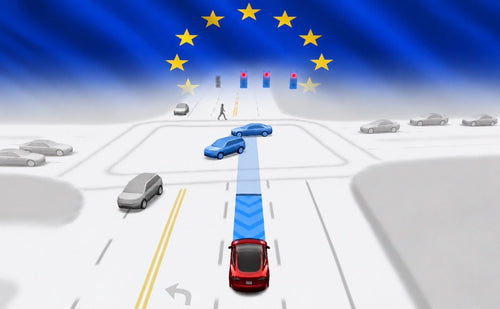
Tesla's European fleet has now crossed 100 million kilometers driven on FSD Supervised, according to an official announcement from Tesla Europe, Middle East & Africa. This regional milestone adds meaningful context to the global 13.6 billion mile figure, highlighting Europe's growing contribution to Tesla's autonomous driving data pool. At roughly 62 million miles, Europe's 100M km represents a notable acceleration in FSD adoption across the region, where regulatory and consumer hurdles have historically slowed rollout compared to North America.
@teslaeurope · Aug 26, 2026
"100 million kilometers driven on FSD Supervised by the Tesla fleet in Europe"
View on X ↗
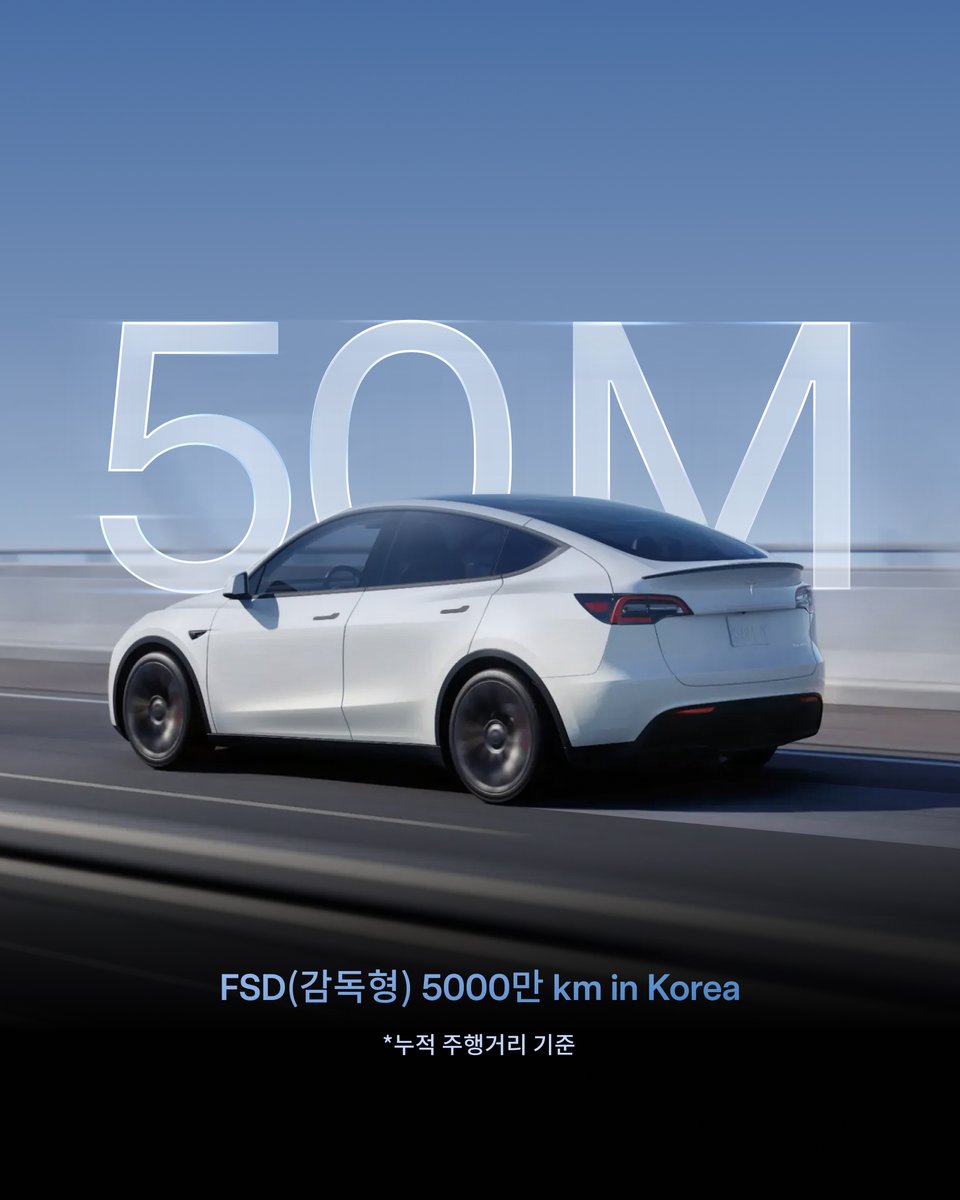
Tesla's Full Self-Driving (Supervised) system has now crossed 13.6 billion cumulative miles driven by real-world customers around the globe — a figure that keeps climbing as the fleet grows and individual owners rack up more autonomous miles. The latest data point comes with a regional highlight: Tesla owners in South Korea have collectively logged over 50 million kilometers (roughly 31 million miles) on FSD (Supervised), a meaningful signal of the technology's traction in a market that only received the feature relatively recently.

Why Cumulative Miles Matter
Raw mileage numbers aren't just a marketing talking point — they're the fuel that trains Tesla's neural networks. Every mile driven under FSD (Supervised) generates edge-case data: unusual intersections, unpredictable pedestrian behavior, adverse weather, construction zones. The more miles the fleet accumulates, the more scenarios the system has seen and can learn from.
For context, the 13 billion-mile threshold was crossed on August 3, 2026, according to previous reporting. That means Tesla added roughly 600 million miles in under three weeks — a pace that reflects both the expanding size of the FSD-capable fleet and increasing adoption rates among existing owners. At that cadence, 14 billion miles is likely only weeks away.
The compounding effect here is significant. Early autonomous driving programs measured progress in thousands of miles. Tesla is now operating at a scale where the entire history of some competitors' testing programs would be a rounding error on a single week's data collection.
South Korea as a Case Study
The South Korea figure deserves its own attention. Fifty million kilometers from a single country — one that isn't among Tesla's largest markets by volume — suggests FSD adoption rates among Korean owners are unusually high. South Korea received FSD (Supervised) access later than North America, which makes the milestone more striking: owners there appear to be engaging with the feature heavily once it becomes available.
South Korea's road infrastructure also presents a distinct challenge set compared to the U.S. — dense urban environments, complex lane markings, and driving behaviors that differ from the American suburban and highway scenarios that dominated early FSD training data. High mileage from Korean owners means Tesla's models are being stress-tested against a genuinely different driving context, which strengthens the system's generalization ability.
The Bigger Picture for FSD's Road to Autonomy
Tesla has long argued that real-world fleet data is its core competitive moat in the race toward full autonomy. The 13.6 billion-mile figure is the clearest quantitative expression of that argument. No robotaxi pilot program, no matter how well-funded, can replicate the diversity of conditions that come from millions of privately owned vehicles operating across dozens of countries simultaneously.
What remains the open question is when cumulative miles translate into a capability threshold — the point where Tesla's internal metrics justify removing the supervised requirement entirely. Elon Musk has made predictions on that timeline before, and the industry watches each mileage milestone partly as a proxy for how close that moment might be. The data keeps moving. The supervised label, for now, stays.
Related Gear
Gear up your Tesla with tested, custom-fit BASENOR accessories — shop Tesla accessories →
Sources & reporting notes
The links below identify the material source records used for this report.
- @SawyerMerritt on X (2026-08-21T01:49:43.000Z) — Direct source
Source links are preserved as published or accessed. See our editorial standards and corrections policy.
The BASENOR Editorial Desk covers Tesla, SpaceX, and related technology, curating reporting from primary sources — official accounts, regulatory filings, and software release data. Every article passes source-record and fact-checking review before publication. About the newsroom.
This report was curated by the BASENOR Editorial Desk from the sources listed above. Read our editorial standards or email editorial@basenor.com to report an error.