The News: Elon Musk publicly stated that Tesla FSD saves lives and the safety statistics are "unequivocal," while acknowledging the technology isn't perfect and that Tesla will face litigation even as it prevents the majority of accidents.
Why It Matters: This is one of Musk's most direct public statements on FSD safety outcomes — and the underlying data backs it up more than most owners realize.
Source: @elonmusk on X
Tesla FSD Safety Data: What Musk's Claims Actually Mean for Owners
Elon Musk doesn't often frame Tesla's Full Self-Driving technology in purely humanitarian terms. But on April 6, 2026, he did exactly that — and the numbers behind his statement are worth understanding if you drive a Tesla.

Musk's core argument is straightforward: even an imperfect FSD that prevents 90% of fatal accidents would save roughly 900,000 lives per year globally — yet Tesla would still face lawsuits for the 10% of fatalities that occur. It's a pointed observation about how legal liability works when safety is dramatically improved but not made absolute.
📊 Key Figures: What the Safety Data Actually Shows
| Driving Mode | Miles Per Major Collision | vs. U.S. Average |
|---|---|---|
| Tesla FSD (Supervised) | 1 per 5,300,676 mi | 8× safer |
| Tesla Manual + Active Safety | 1 per 2,175,763 mi | 3.3× safer |
| Tesla Manual, No Active Safety | 1 per 855,132 mi | 1.3× safer |
| U.S. National Average | 1 per 660,164 mi | Baseline |
Source: Tesla Safety Report, 12-month period ending February 2026. North America only.
These figures come from Tesla's own safety reporting, covering the 12-month period ending February 2026. Tesla recorded 830 major collisions with FSD (Supervised) engaged during that window — across a fleet that has now driven over 8 billion cumulative FSD miles. In the first 50 days of 2026 alone, owners added another billion miles on FSD Supervised, a pace that puts the fleet on track for roughly 10 billion FSD miles this year.

The Litigation Paradox Musk Is Describing
Musk's framing highlights a genuine tension in autonomous vehicle development. Under current tort law, a company that reduces accidents by 90% is still legally exposed for the 10% that remain — and those cases will be high-profile, well-funded, and closely watched. The 90% of prevented accidents, by definition, never generate a lawsuit, a news headline, or a court filing.
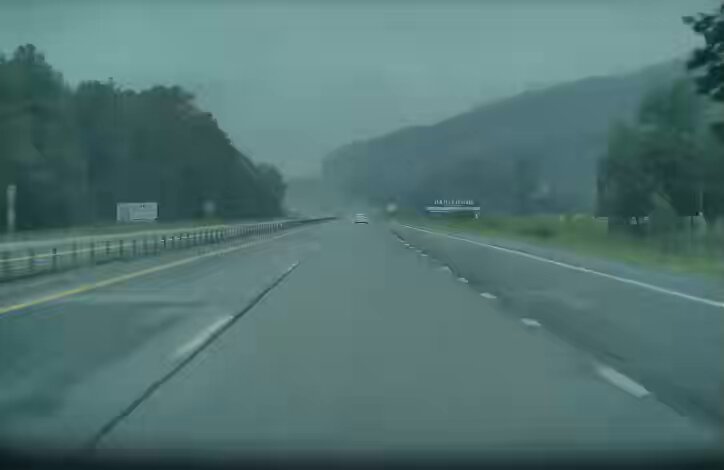
This isn't a hypothetical concern. NHTSA upgraded its probe into Tesla's FSD system from a Preliminary Evaluation to a full Engineering Analysis (EA26002) on March 18, 2026, covering an estimated 3.2 million Tesla vehicles from model years 2016–2026. The investigation focuses specifically on whether FSD failed to adequately respond to reduced visibility conditions. Nine incidents are documented in the current probe, including one pedestrian fatality.
The regulatory pressure and the safety data are not necessarily in contradiction. A system can be statistically far safer than human driving while still having specific, identifiable failure modes that warrant investigation. Both things are true simultaneously.
What's Coming Next for FSD
The timing of Musk's comments is notable. FSD version 14.3 was in Tesla employee beta testing as of early April 2026, with a wide release expected imminently. Musk has described v14.3 as incorporating a significantly larger neural network with improved reasoning capabilities, reinforcement learning, and better handling of complex urban environments. HW4-equipped vehicles are expected to receive the update first; HW3 owners are anticipated to receive an "FSD v14 Lite" version around mid-2026.
On the autonomous robotaxi front, Tesla's unsupervised FSD service has been operating in geofenced areas of Austin, Texas since June 2025. As of March 2026, 14 collisions involving Tesla Robotaxis have been reported over approximately 800,000 miles driven in that program — a collision rate that, while still being analyzed, is in line with the broader FSD safety trajectory.
Internationally, the Netherlands is expected to announce a decision on the first European FSD approval on April 10, 2026 — a potential milestone that would open a major new market for the technology.
🔭 The BASENOR Take
Timeline: FSD safety data covers 12 months ending February 2026. Robotaxi program running since June 2025. FSD v14.3 imminent.
Impact Level: High — this data directly affects how regulators, insurers, and courts will evaluate Tesla's technology over the next 2–3 years.
Confidence: High on the safety statistics (Tesla's own reporting, consistent with prior quarters). Medium on the 10× improvement claim — Musk framed this as a forward-looking target, not a current achievement.
The core issue: The gap between statistical reality and legal/regulatory perception is the defining challenge for FSD's commercial expansion. Tesla's data shows an 8× safety improvement over the national average when FSD is engaged. But eight times safer than human drivers is not the same as infallible — and in a legal system built around individual cases rather than population statistics, that distinction costs money and slows deployment.
📰 Deep Dive
The scale of FSD's mileage accumulation is often underappreciated. Annual FSD Supervised miles grew from approximately 6 million in 2021 to 4.25 billion in 2025 — a roughly 700× increase in four years. That volume of real-world data is what allows Tesla's neural networks to encounter and learn from edge cases that no simulation could fully replicate. It's also what makes Tesla's safety statistics statistically meaningful rather than anecdotal.
Musk's reference to a "million lives lost in auto accidents every year" is a global figure. The U.S. alone sees approximately 40,000 road fatalities annually. If FSD were to achieve even a 50% reduction in accident rates across a fully deployed fleet, the public health impact would dwarf most medical interventions. The challenge is that deployment is not instantaneous — it's a decade-long transition, and the legal and regulatory frameworks governing that transition were written for a world where human error was the only variable.
For current Tesla owners, the practical implication is simpler: if you're driving with FSD Supervised engaged on compatible roads, the data consistently shows you are in a materially safer driving environment than the national average. That's not marketing — it's what eight billion miles of collision data shows. Whether that translates into lower insurance premiums, reduced regulatory friction, or faster international rollout remains the open question that 2026 will likely begin to answer. Follow our FSD coverage as these developments unfold.
📋 Tracking Tesla software? See every firmware, FSD and app version in one place in our Tesla Software Update Tracker.
🚕 Following the Robotaxi rollout? See every operating city, launch date and announced market in our Tesla Robotaxi Tracker.
Related Gear
Gear up your Tesla with tested, custom-fit BASENOR accessories — shop Tesla accessories →
Sources & reporting notes
The links below identify the material source records used for this report.
- @elonmusk on X (2026-04-06T17:35:29.000Z) — Direct source
- @elonmusk on X (2026-04-06T17:21:26.000Z) — Direct source
Source links are preserved as published or accessed. See our editorial standards and corrections policy.
The BASENOR Editorial Desk covers Tesla, SpaceX, and related technology, curating reporting from primary sources — official accounts, regulatory filings, and software release data. Every article passes source-record and fact-checking review before publication. About the newsroom.
This report was curated by the BASENOR Editorial Desk from the sources listed above. Read our editorial standards or email editorial@basenor.com to report an error.