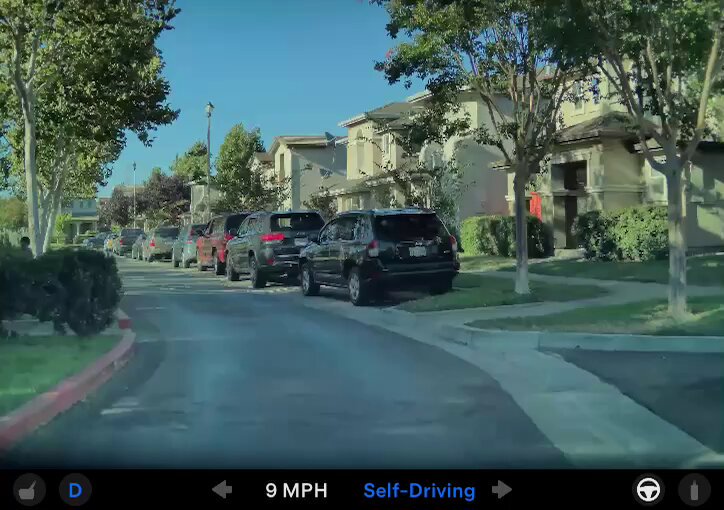
Tesla FSD (Supervised) has added another life-saving incident to a growing list — this time, a boy's life was spared after the system reacted to an imminent crash that, according to The Tesla Newswire, a human driver would likely never have been able to avoid. The incident is a stark reminder of what the technology is capable of when it's properly engaged, and it raises a practical question for every Tesla owner: are you actually using FSD the right way?

A Pattern, Not a Fluke
This incident isn't an isolated moment. Over the past several months, FSD (Supervised) has been credited with a string of interventions that human reflexes almost certainly couldn't have matched in time:
- August 26, 2026: FSD running v14.2.2.5 detected a broken-down vehicle in the driving lane and moved around it, also identifying a hazard beyond the stopped car before the driver could perceive it.
- August 16, 2026: The system detected a wrong-way driver entering an exit ramp and avoided a head-on collision.
- August 13, 2026: FSD moved the vehicle onto the shoulder just before an at-fault car made contact. The Tesla sustained no damage; the other vehicle crashed into two cars.
- February 2026: A Cybertruck owner lost consciousness on the freeway. FSD detected the medical emergency, slowed the vehicle, activated hazard lights, and pulled safely to the shoulder.
- June 2026: FSD rerouted a Model Y to the nearest hospital during a driver's heart attack. Doctors confirmed the fast response likely saved his life.
According to Tesla's own safety data (as of May 2026), vehicles with FSD (Supervised) engaged experience 7x fewer major and minor collisions and 5x fewer off-highway collisions compared to vehicles driven without it. The fleet has now accumulated 10 billion miles with FSD engaged, including 3.7 billion on city streets.
What Makes FSD React Faster Than a Human
The reason FSD can intervene in situations a human driver "would likely never have been able to avoid" comes down to perception latency. A human driver needs to see a hazard, process it, decide to act, and physically move — a chain that typically takes 1.5 to 2.5 seconds from perception to brake application. FSD's vision-based system processes its camera feeds continuously and can initiate a steering or braking response in a fraction of that time, and critically, it can react to hazards that are partially or fully outside a driver's field of attention at that moment.
Tesla officially posted a video in July 2026 showing FSD intervening in real-world scenarios — swerving vehicles, sudden stops, pedestrians entering traffic — specifically noting the system is designed to react faster than a human driver in these edge cases.
How to Make Sure FSD Is Working for You
Having FSD available on your Tesla and actually having it protect you are two different things. Here's what to check and do right now:
- Confirm your subscription is active. Since February 14, 2026, Tesla no longer sells FSD as a one-time purchase — it's subscription-only at $99/month. Go to Controls → Upgrades in your Tesla app or touchscreen to verify your subscription status. If it's lapsed, you won't have access to the system at all.
- Check that you're on the latest FSD version. As of late August 2026, Tesla has been rolling out software update 2026.26.6.5, which bundles FSD (Supervised) v14.3.8 for Hardware 4 (HW4) vehicles. Go to Controls → Software and tap Check for Updates. If an update is available, install it on Wi-Fi.
- Enable FSD on every eligible trip, not just highways. Many of the life-saving interventions documented this year happened on city streets and exit ramps — exactly the environments where FSD's reaction speed advantage matters most. Engage it by pressing the right scroll wheel stalk down twice, or via the Autopilot menu.
- Keep your hands on the wheel and eyes on the road. FSD (Supervised) requires driver supervision — it is not a fully autonomous system. The driver must remain ready to take over. The system's safety benefit comes from it catching what you miss in a split second, not from replacing your attention entirely.
- Don't dismiss the nag. If the steering wheel nag prompts you to apply light torque, do it immediately. Dismissing or bypassing the nag defeats the supervised model and can result in FSD disengaging at the worst possible moment.
The accumulating evidence from real-world incidents makes a consistent case: FSD (Supervised) is most valuable not on clear, empty highways where a human driver is fully alert, but in the chaotic, unpredictable moments where human reaction time runs out. Keeping it active, updated, and properly supervised is the most concrete safety step a Tesla owner can take today. For more on our FSD coverage, including recent update notes and owner reports, check the dedicated section.
Related Gear
Gear up your Tesla with tested, custom-fit BASENOR accessories — shop Tesla accessories →
Sources & reporting notes
The links below identify the material source records used for this report.
- @TeslaNewswire on X (2026-08-30T14:57:52.000Z) — Direct source
Source links are preserved as published or accessed. See our editorial standards and corrections policy.
The BASENOR Editorial Desk covers Tesla, SpaceX, and related technology, curating reporting from primary sources — official accounts, regulatory filings, and software release data. Every article passes source-record and fact-checking review before publication. About the newsroom.
This report was curated by the BASENOR Editorial Desk from the sources listed above. Read our editorial standards or email editorial@basenor.com to report an error.